What are good travel AI photo prompts in 2026?
Good travel AI photo prompts in 2026 do four things: describe the outfit in fabric and colour, name one light source and its side, fix the framing (head and shoulders, waist up, full body), and set the destination with objects rather than a landmark's name. White cube houses and a blue dome say Greek island; a named tower does not draw any better and often comes back smeared.
The 30 prompts below are grouped by scene, because a caldera at sunset needs a different light line than a rainy neon crossing. Each card ends with a why note that explains the trick and names the MakeAiPhotos look. Same card format as our golden hour AI photo prompts page, which covers the light line in more depth; this page applies it to travel scenes.
Fifteen looks named on this page are live today across two packs: Santorini, Dubai skyline, Tokyo night, the European old town and more on the travel pack, plus the Golden hour shoreline look on the summer beach pack. Where a prompt describes a scene neither pack has yet, like an airport gate, the why note says so and names the closest look.
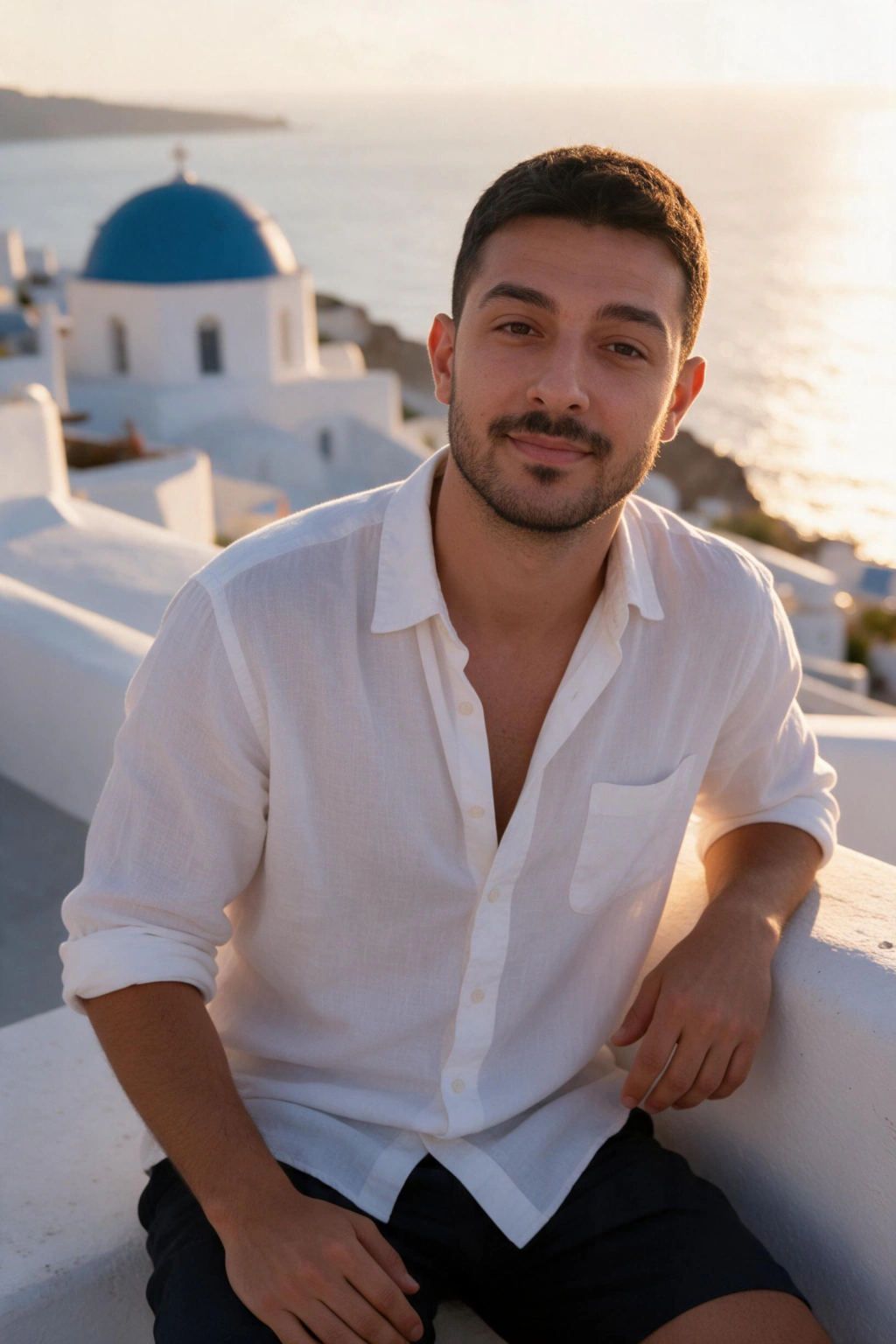
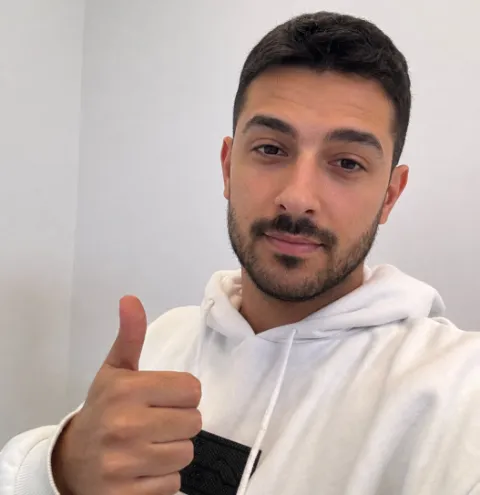
One phone selfie to 5 AI photos of the same person
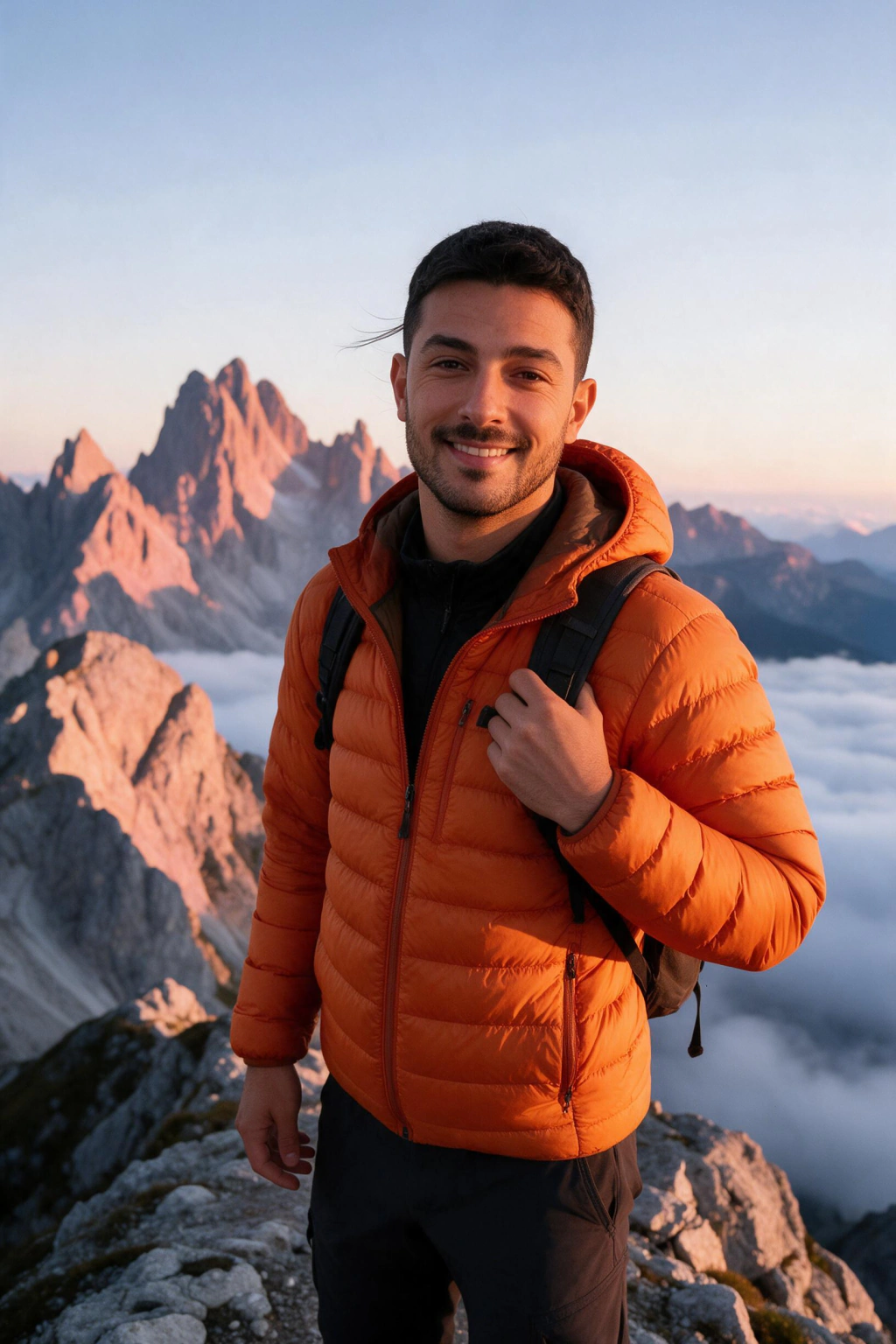
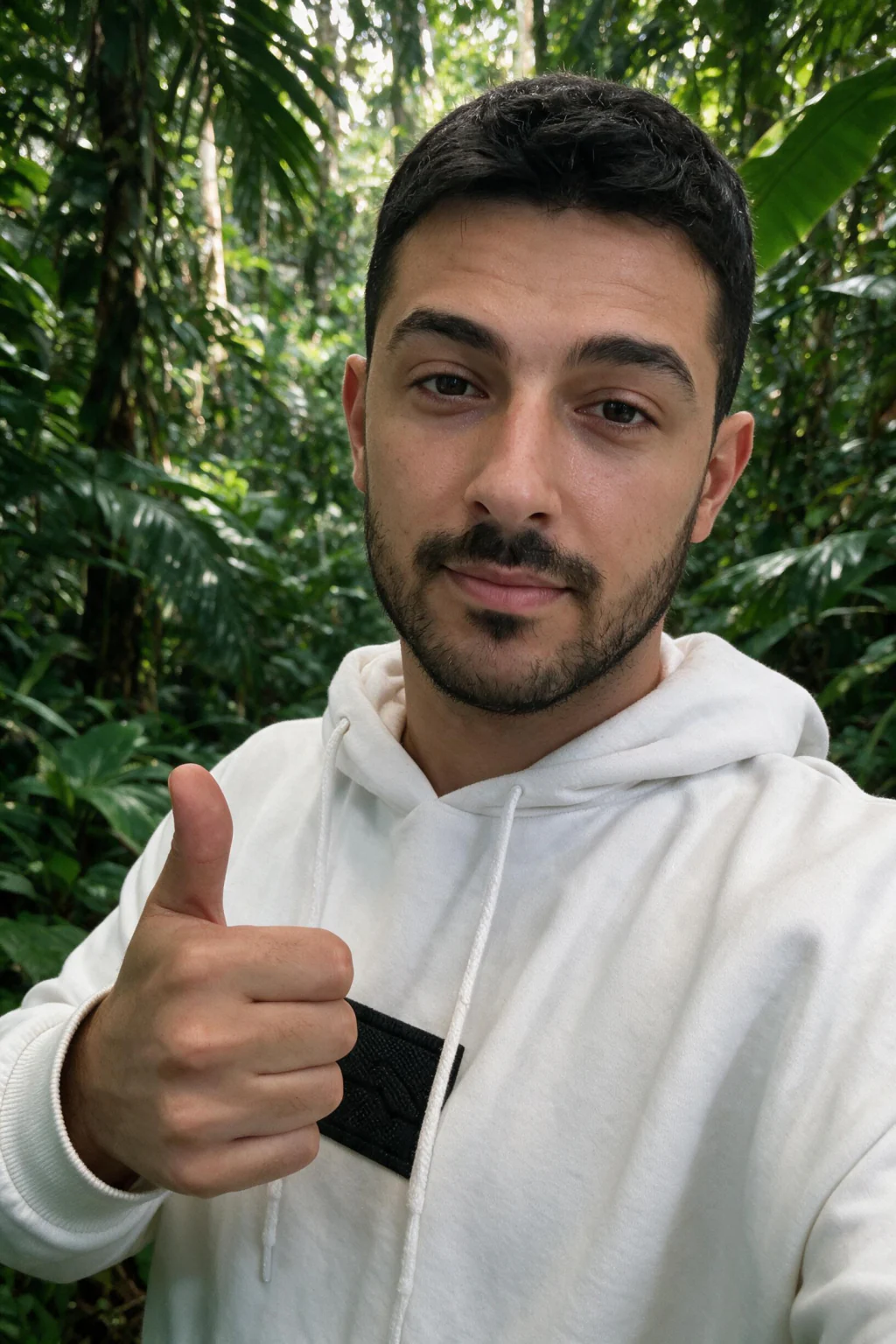
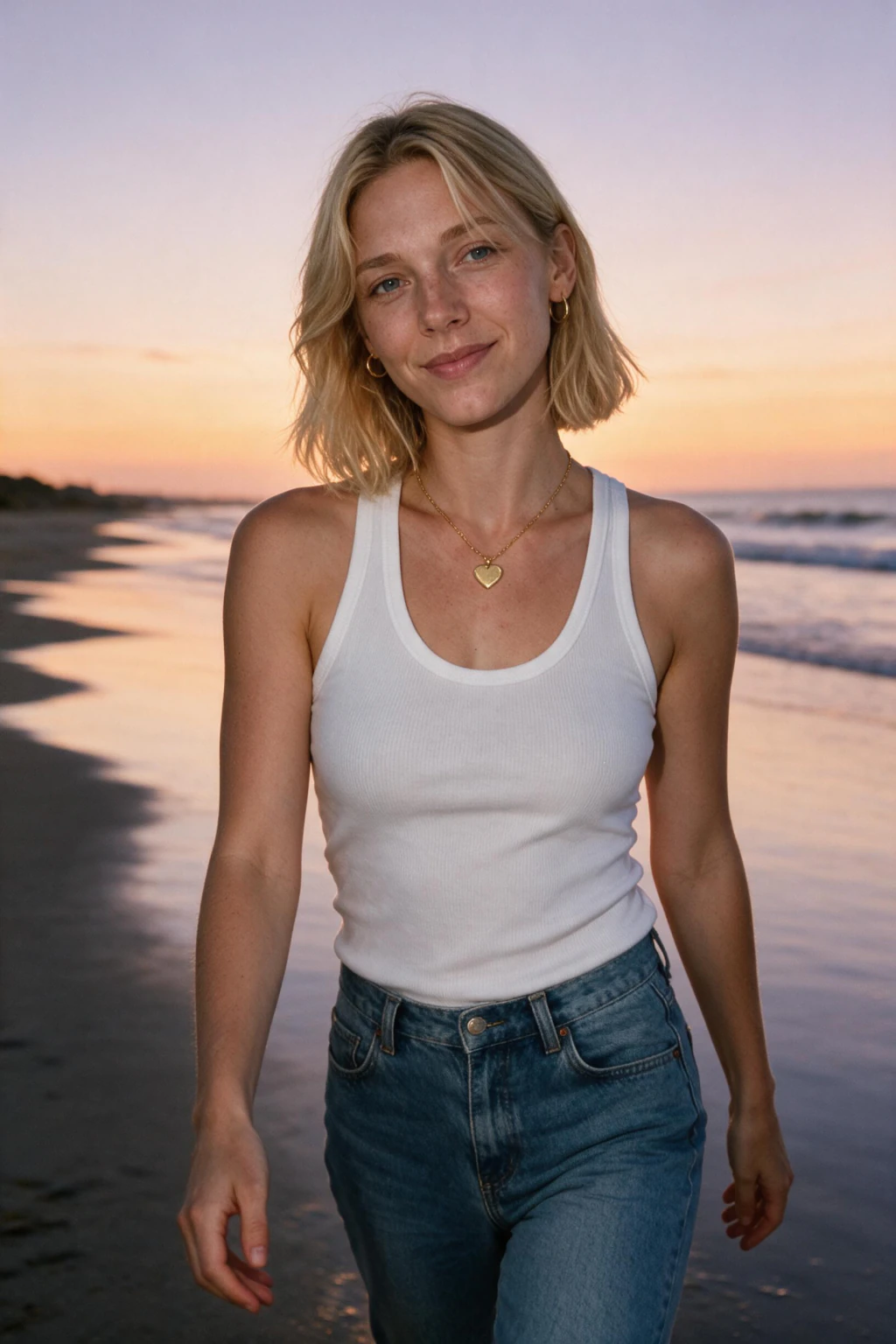
Island and coast prompts (5)
Island and coast prompts run on colour and reflection: white walls, blue water, wet sand. The trick is the same in every card, put the low sun behind or to one side so it either rims the hair or doubles itself on a wet surface.
Three of these five map to the Santorini look on the travel pack, and two map to the Golden hour shoreline look on the summer beach pack. Describe the island by its architecture, cube houses, a dome, a caldera drop, never by name.
Blue Dome Doorway
Three-quarter portrait of a person in a flowing white cotton dress standing in a narrow whitewashed alley beside a round blue-domed rooftop, pink bougainvillea spilling over a low wall, the sea visible in a gap between the buildings. Soft midday light bounced off the white walls from every side, minimal shadow. Waist-up framing, 50mm lens at f/2, ISO 200. Keep the face structure, skin tone and hairline from the uploaded photo unchanged, natural skin texture, no beautification.
Maps to the Santorini look. White walls act as a giant reflector, which is the one time bounced light beats a single source, because every surface around you is already painted to do the job.
Driftwood Seat at Low Tide
Portrait of a person in a cream knit sweater and rolled linen trousers seated on a large piece of grey driftwood at low tide, wet sand mirroring the sky, gentle waves soft behind. Warm side light from camera right as the sun nears the horizon, soft shadow on the far cheek. Waist-up framing, 85mm lens at f/1.8, ISO 200. Keep the face structure, skin tone and hairline from the uploaded photo unchanged, natural skin texture, no beautification.
Maps to the Golden hour shoreline look. Sitting low puts the horizon behind the shoulders instead of through the neck, the framing mistake that ruins most beach portraits.
Big city skyline and night prompts (5)
Skyline and night prompts live or die on the background staying a blur of light rather than a sharp named building. The trick: pick one glow, warm interior lamps, dusk haze or wet neon, and let every tower or sign soften behind you.
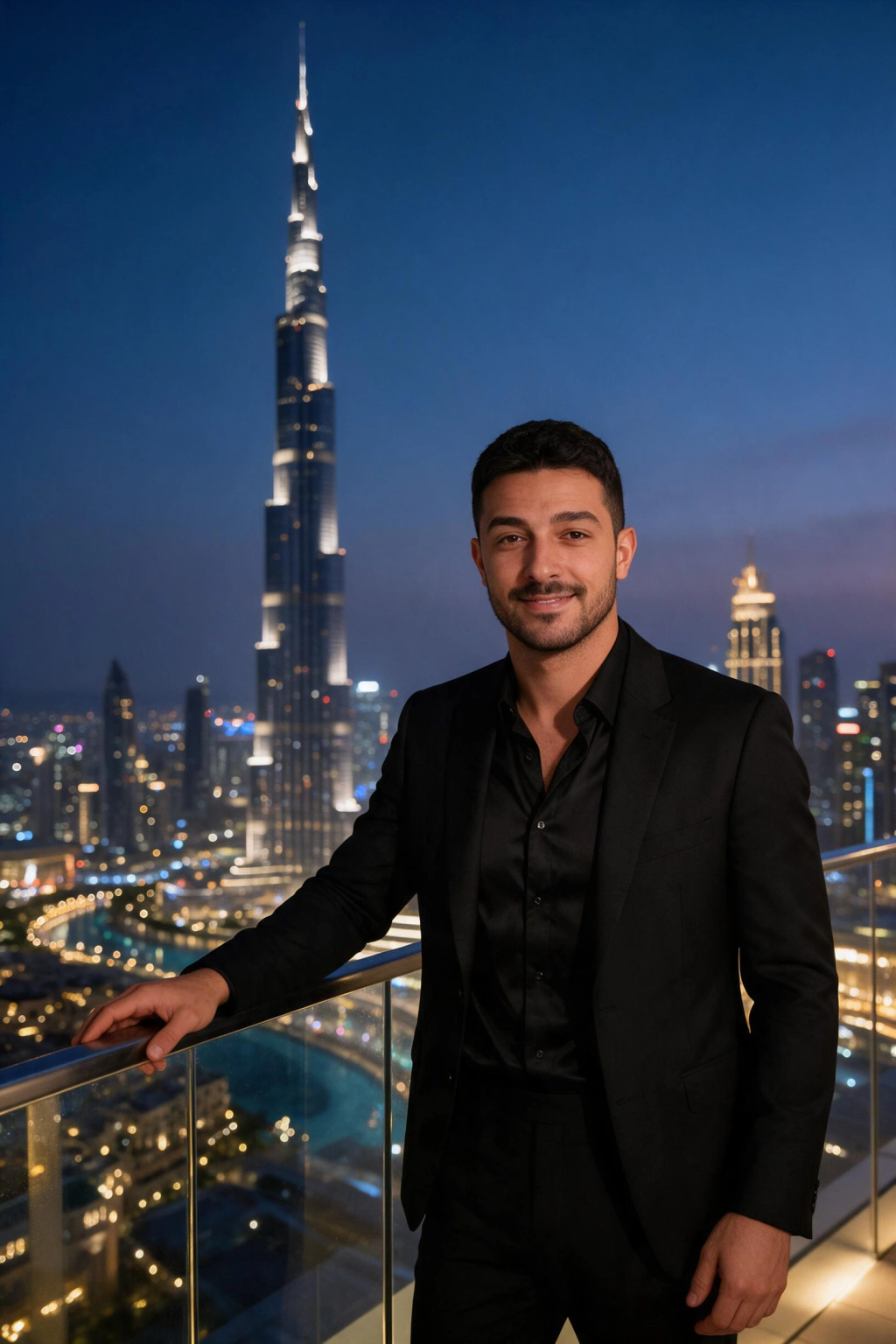
These map to the Dubai skyline, Tokyo night and Brooklyn bridge travel photo looks on the travel pack. Describe any tall structure by its shape, a spire-topped tower, cables fanning from stone towers, never by name.
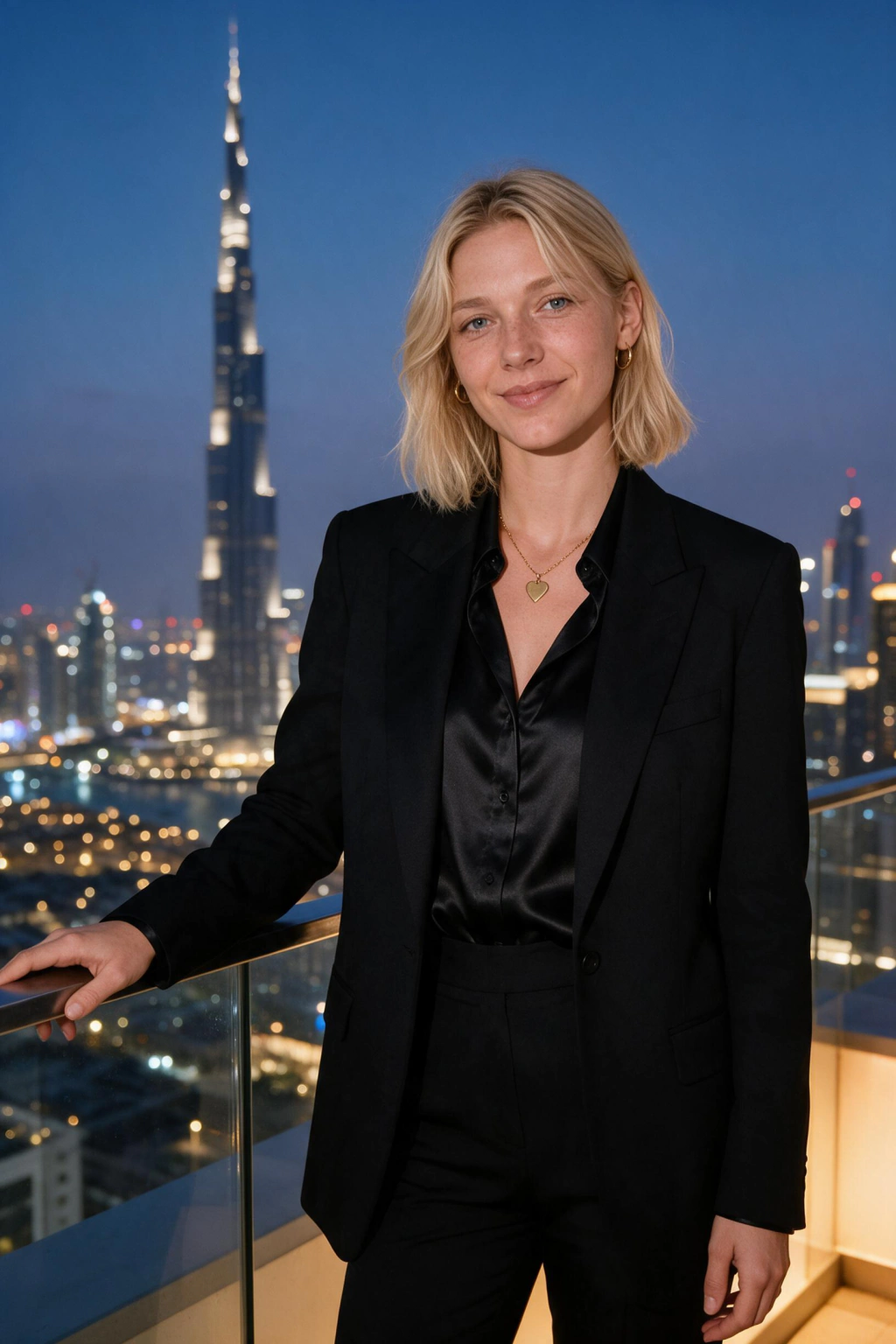
Desert City Golden Hour Balcony
Full-body portrait of a person in a flowing cream linen outfit standing on a high balcony, one hand on a glass rail, a hazy desert-city skyline of tall glass towers fading into warm dust-coloured air behind. Low sun behind the towers, warm backlight, soft golden haze filling the shadows. 35mm lens at f/2.8, ISO 200. Keep the face structure, skin tone and hairline from the uploaded photo unchanged, natural skin texture, no beautification.
Maps to the Dubai skyline look. Haze does double duty here: it is accurate to a desert city at golden hour and it softens every tower edge the model would otherwise draw wrong.
Ramen Counter Window Seat
Close waist-up portrait of a person in a charcoal wool coat seated at a narrow counter beside a steamed-up window, a bowl of noodles blurred in the foreground, a lantern-lit alley of small signs glowing soft behind the glass. Warm lamp light from above as the key, cool blue night bleeding in through the window. Close framing, 85mm lens at f/1.8, ISO 640. Keep the face structure, skin tone and hairline from the uploaded photo unchanged, natural skin texture, no beautification.
Maps to the Tokyo night look. The steamed glass blurs the alley signage into colour instead of legible text, solving the same lettering problem a foggy filter would.
Old town and street prompts (5)
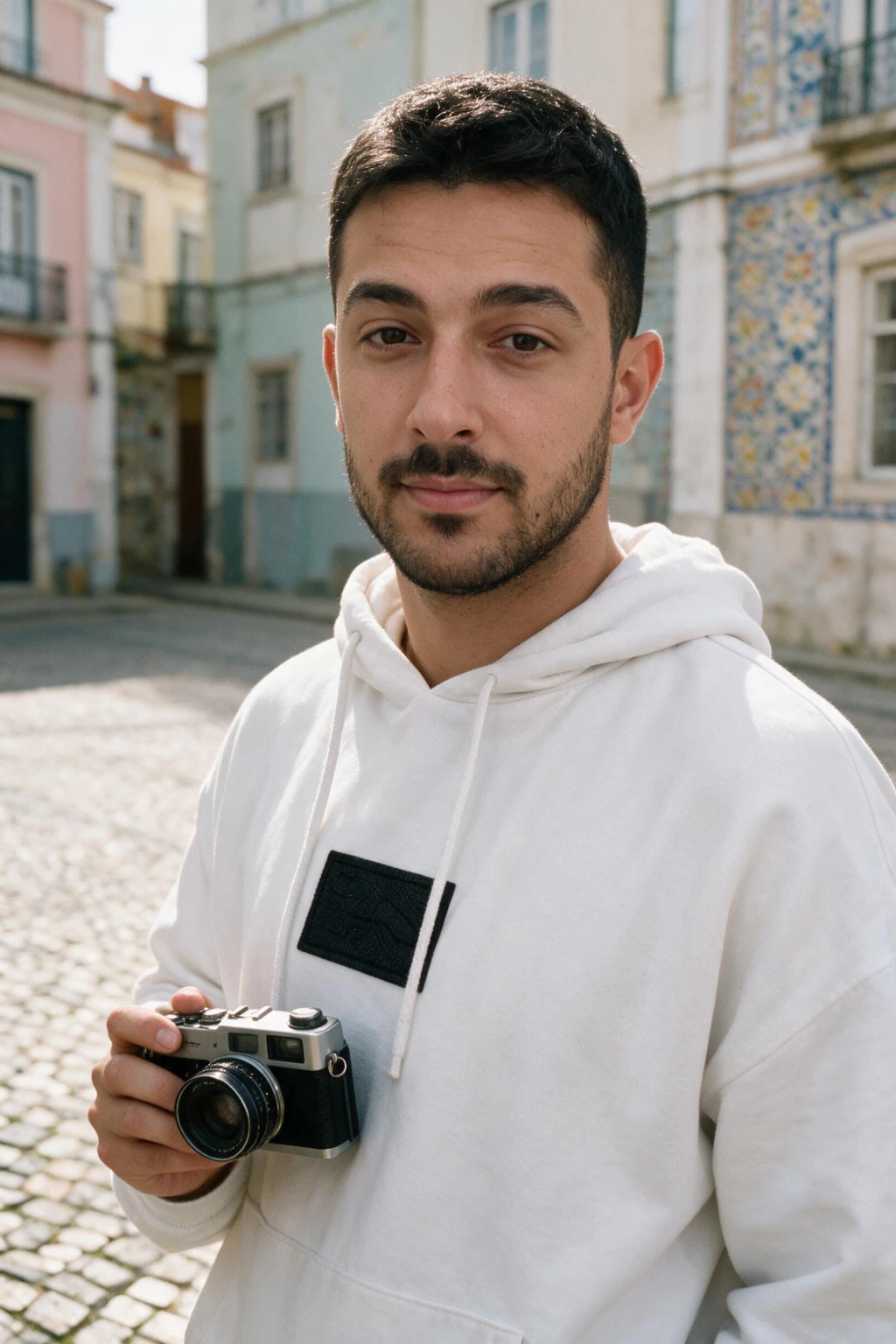
Old town prompts need close walls more than open sky. Two facades a few metres apart bounce light at each other, which is why these cards ask for soft, bounced daylight instead of a hard sun.
Four map to the European old town travel and Rooftop terrace golden hour looks. The fifth keeps a famous tower where it belongs: blurred, small and far behind the rooftops, never the subject.
Cafe Table on the Piazza
Waist-up portrait of a person in a cream linen shirt seated at a small round cafe table in a stone piazza, an espresso cup and saucer on the table, warm-toned stone buildings and a church facade soft out of focus behind. Overcast soft daylight from above, gentle fill from the light stone ground. 85mm lens at f/1.8, ISO 200. Keep the face structure, skin tone and hairline from the uploaded photo unchanged, natural skin texture, no beautification.
Maps to the European old town travel look. Pale stone underfoot acts as a second reflector, filling the shadow under the chin without a second lamp.
Mountain and trail prompts (5)
Mountain and trail prompts need distance and texture, not a named peak. Layered haze between ridges reads as depth; dappled light through pines and moving water read as real ground, both cheap for the model to draw correctly.
These five map to the Mountain summit, Forest trail explorer and River nature adventure looks. Say the peaks are unnamed and the trail is generic, a specific range comes back as a guess.
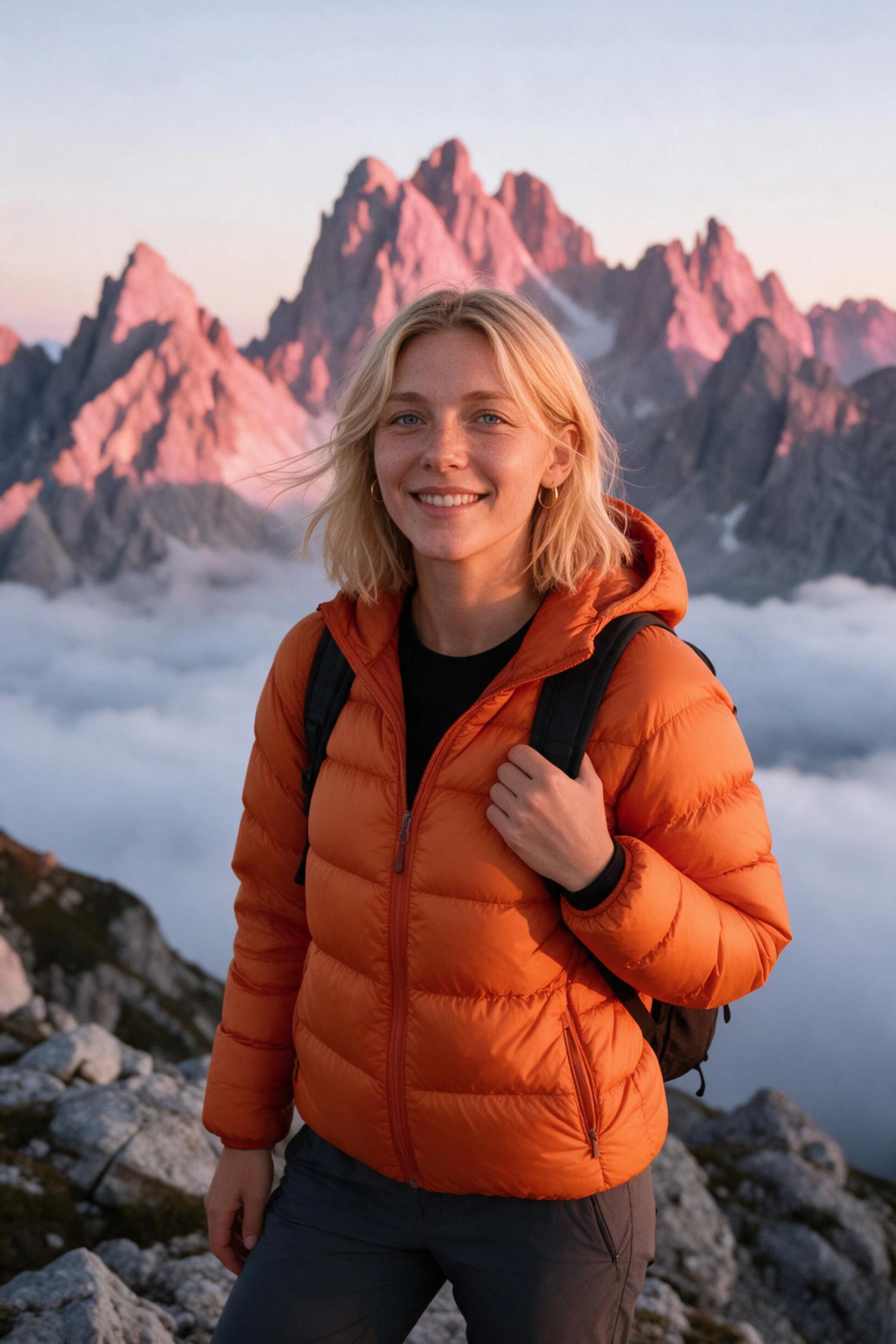
Seated on the Summit Rock
Three-quarter portrait of a person in an olive puffer vest over a navy base layer seated on a flat summit rock, knees up, a steel water bottle beside them, layered peaks soft behind under a pale morning sky. Soft overcast light from above, even and shadowless. 50mm lens at f/2.8, ISO 200. Keep the face structure, skin tone and hairline from the uploaded photo unchanged, natural skin texture, no beautification.
Maps to the Mountain summit look. Sitting low against the rock gives the peaks room to fill the frame above you instead of competing at eye level.
Trail Break, Backpack Down
Waist-up portrait of a person in a grey merino base layer, a plain unbranded canvas backpack resting on a fallen log beside them, tall pines soft behind, sitting on the log mid-break with a relaxed half-smile. Soft filtered forest light from camera left. 85mm lens at f/2, ISO 400. Keep the face structure, skin tone and hairline from the uploaded photo unchanged, natural skin texture, no beautification.
Maps to the Forest trail explorer look. Say the backpack is plain and unbranded or the model prints a logo on it; a resting pose also keeps the hands still, which helps likeness.
Jungle and nature prompts (5)
Jungle and open-country prompts trade a built background for a green or gold one, which removes the landmark problem entirely. Leaves, wheat and open sky need soft, even light so nothing in the frame is guessing at a shadow.
These map to the Tropical jungle travel, Golden wheat field, Open meadow landscape and River nature adventure looks. No prop here needs a name, which makes this the easiest group to get right.
Jungle Path Waterfall Behind
Full-body portrait of a person in a plain white cotton tank and khaki shorts walking a narrow dirt path, broad palm leaves framing both sides, a soft waterfall blurred pale behind through the foliage. Soft overcast daylight filtered through the canopy from above. 35mm lens at f/2.8, ISO 320. Keep the face structure, skin tone and hairline from the uploaded photo unchanged, natural skin texture, no beautification.
Maps to the Tropical jungle travel look. Blurring the waterfall behind the leaves keeps it a texture instead of a sharp focal point the eye fights the face for.
Mossy Riverbank Rest Stop
Waist-up portrait of a person in a grey wool sweater seated on a moss-covered rock beside a slow forest river, water reflecting the green canopy above, mist low over the surface. Soft diffused daylight from camera left, cool green cast. 50mm lens at f/2, ISO 500. Keep the face structure, skin tone and hairline from the uploaded photo unchanged, natural skin texture, no beautification.
Maps to the River nature adventure look. Still water reflecting the canopy is a second light source at no cost, softening the shadow side of the face without another lamp.
Airport, first day and profile picture prompts (5)
The first-day-of-the-trip photo and the avatar crop are two different jobs. One needs a plain, unbranded travel scene; the other needs the face large and the background reduced to a wash of colour.
Two of these five run on the Northern lights look, one leans on the closest available look for an airport scene that has no real match yet, and two are straight profile-picture crops of looks already in the pack.
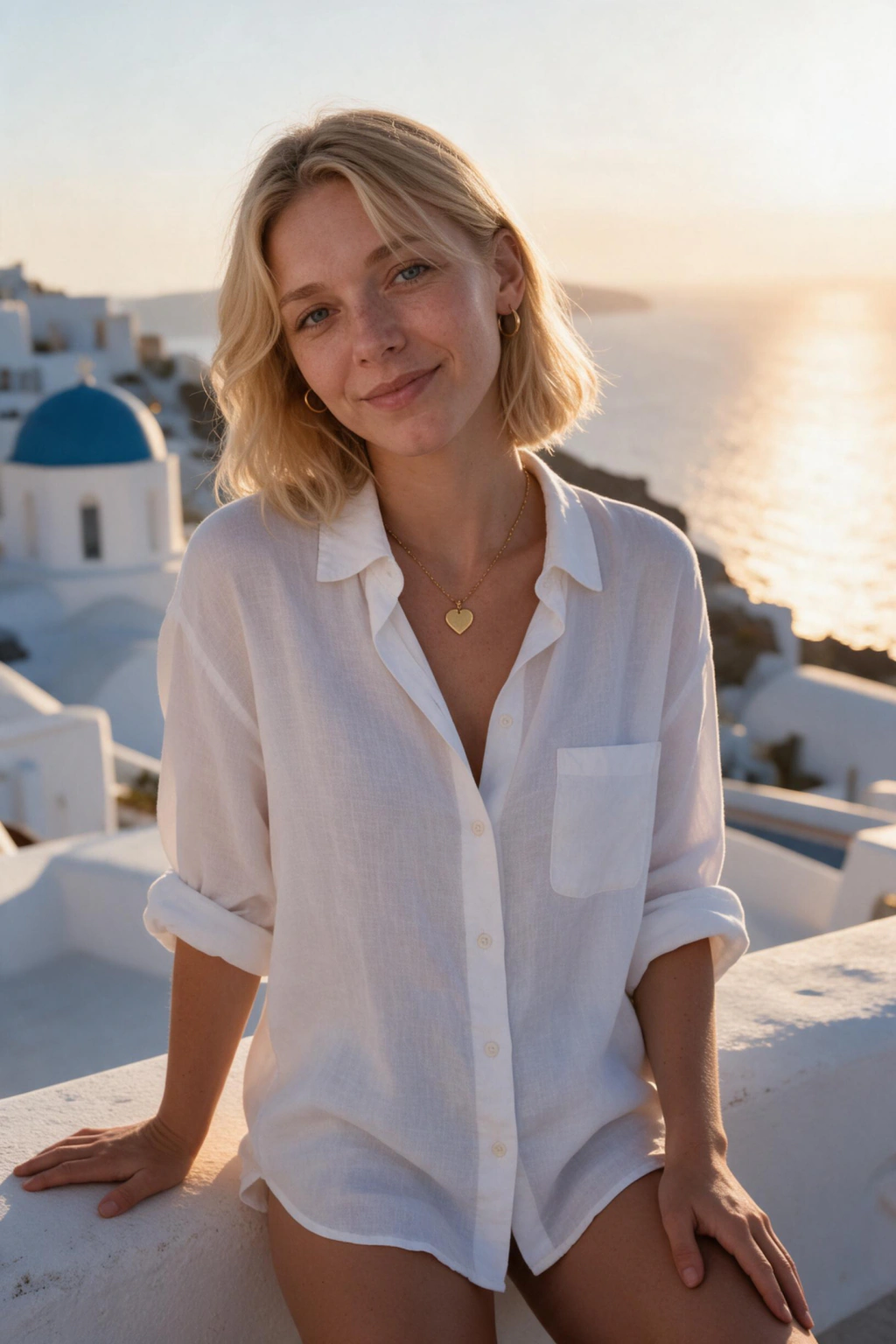
Cabin Window, Aurora Outside
Close waist-up portrait of a person in a cream wool sweater standing at a frosted cabin window, aurora ribbons soft and out of focus through the glass behind them, faint breath visible in the cold air near the pane. Warm lamp light from camera right inside the cabin, cool ambient light bleeding through the window. 85mm lens at f/1.8, ISO 1600. Keep the face structure, skin tone and hairline from the uploaded photo unchanged, natural skin texture, no beautification.
Maps to the Northern lights look. Warm inside, cool outside through the glass is the same two-colour split that makes any window portrait read as a real building.
Gate Window, Plane on the Tarmac
Waist-up portrait of a person in a soft grey travel hoodie, a plain unbranded canvas tote on the seat beside them, seated at a large airport window, a plane's tail fin blurred and unmarked on the tarmac behind, soft grey daylight filling the glass. Even window light from the front, no hard shadow. 50mm lens at f/2, ISO 400. Keep the face structure, skin tone and hairline from the uploaded photo unchanged, natural skin texture, no beautification.
Maps to the Santorini look as the closest match, for the same soft travel-day light. The terminal itself is for ChatGPT or Gemini; keep the tail fin blurred and unmarked or the model prints an airline logo that is not real.
What makes a travel photo read as real instead of a stock photo?
Most failed travel prompts are portraits with a landmark badly drawn behind them. The table lists the cues that carry the destination without a name, and which prompts above use each. Aim for three of the five in any frame.
| Cue | Why it reads as real travel | Prompts above that use it |
|---|---|---|
| Objects, not landmark names: white cube houses, a blue dome, a caldera, a lattice tower blurred far behind | A named landmark gets drawn as a smeared guess; its shape in the background does not | Caldera Edge at Sunset, Old Street, Tower Blurred Behind, Suspension Bridge Cables at Dusk |
| Light angle: low sun behind or to one side, or one warm lamp against a cool window | Flat midday light is the single biggest tell that a travel photo was staged in a studio, not on the trip | Blue Dome Doorway, Ridge Line at Sunrise, Cabin Window, Aurora Outside |
| Local texture underfoot or overhead: cobblestones, wet neon pavement, snow, wheat stalks, moss | Ground and sky textures are cheap for the model to get right and expensive to fake with a word like scenic | Cobblestone Street, Flower Boxes, Neon Crossing at Night, Golden Wheat Field, Countryside Trip |
| Wardrobe suited to climate: linen for heat, wool and shells for cold, technical layers for altitude | An outfit that fights the destination's weather is the second biggest tell after flat light | Ridge Line at Sunrise, Wide Leaves and Green Canopy, Northern Lights, First Night |
| Unbranded gear: a plain bag, an unmarked plane tail, a canvas backpack with no logo | A real brand logo the model invents is the fastest way a travel photo reads as fake | Trail Break, Backpack Down, Gate Window, Plane on the Tarmac |
What is the prompt for trending AI travel photos?
There is no single secret string. The travel prompts that spread on feeds share a shape, not a sentence: an outfit in fabric and colour, a setting in objects, one light source with a direction, a framing and a lens, and a closing line telling the tool to keep the uploaded face unchanged. Every card on this page is written in that shape.
The closing line is the part most people copy without the rest. On its own it does nothing, because a chat tool treats an attached photo as a reference and draws a person who resembles you in a scene it invents. The scene lines make the photo good; the face line only nudges the resemblance.
On MakeAiPhotos the face line is not needed, because the face comes from your selfie, not the prompt. You pick the Santorini look and the caldera, wardrobe and light are already written into it. That is the difference between a trending prompt and a trending photo of you.
What are some good prompts for AI to create realistic travel photos?
Realistic prompts are physical, in four parts. The outfit as fabric and colour: a white linen shirt over pale trousers, not a chic travel outfit. One light source and its side: low sun behind the caldera from camera left. The framing: head and shoulders, waist up, three-quarter or full body. The camera: focal length, aperture and ISO, which set the depth of field and the grain.
Add one line that protects the skin: natural skin texture, no smoothing, keep freckles and pores. Leave out ultra realistic, 8K and masterpiece; they are not physical instructions and the model averages them into gloss.
The full method, with 30 prompts that are not destination-specific, is in our best AI prompt for realistic photos guide. The travel cards above are that method with a passport in it.
Do travel AI photo prompts work for Instagram and profile pictures?
Yes, if the crop is decided before the prompt is written. A profile picture needs the face large and the background one wash of colour, which is why Square Travel Profile Picture, Caldera Blur puts the whitewashed walls behind you as bokeh and nothing else. A feed post can carry a full-body frame with sky. A story needs the subject low and the top third empty for the sticker.
For an aesthetic grid, keep one grade across the set. Write it as film traits (faded blacks, warm highlights, fine grain) instead of a filter name, and repeat it on every prompt so the photos match side by side across a single trip.
Vacation AI photo prompts and travel AI photo prompts describe the same caldera, skyline and trail, so the word does not change the picture. Every card above runs under either heading, pasted into ChatGPT or Gemini or picked as a look on the travel pack.
How do you keep your own face in a travel photo?
Three levers, in order. First, the upload. On MakeAiPhotos the face comes from the selfie, not the prompt, so a sharp, front-facing, current-hair selfie in soft daylight with beauty mode off does more than any wording. One clear selfie is enough.
Second, keep the face uncovered and lit. Sunglasses, a wide hat brim, a scarf over the chin and heavy fog all hide the parts that make the photo recognizably you. Every prompt above keeps the light on the face and nothing covering it.
Third, an identity line if you are pasting into a chat tool: keep the face structure, skin tone and hairline from the uploaded photo unchanged, natural skin texture, no beautification. It helps most where the tool treats your photo as loose inspiration rather than an exact reference.
Are AI travel photos evergreen, and will people know?
Yes to both, with a caveat. Unlike our seasonal prompt packs, a caldera at sunset or a neon crossing works any month you post it, before a trip, after one, or with no trip booked at all. There is no leaf-peak window to beat here.
Whether people can tell is a longer question than this page has room for. Our how to fake travel photos guide covers the exact tells that give an AI travel photo away, and our AI fake travel photos piece covers the ethics of posting one as if you were there. Read either before you caption a photo as a real trip.
What this page is for is different: 30 prompts and looks for a travel-style photo of you, whether or not the trip happened, with the destination set by objects and light rather than a claim.
What are the common travel AI photo prompt mistakes?
Mistake 1: adjectives instead of objects. Scenic, breathtaking, stunning view. Fix: name the cube houses, the dome, the caldera, the wheat stalks.
Mistake 2: no light line. A skyline with no light direction comes back under flat midday haze and the towers go grey. Fix: one sentence naming the source and the side.
Mistake 3: an outfit that fights the climate. A wool coat on a jungle card or a tank top on a snowy ridge breaks the scene before the face does. Fix: linen for heat, wool and shells for cold.
Mistake 4: a named landmark. A famous tower, bridge or mountain comes back as a smeared guess the model half remembers. Fix: describe the shape, a lattice tower, a suspension bridge, a rocky ridge, and let it sit blurred in the background.
Mistake 5: a visible logo. A branded suitcase, a labelled plane tail or a logo on a backpack often prints wrong or invents a mark that does not exist. Fix: say plain and unbranded.
Mistake 6: judging at full screen only. Fix: shrink every result to a phone thumbnail. If the destination and your face still read at 96 pixels, it works as a profile picture; if only the outfit reads, it is a feed post.
Frequently Asked Questions
- What are good travel AI photo prompts?
- Good travel AI photo prompts describe a physical scene: outfit in fabric and colour, one light source with a direction, a framing and a lens, and the destination set by objects instead of a landmark's name. Think white cube houses and a blue dome, or a neon crossing at night. All 30 here follow that shape.
- What is the best AI prompt for a travel photo?
- The best AI travel photo prompt is one a photographer could act on. Caldera Edge at Sunset shows it: a white linen shirt, a caldera-side ledge with whitewashed cube houses and a blue dome behind, low sun from camera left, three-quarter framing, 35mm at f/2.8. Every word is something the model can draw; scenic or breathtaking are not.
- How do I put my face into a travel photo with AI?
- Upload one clear, front-facing selfie into ChatGPT or Gemini along with a scene prompt, and add a closing line asking the tool to keep your face structure, skin tone and hairline unchanged. On MakeAiPhotos you skip that step: upload once, pick a look like Santorini, and the face comes from your selfie automatically.
- Do I need to type these prompts into MakeAiPhotos?
- No. The prompt text is for ChatGPT, Gemini or any text-to-image tool. On MakeAiPhotos you pick the look each card names, Santorini or Dubai skyline on the travel pack, Golden hour shoreline on the summer beach pack. Upload one selfie once and run as many looks as you like, about 2 minutes each, no model training.
- Are travel AI photo prompts only for people who actually travelled?
- No. Unlike a seasonal prompt pack, these scenes work any month, before a trip, after one, or with none booked. The destination is set by objects and light, not a claim, so the same caldera or skyline card works whenever you want the photo.
- Why does my travel AI photo not look like me?
- Usually one of three things: the upload was soft, filtered or angled; the prompt covered the face with sunglasses, a hat brim or heavy fog; or a chat tool treated your photo as loose inspiration, not an identity. Fix the selfie first, keep the face open and lit, and use a selfie-based generator for the profile version.
- How much does it cost to make travel AI photos of yourself?
- On MakeAiPhotos, $14.99 one time buys about 30 finished photos from one selfie, about 2 minutes each, with a 14-day money-back guarantee (terms apply). A real trip to shoot the same set costs the flight alone. You see your own result before you pay.
- Which MakeAiPhotos look matches the travel prompts?
- Santorini, Dubai skyline, Tokyo night, the European old town, Northern lights, and the mountain and jungle looks on the travel pack, plus Golden hour shoreline on the summer beach pack. Prompts describing a scene neither pack has yet, like an airport gate, name the closest look and say the rest is for ChatGPT or Gemini.