Can a headshot be a selfie? The direct answer
Not as taken. A selfie shot at arm's length on the front camera reads as a selfie no matter how well you crop it, and the people looking at headshots can tell in under a second.
The reason is not your face. It is two things the phone did to it. The front camera is a wide lens held close, which pushes the nose and forehead forward and pulls the ears and jaw back. And the light was whatever the room had, usually a ceiling bulb or a bathroom mirror, which flattens skin and puts shadows in the wrong places.
Here is the part the photographers' blogs leave out. A clean selfie is the exact input a headshot generator needs. Upload one to the AI headshot generator, pick a look, and what comes back is a new studio-style portrait of your own unmodified face, in about 2 minutes, with no model training. The selfie stops being the headshot and becomes the reference for it.
So the honest answer has two halves. As a finished photo, a selfie is the wrong tool. As the starting point, one good selfie is all you need.
Selfie or headshot? The tells side by side
Use this to judge the photo you have now. If the left column describes it, it is a selfie, whatever you call it.
| What you see | Selfie | Headshot |
|---|---|---|
| Lens distance | Arm's length, wide lens, nose forward and ears back | Two metres or more, face in natural proportion |
| Light | Whatever the room had, often from above or a mirror | Soft, from one side or the front, no visible source |
| Framing | Arm or shoulder angled toward the camera, head tilted | Square to the camera, head and shoulders, centred |
| Background | Bathroom, car, bedroom, other people | Plain or softly blurred, nothing to read |
| Expression | Posed for a friend | Posed for a stranger deciding whether to trust you |
What a headshot generator does with your selfie
It does not filter or retouch the selfie. It reads your face from it and generates a new photograph of you in a setting and light you choose, with the wide-lens distortion gone because the new image is not shot at arm's length at all.
That is why the input rules are strict and simple. The generator needs your real face, clearly lit, fully visible and undistorted. It does not need a good photo. It needs an honest one.
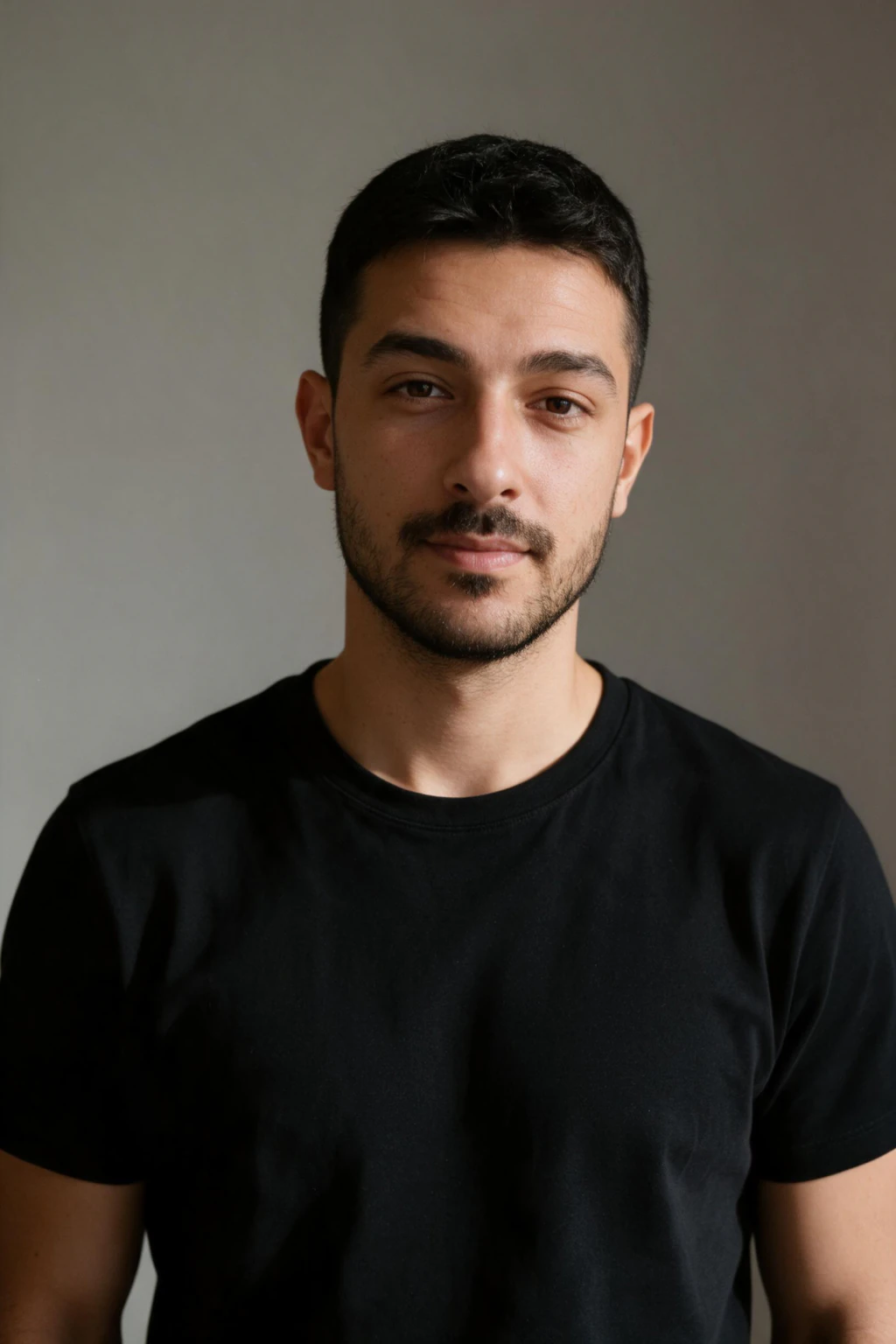
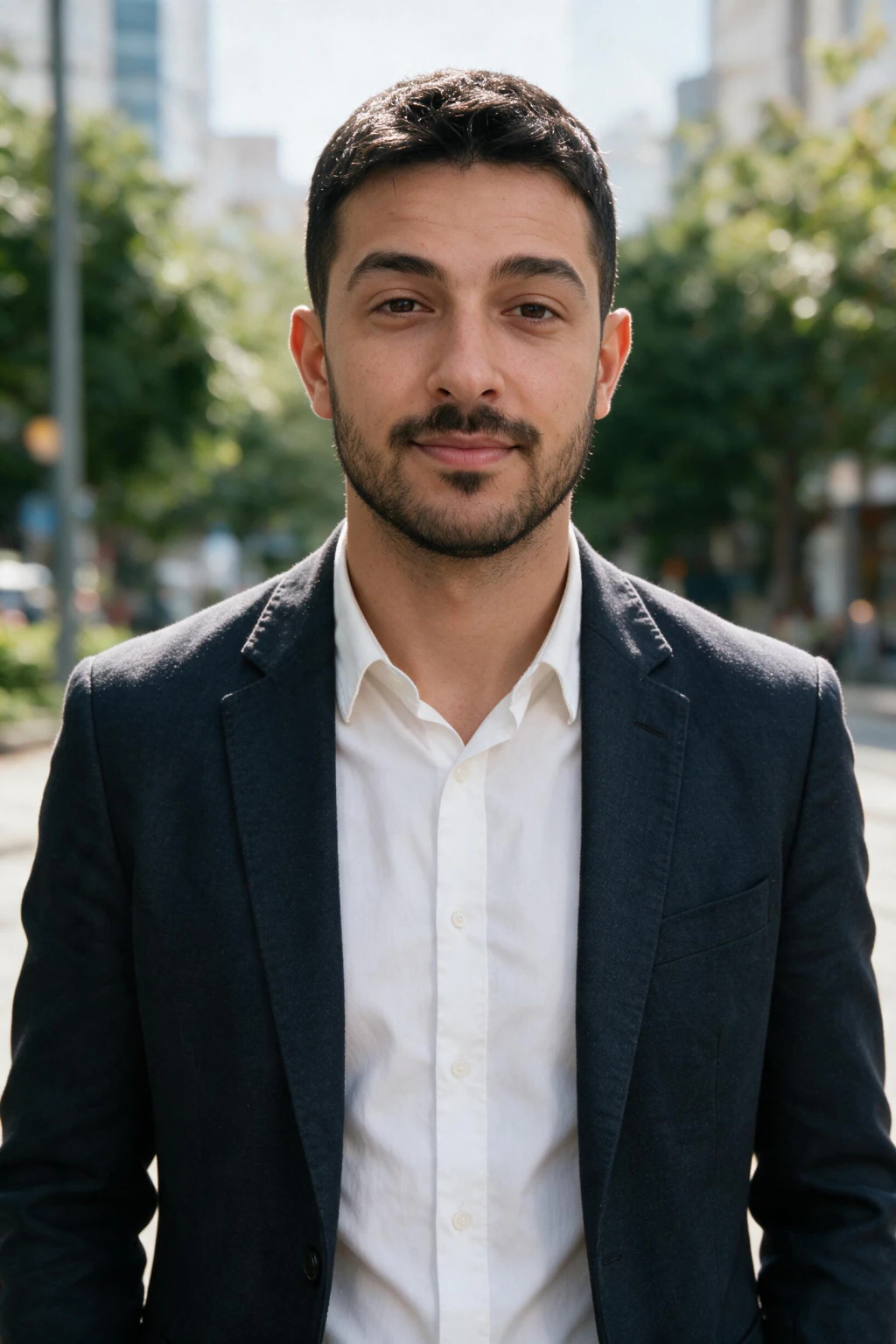
The three looks below came from the single phone selfie on the left. Same person, same jaw, same hairline, three different rooms.


The one selfie worth taking
If you are going to take one photo of yourself today, take this one. It is the input that gives a headshot generator the most to work with, and it takes about a minute.
Stand facing a window in daytime. Not beside it, facing it, so the light lands evenly on your whole face. Switch to the rear camera and either prop the phone at eye level with the timer on, or hold it as far away as your arm allows and crop later.
Turn off beauty mode, portrait mode and every filter. Keep your hair off your face, take off glasses if they reflect the window, and look straight into the lens with a small natural expression. Take five and keep the one where your eyes are sharpest.
What to leave out: sunglasses, hats, a hand on the chin, a second person, and any angle that hides one side of the face. Every one of those removes information the generator needs to keep you looking like you.
Why a selfie on LinkedIn costs you more than you think
LinkedIn has published for years that profiles with a photo get many times more views and connection requests than profiles without one. The less-quoted part is that a bad photo does not get you the full benefit of having one.
Recruiters and hiring managers say in survey after survey that a visible selfie reads as unprepared. One hiring-manager survey a headshot studio published put the share who would not hire someone with a selfie on LinkedIn at over half. Take the exact number with caution, but the direction is consistent across every source.
The cost is not that you look bad. It is that the viewer spends their first second on the photo's quality instead of on you, and most profile visits do not last long enough to recover from that.
Selfie, photographer, or generated: what each actually costs
A selfie costs nothing and gives you the photo everyone in this article is trying to replace. A photographer costs somewhere between $150 and $500 for a session, plus a week or two for edits, and it is the right call when you need twenty polished frames and someone directing your posture.
A generated headshot sits in between. One selfie in, a new photo out in about 2 minutes, $14.99 for about 30 photos, and the face in it is yours without a filter. It cannot direct your posture, and it cannot photograph a room you are actually standing in. It can give you a clean, well-lit portrait of the real you by lunchtime.
There is a longer comparison in AI headshots vs a professional photographer if you are choosing between the two for a whole team.
Will the headshot still look like me?
Yes, if the selfie you upload showed your real face. The generator keeps the jaw, the nose, the eye spacing and the hairline it was given. What it changes is everything around them: the room, the light, the lens distance, the clothes.
Where people get burned is uploading a filtered or beauty-mode selfie. The generator faithfully reproduces the smoothed, slimmed face it was shown, and the result looks like a slightly different person. Feed it the honest photo.
If a result drifts, the causes and fixes are in why AI photos of me do not look like me, and the 7 rules for the upload are in how to take a selfie for AI headshots.
Common mistakes when using a selfie for a headshot
Mistake 1, cropping the bathroom selfie and calling it done. The lens distortion and the mirror light survive any crop.
Mistake 2, uploading a beauty-mode selfie to a generator. The output looks like the filter, not like you.
Mistake 3, front camera at arm's length. Rear camera, propped or held far, is the single biggest quality jump.
Mistake 4, sunglasses or a hat in the reference. Anything covering part of the face is information the generator has to guess.
Mistake 5, generating one headshot and stopping. Generate three or four backgrounds and pick the one that looks most like you on an ordinary Tuesday.
Frequently Asked Questions
- Can you use a selfie as a professional headshot?
- Not as taken. A front-camera selfie at arm's length distorts the face and carries room light, and recruiters read both instantly. What a clean selfie can be is the input: upload it to a headshot generator and the photo that comes back is a new studio-style portrait of your real face.
- Why does a selfie look unprofessional as a headshot?
- Two reasons, neither of them your face. The front camera is a wide lens held close, which pushes the nose forward and pulls the ears back. And the light is whatever the room had, usually from above or a mirror. A headshot fixes both with distance and soft directional light.
- What kind of selfie works for an AI headshot?
- One taken on the rear camera, facing a window in daytime, beauty mode and filters off, face fully visible with nothing across the eyes. It does not need to be a good photo, it needs to be an honest one. Filtered selfies produce headshots that look like the filter rather than you.
- Is a selfie okay for LinkedIn?
- It works but it costs you. LinkedIn profiles with a photo get many times more views than those without, and a visible selfie gives back part of that gain because viewers spend their first second judging the photo. A generated or professional headshot removes that hesitation.
- How long does it take to turn a selfie into a headshot?
- About 2 minutes per photo with MakeAiPhotos, and there is no model to train first. Upload one selfie, pick a background, and the headshot renders straight away. $14.99 covers about 30 photos, so trying three or four backgrounds and keeping the best is the normal workflow.
- Will an AI headshot from my selfie look like me?
- Yes, when the selfie showed your real face. The generator keeps your jaw, nose, eye spacing and hairline and changes the setting, light and lens distance around them. Upload a smoothed or slimmed selfie and it reproduces that instead, which is the one way to get a result that looks like someone else.