How do AI car photo prompts work in 2026?
An AI car photo prompt is a block of text you paste into an image chatbot with a selfie attached, asking for a new photo of you beside a car you do not own. The trend runs on Instagram and TikTok as supercar night shots, desert 4x4s and driver-seat selfies. Most of the prompts shared under it name a real brand and ask for its emblem clearly visible.
Route one is a general image chatbot. Attach a selfie to Gemini or ChatGPT, paste a prompt like the 6 below, and a car photo comes back in under a minute. The catch is the face: every attempt is a fresh drawing, so you look like yourself on one try and like a cousin on the next.
Route two is a generator built to keep your face. Upload one selfie to the AI car photo generator, pick a look, and the photo comes back in about 2 minutes with no model training. The rest of this article gives you the prompts for route one and explains why route two exists.
6 copy-paste AI car photo prompts for Gemini or ChatGPT
Attach one clear selfie, then paste one of these. Each names the car by its shape instead of its brand, sets the camera angle and the light, and bans the badge and the plate, because a prompt that only says me with a supercar gets you a stranger beside a logo.
Prompt 1, supercar at night: Use the face in the uploaded photo exactly, same features, same skin tone, same proportions, do not beautify. Knees-up photo of this person leaning on the front fender of a low black mid-engine two-door supercar, unbadged, no manufacturer emblem, no readable license plate. Wet city street at night after rain, neon signs and orange street lights reflecting in the pavement. Camera at hip height, 45 degrees off the front bumper, front wheel turned toward the camera. Black leather jacket, dark jeans, relaxed stance, looking just past the camera. 50mm lens look, natural film grain, no HDR, no oversharpening.
Prompt 2, muscle car on a desert road: Use the face in the uploaded photo exactly, do not beautify. Photo of this person sitting on the hood of a 1970s-style American two-door muscle car with a long hood and a wide flat grille, matte dark green paint, unbadged, no emblem, no readable plate. Straight two-lane desert road at golden hour, low warm sun from the side, a little dust in the air. Camera low at grille height, front three-quarter angle. White t-shirt, denim jacket, boots. Warm film color, fine grain.
Prompt 3, 4x4 in the desert: Use the face in the uploaded photo exactly, do not beautify. Photo of this person standing on the side step of a boxy lifted off-road 4x4 with a roof rack, a spare wheel on the tailgate and dusty tan paint, unbadged, no emblem, no readable plate. Red sand dunes in late afternoon, long shadows, light haze. Camera at chest height, rear three-quarter angle, one arm resting on the roof rack. Olive utility jacket, cargo trousers, sunglasses pushed up on the head. Natural color, soft haze, sharp but not crunchy.
Prompt 4, JDM garage: Use the face in the uploaded photo exactly, do not beautify. Photo of this person leaning on the rear quarter of a 1990s Japanese-style two-door sports coupe, pearl white paint, tall rear wing, lowered on bronze wheels, unbadged, no emblem, no readable plate, no sticker text. Concrete parking garage at night, green-tinted fluorescent tubes overhead, painted numbers on the pillars. Camera at knee height, 35mm lens look, front three-quarter angle. Black bomber jacket, cargo pants, clean sneakers. Cool fluorescent color cast, slight grain.
Prompt 5, classic convertible: Use the face in the uploaded photo exactly, do not beautify. Photo of this person driving a 1960s-style two-seat convertible with the top down, cream paint, chrome bumpers, a thin wood-rimmed steering wheel, unbadged, no emblem, no readable plate. Coastal cliff road at golden hour, sea behind, hair moving in the wind. Camera from a following car at door height, front three-quarter angle, slight motion blur on the road. White linen shirt, sunglasses in the shirt pocket. Faded warm film look, fine grain.
Prompt 6, driver-seat selfie: Use the face in the uploaded photo exactly, do not beautify. Phone selfie taken by this person from the driver's seat of a modern car, arm's length, one hand on the steering wheel, seatbelt on, soft daylight through the side window lighting the face. Plain dark leather interior, plain steering wheel hub with no logo, no text on the dashboard screen. Slight wide-angle phone lens stretch at the edges, natural skin texture, no beauty filter.
These six cover six of the 10 looks in the AI car photo generator: the supercar at night, the muscle car, the 4x4 in the desert, the JDM garage, the classic convertible and the driver-seat selfie. The other four, the pit lane, the sport bike, the cafe racer and the cruiser at sunset, are ready-made in the pack. The three motorcycle looks get their own prompts in biker AI photo prompts.
What does each prompt word do, and what breaks without it?
Every prompt above carries the same six instructions. Drop one and a specific thing goes wrong, which is why the one-line car prompts copied from captions rarely land.
| Prompt words | What they do | What breaks without them |
|---|---|---|
| Use the face in the uploaded photo exactly, first | Tells the model which face matters before it reads about paint and chrome | A smoother, more symmetrical stranger leaning on the car |
| The car by shape and era: low mid-engine two-door, boxy lifted 4x4 | Gets the silhouette you want without calling up one brand's styling | A brand name, which brings its badge back no matter what else you ask |
| Unbadged, no emblem, no readable license plate | Keeps real marques and invented registrations off your photo | A logo on the grille, often with wrong letters, and a plate with a number on it |
| Camera at hip height, 45 degrees off the front bumper | The three-quarter angle car photographers open with | A flat side-on shot that looks like a sale listing |
| Wet pavement plus named lights: street lights, neon, golden-hour sun | Reflections under the car that tie it to the ground | A car sitting on flat grey tarmac as if it was dropped into the scene |
| Film grain, no HDR, no oversharpening | Kills the glossy render look | Paint and chrome so crisp it reads as a video game screenshot |
Why does naming the car brand put a badge and a plate on your photo?
A named car comes with its emblem because nearly every photo of that car the model learned from shows one. Type the brand and you get the grille badge, the lettering on the tail, and usually a license plate, since real cars on real streets carry them. Many of the car prompts shared online go further and ask for the logo clearly visible.
That is three problems on a photo you plan to post. Emblems and lettering are where image models most often go visibly wrong: a letter missing, a crest slightly off its real shape, a wordmark that almost spells the name. Anyone who knows cars checks the badge first, and a wrong badge gives the whole photo away.
The plate is the second problem. The model writes something that looks like a real registration, in a real format, and a readable plate on a public profile is a number that can belong to a stranger's car. Nobody wants their photo tied to someone else's vehicle.
The third is what the badge says about you. A named supercar on a dating or social profile reads as a claim of ownership or as a sponsored post, and the first message you get is whether it is yours. An unbadged car keeps the mood of the photo without the claim.
The fix is one line in every prompt: unbadged, no manufacturer emblem, no readable license plate, plus a description of the car by its shape and era. Every car in the AI car photo generator is built that way, with no real marque and no plate you can read.
How does a real car photographer shoot a car portrait?
The look you are prompting for is a car photographer's standard frame, and naming its parts is what separates a convincing prompt from a render. The default is the front three-quarter angle. One car photography guide sets the camera roughly 45 degrees off the front bumper with the lens at the top of the headlight, and notes that a lens dropped to grille height makes a car look sportier.
With you in the frame, split the difference. A lens around hip height keeps the car low and planted without shooting up your nose, and it is the height the prompts above ask for.
The front wheel matters more than it looks. Photographers turn it slightly toward the camera so the face of the wheel shows, which adds the forward lean you see in every car advert. Wheels pointing straight ahead read flat.
Wet pavement does the grounding. One automotive photography guide describes wet tarmac as turning a flat road into a mirror that reflects the car, the sky and every light around it. Those reflections under the tyres are exactly what an AI car photo is missing when the car looks dropped in.
Golden hour is the automotive default, and the same guide adds the 15 to 25 minutes after sunset when the sky still holds color. After that, practical lights take over. Parking the car near street lights, lit shop windows or neon gives a mix of warm and cool tones on the paint, which is why the supercar prompt names both.
Your phone gets most of this wrong on its own. The wide front lens stretches the car and your face at arm's length, HDR flattens the reflections into grey, and sharpening turns chrome into glitter. The full list of realism checks for any AI photo is in how to make AI photos look realistic.
Why does the chatbot change your face beside the car?
A general image chatbot does not keep your face and swap the background. It draws the whole frame again, your face included, from its own reading of the person in your selfie, and every attempt is a new drawing. That is why the same prompt gives you three slightly different people.
Car shots make it worse than most scenes. In a full-length photo beside a car, your face is a small part of the image while paint, chrome, glass and reflections soak up most of the detail. The features that make you recognisable, the nose bridge, the jaw, the space between the eyes, get smoothed toward an average face.
Three things help inside a chatbot: a sharp front-facing selfie, the face instruction as the first line, and framing from the knees up so your face gets more of the frame. Even then, the likeness varies from attempt to attempt.
A generator built for photos of you works the other way round. MakeAiPhotos starts from your selfie, keeps your features, and generates the car, the street and the light around them, the same approach behind all its AI photos of yourself. Pick a look in the AI car photo generator and it comes back in about 2 minutes, with no model training.
Same selfie, three car looks
These three came from one phone selfie, run through MakeAiPhotos looks built on the recipe above: car described by shape, no badge, no plate, three-quarter angle, real light on the paint.

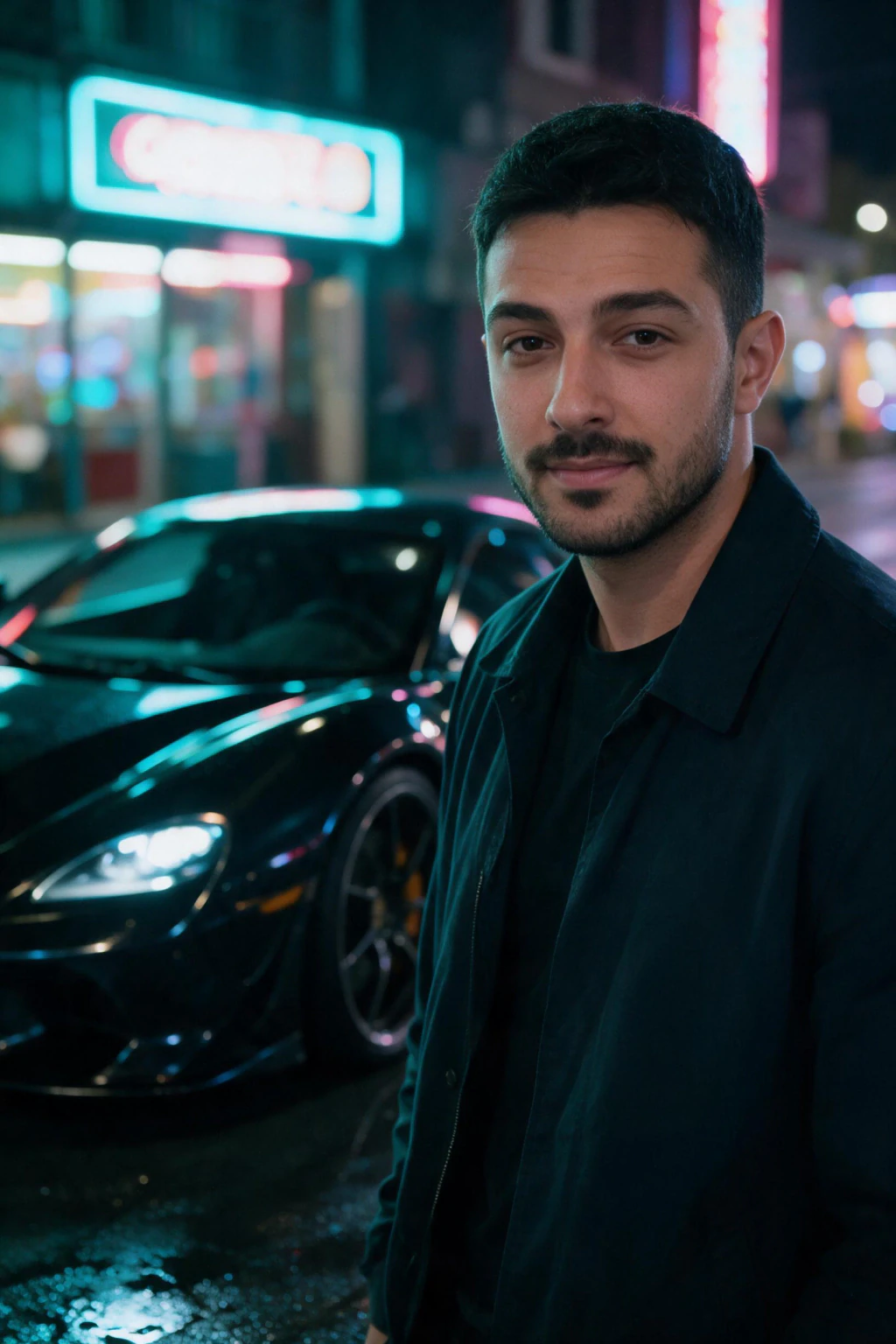
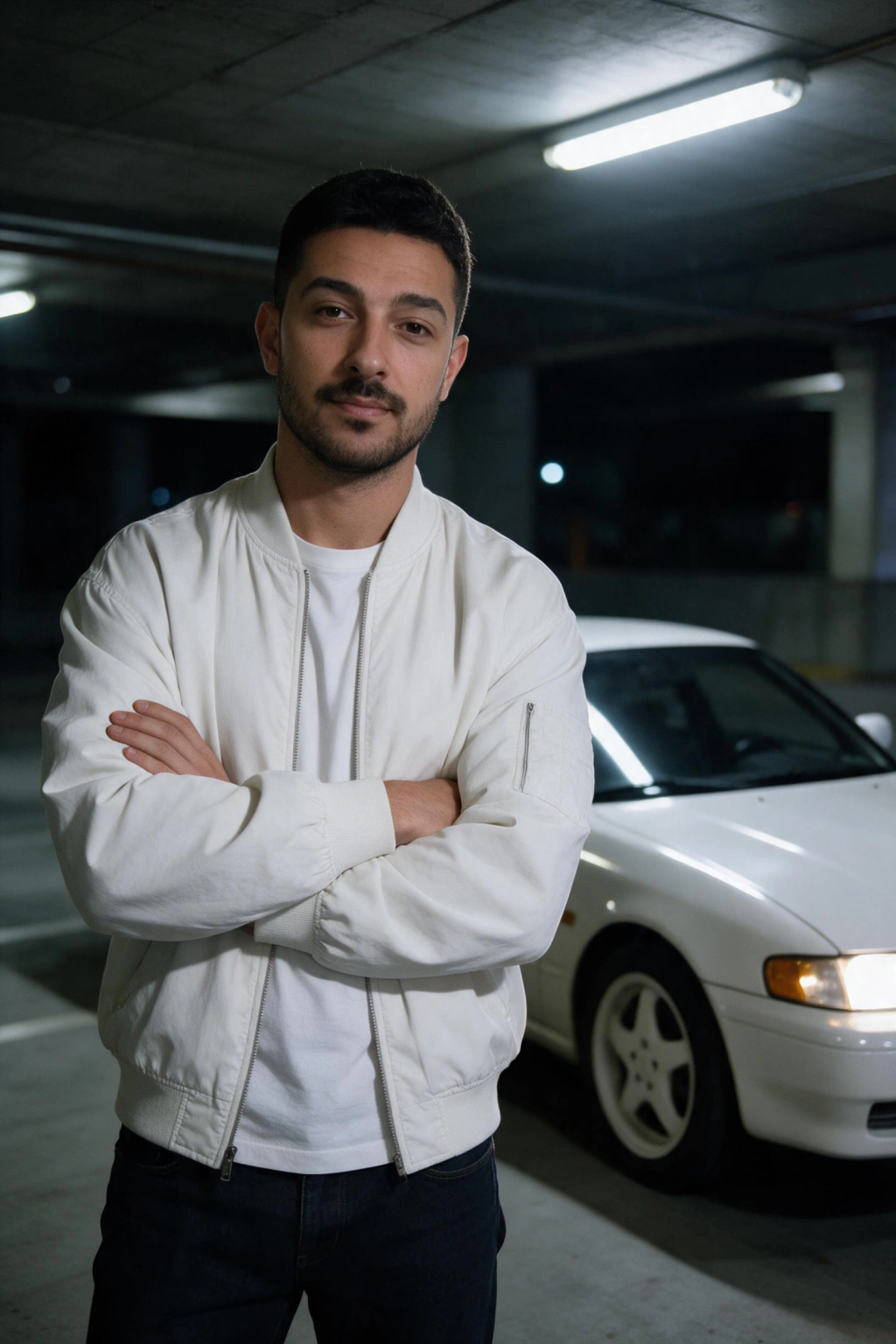
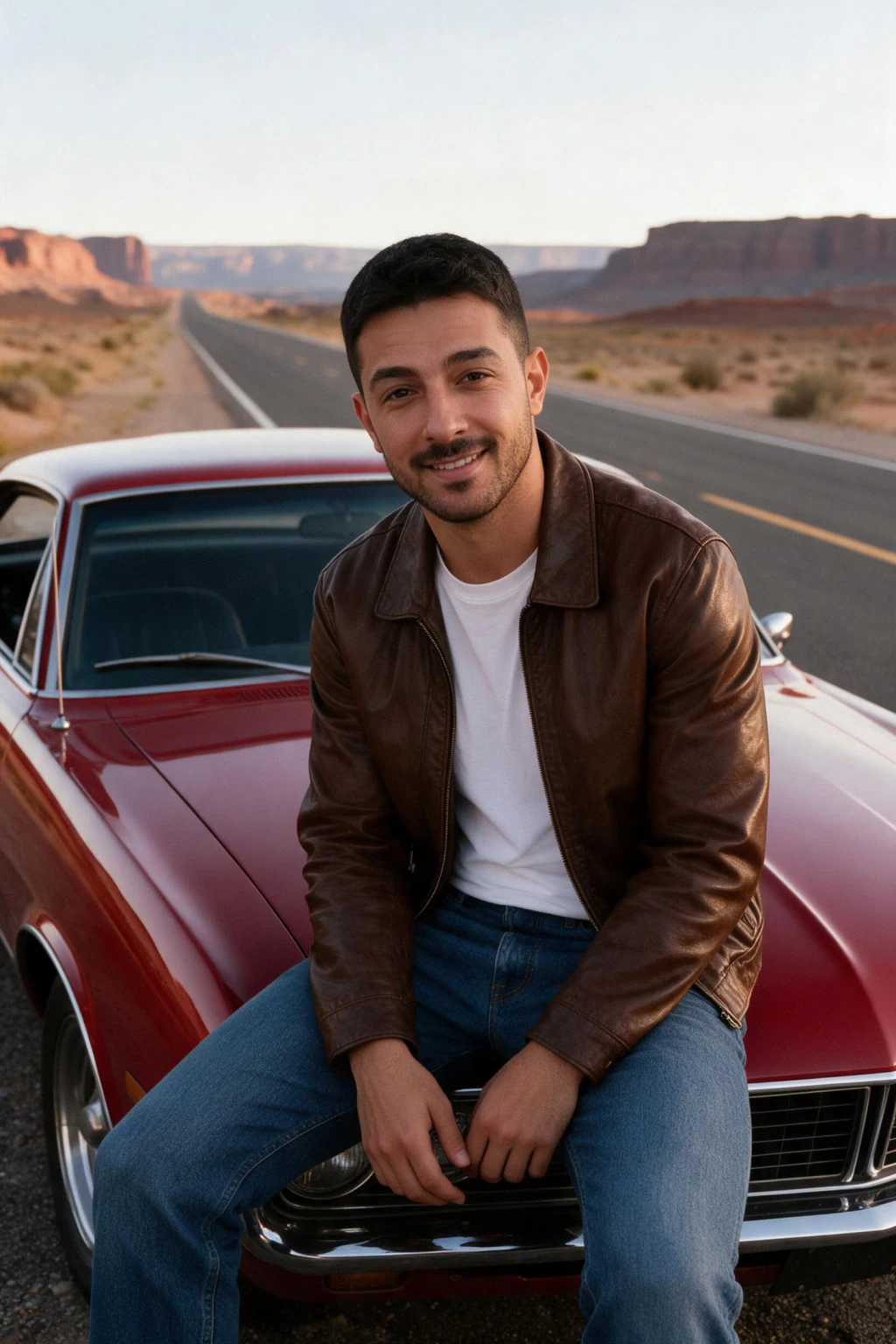
Which AI car photo should you post?
The pack has 10 looks, 7 cars and 3 motorcycles, and they land differently. The supercar at night is the one the trend is known for and gets the biggest reaction. The driver-seat selfie is the most believable as a profile picture, because it is how people really photograph themselves in cars.
The muscle car, the 4x4 in the desert and the classic convertible are the outdoors set, warmer and easier to post on a dating profile without it reading as a flex. The JDM garage and the pit lane are for anyone who follows car culture or motorsport. The sport bike, the cafe racer and the cruiser at sunset are covered in biker AI photo prompts.
If the car is really about the lifestyle, the AI luxury lifestyle photos pack covers yachts, private jets and rooftop terraces from the same selfie.
One upload covers all 10 looks. $14.99 buys about 15 photos at about 2 minutes each, you see your own result before you pay, and a 14-day money-back guarantee comes with it.
Frequently Asked Questions
- What is the best AI car photo prompt for Gemini?
- The best one starts with an instruction to use the exact face from your photo, describes the car by shape and era instead of brand, and bans the emblem and a readable plate. Then it sets a three-quarter angle at hip height, wet pavement under named street lights, and film grain with no HDR.
- Why does Gemini change my face in car photos?
- Because a general chatbot redraws the whole frame, your face included, on every attempt. In a full-length car shot your face is a small part of the image while paint, chrome and reflections take most of the detail, so it drifts toward an average face. Frame from the knees up and put the face instruction first.
- Should I name the car brand in an AI car photo prompt?
- No, if the photo is going on a public profile. Naming a brand makes the model draw its emblem, often with wrong lettering, and usually an invented plate that looks like a real registration. Describe the car by shape and era instead, and add unbadged, no emblem and no readable license plate.
- Can I use a ChatGPT car photo prompt with my own selfie?
- Yes. Attach one clear, front-facing selfie taken in daylight, then paste the prompt with the face instruction as the first line. Expect the likeness to vary between attempts, since each one is a fresh drawing. If it keeps drifting, a one-selfie generator that keeps your features gives you the same face every time.
- How long does it take to make an AI photo with a car?
- About 2 minutes per photo on MakeAiPhotos, from one clear selfie with no model training. $14.99 one time covers about 15 photos across the pack's 10 looks, 7 cars and 3 motorcycles. You see your own result before you pay, and a 14-day money-back guarantee comes with every purchase.
- What is the best angle for a photo with a car?
- The front three-quarter angle, about 45 degrees off the front bumper, with the front wheel turned slightly toward the camera. Car photographers set the lens near headlight height when the car is alone. With a person in the frame, hip height keeps the car looking planted and your face at a natural angle.