What are the best muscle car photoshoot ideas?
The best muscle car photoshoot ideas all use the same setting: one empty two-lane desert highway, one unbadged 1960s-style coupe, and four poses that hold from a single clean angle. Sitting on the hood, leaning on the driver door, a three-quarter stance with a hand on the roof, and a walk-away down the painted centre line.
You can get there two ways. Paste one of the 8 prompts below into Gemini or ChatGPT with a selfie attached, and a desert road photo comes back in under a minute, though the face changes on every attempt. Or upload one selfie to the AI car and motorcycle photo generator, pick the muscle car look, and the photo comes back in about 2 minutes with your own face kept.
Either way, the rule that decides whether the photo survives a second look is to never name the manufacturer. A marque in the prompt brings its badge to the grille, usually with the lettering wrong, plus an invented license plate. Describe the car by its shape and era instead: long hood, wide flat grille, deep red paint, unbadged.
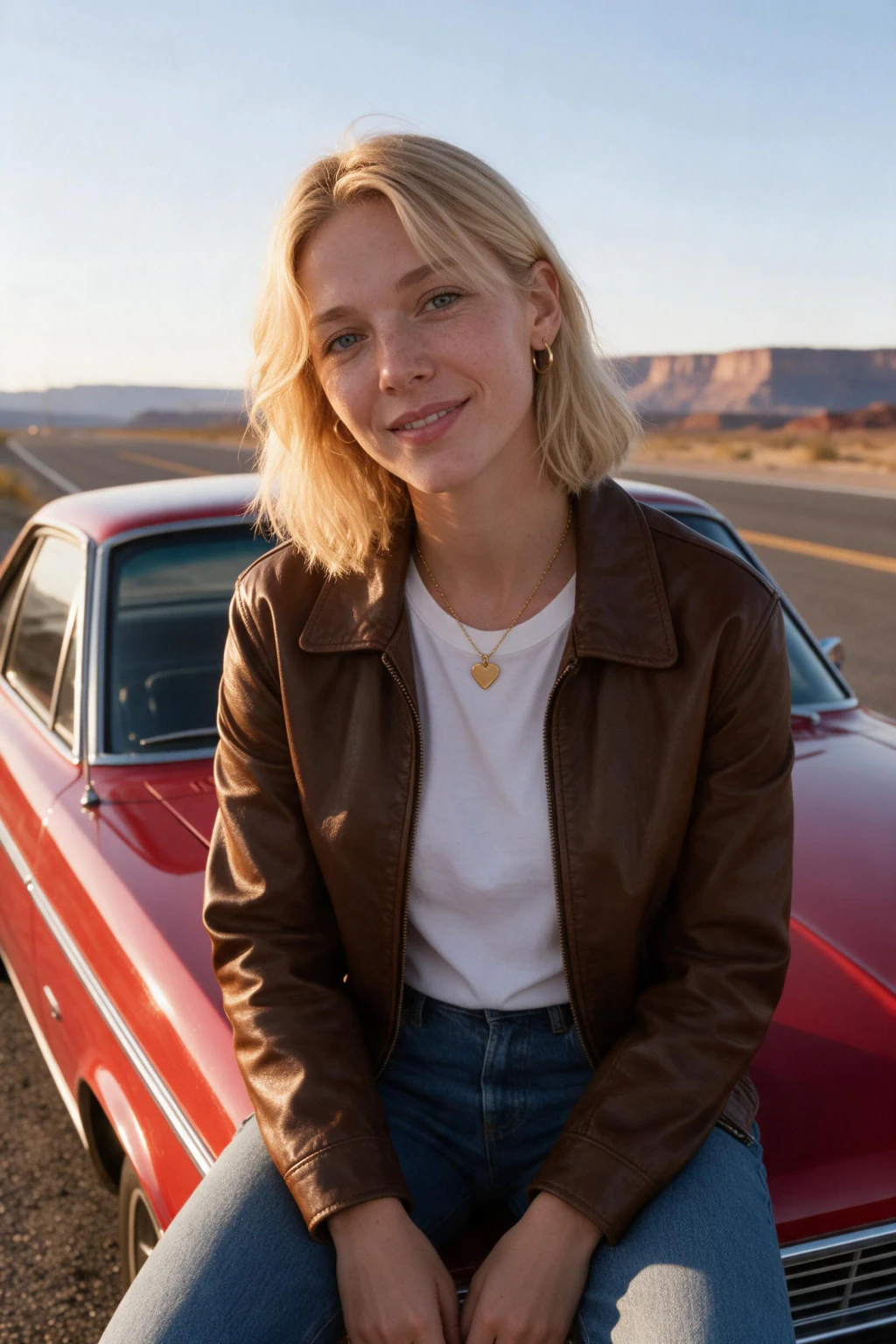
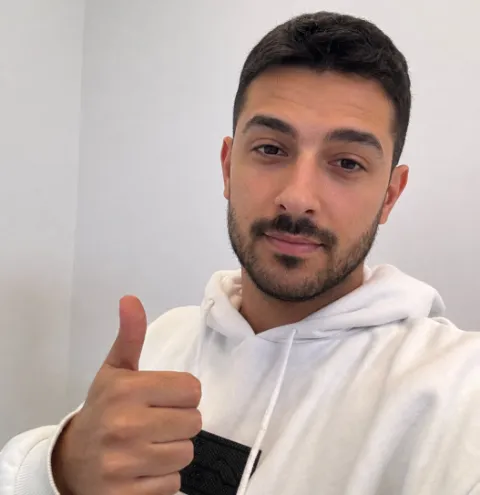
One phone selfie to 4 AI photos of the same person
8 copy-paste muscle car photo prompts for Gemini or ChatGPT
Attach one clear selfie, then paste one of these. Every prompt names the car by shape and era instead of by manufacturer, fixes the camera height as well as the pose, and bans the badge and the plate, because a prompt that only says me with a muscle car gets you a stranger beside a misspelled logo.
All eight run on the same road, so you can generate the set from one upload and pick later. The look each card maps to is named at the end of it, which is how you skip the prompt box entirely.
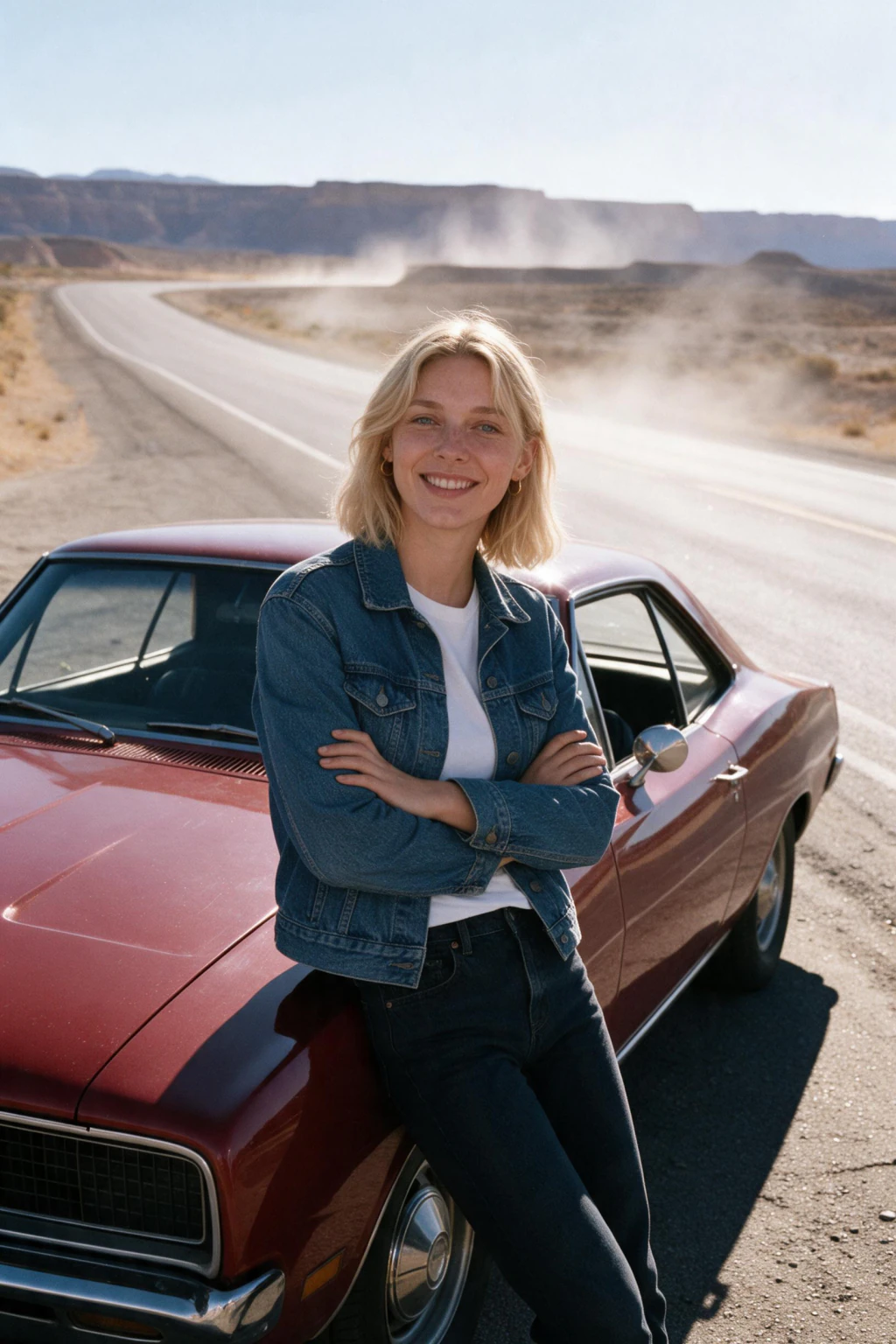
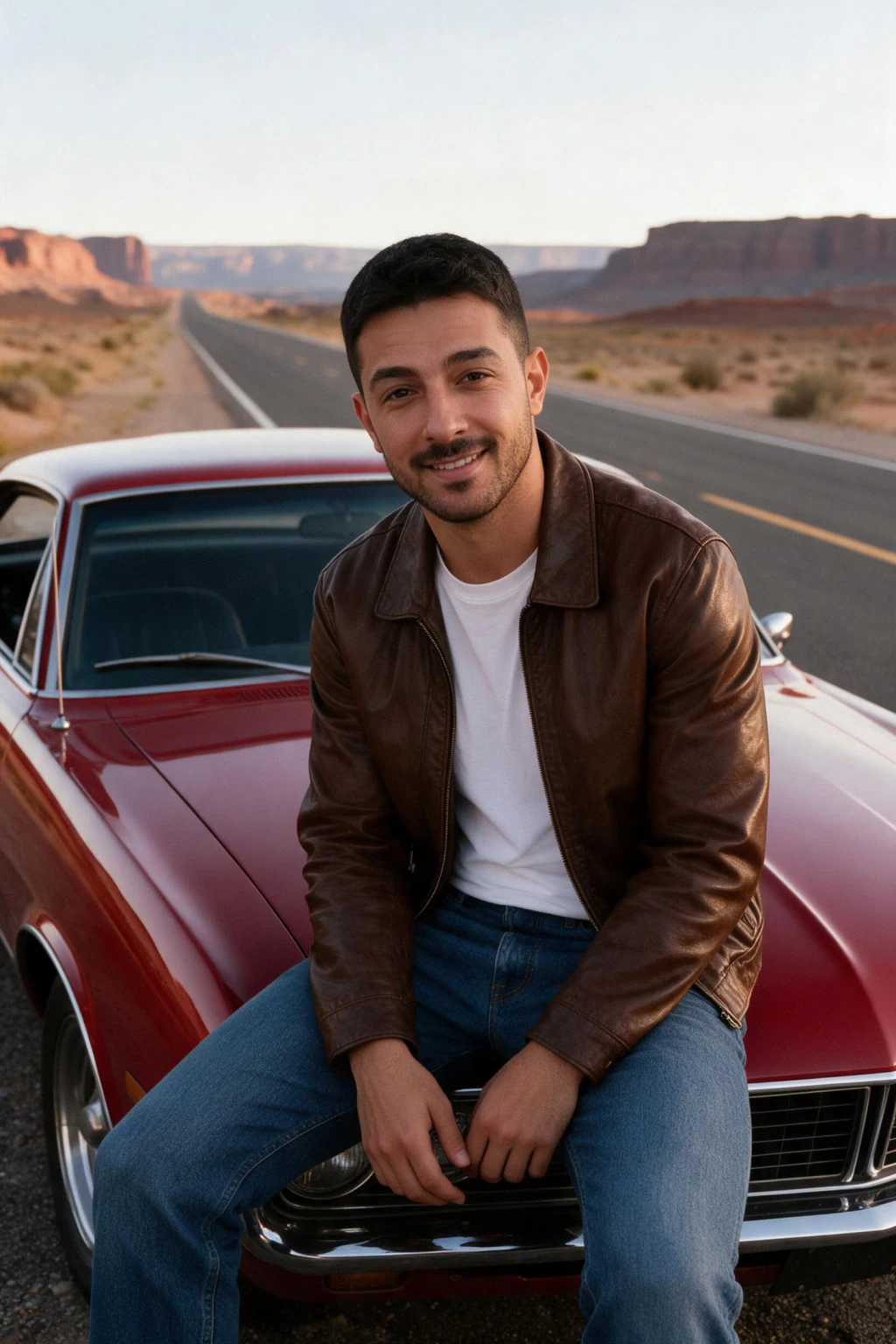
Hood Sit at Golden Hour
Use the face in the uploaded photo exactly, do not beautify. Full-body photo of this person sitting on the hood of a deep red 1960s-style two-door muscle car, long hood, wide flat grille, unbadged, no emblem, no readable plate. Empty desert highway at golden hour, low warm sun from camera left. Camera at waist height tilted up. 50mm lens look, warm film grain.
Maps to the Muscle car look. Waist height tilted up is what puts the horizon behind your shoulders instead of cutting through your face. Shoot it from standing and the road swallows the car.
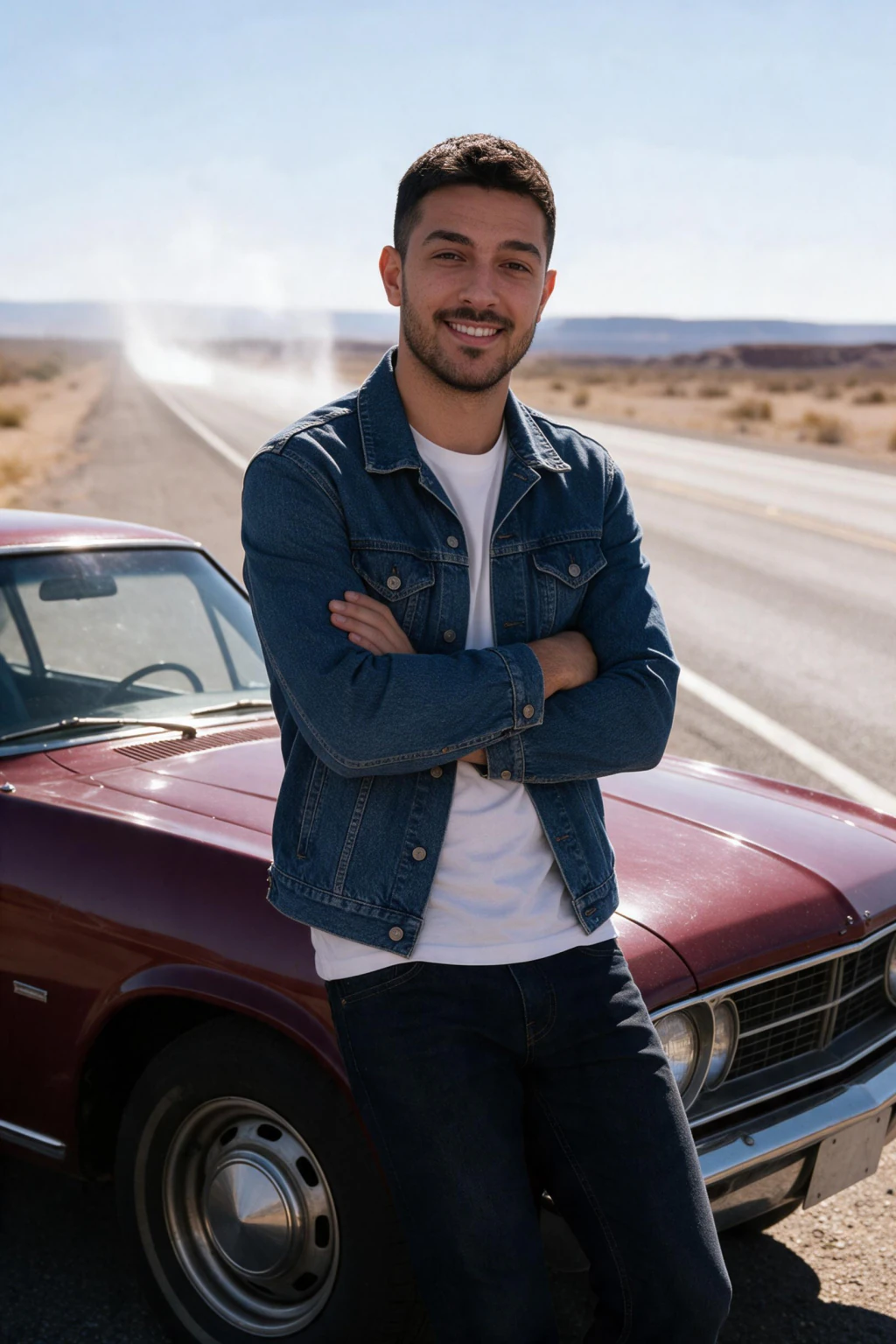
Driver Door Lean at Midday
Use the face in the uploaded photo exactly, do not beautify. Waist-up photo of this person leaning one shoulder against the driver door of the same deep red unbadged muscle car, hip rolled back, arms loose. Flat midday desert sun from directly above, heat shimmer rising off the asphalt behind. Camera at chest height, straight on. 35mm lens look, natural colour, no HDR.
Maps to the Muscle car, leaning on the door look. Arms crossed tight is what ruins this one, because it reads as a stock photo. Naming loose arms and a rolled-back hip is what keeps it relaxed.
Hand on the Roof, Three-Quarter Stance
Use the face in the uploaded photo exactly, do not beautify. Three-quarter body photo of this person standing beside a deep red unbadged 1960s-style muscle car, back leg carrying the weight, front knee soft, relaxed fingers resting on the roof edge. Late afternoon desert light from camera right, long shadow across the road. Camera slightly below eye level. 50mm lens look, fine grain.
Maps to the Muscle car look. Asking for relaxed fingers matters: a flat palm pressed on the roof reads as bracing rather than leaning, and it is the detail that makes the whole pose look staged.
Walk-Away Down the Centre Line
Use the face in the uploaded photo exactly, do not beautify. Full-body photo from behind of this person walking away down the painted centre line of an empty desert highway, glancing back over one shoulder, a deep red unbadged muscle car parked on the shoulder behind. Low backlight from camera front, dust in the air. Camera at knee height. 35mm lens look, warm haze.
Maps to the Muscle car look. The glance back is what keeps your face in the photo at all. Drop it and the model returns a back-of-head shot that works as a mood image and not as a photo of you.
Dust Cloud Behind the Rear Wheels
Use the face in the uploaded photo exactly, do not beautify. Waist-up photo of this person standing beside a parked deep red unbadged muscle car on a desert road while a slow dust cloud drifts past the rear wheels. Hard side sun from camera left through the dust. Camera at chest height, rear three-quarter angle on the car. 35mm lens look, warm haze, fine grain.
Maps to the Muscle car look. Say drifting or settling dust rather than burnout: a spinning-wheel prompt puts motion blur across your face, and the car stops reading as parked.
Headlights On at Blue Hour
Use the face in the uploaded photo exactly, do not beautify. Waist-up photo of this person leaning on the front fender of a deep red unbadged 1960s-style muscle car with its headlights on, parked on an empty desert road twenty minutes after sunset. Deep blue sky, warm headlight spill across the road from camera right. Camera at hip height. 50mm lens look, visible grain.
Maps to the Muscle car look. Blue hour is the one window where the sky and the headlights are close enough in brightness to hold both. Ask for full night and the car disappears into black.
Open Door, One Boot on the Sill
Use the face in the uploaded photo exactly, do not beautify. Full-body photo of this person standing in the open driver door of a deep red unbadged muscle car, one boot on the sill, one forearm resting on the roof, looking down the empty desert road. Warm low sun from behind the car. Camera at waist height, front three-quarter angle. 35mm lens look, warm film colour.
Maps to the Muscle car, leaning on the door look. Naming both the boot and the forearm stops the model drawing you simply standing next to an open door, which is the version it defaults to.
Low Grille-Height Front Three-Quarter
Use the face in the uploaded photo exactly, do not beautify. Full-body photo of this person standing at the front corner of a deep red unbadged 1960s-style muscle car, long hood filling the foreground, front wheel turned toward the camera. Empty desert highway, hard afternoon sun from camera right. Camera low at grille height, front three-quarter angle. 35mm lens look, fine grain.
Maps to the Muscle car look. Grille height is the angle that makes the car read long and low, and turning the front wheel toward the camera adds the forward lean every car advert uses.
How do you nail the hood-sitting pose?
Weight goes on the back hip, not the front foot, so the pose reads relaxed instead of perched. The front boot rests flat on the bumper edge rather than the fender, since a fender flexes and looks unsteady in a still frame.
Camera angle matters as much as the pose itself. Shoot from waist height or lower, tilted slightly up, so the desert horizon splits the frame behind you instead of cutting straight through your face. That single instruction is the difference between the first prompt above and a snapshot.
What should you wear for a desert road photoshoot?
Plain denim and a solid tee read best against desert dust haze, since busy patterns strobe and flatten out in bright, flat light. Keep it to one or two colours total.
A denim jacket adds structure without adding pattern, and boots finish the look better than sneakers beside a muscle car. Skip logos and text, they pull focus off your face in a still photo and they are exactly what an image model renders worst.
Is it okay to sit on the hood of a car?
Only on a parked car with the engine off, pulled fully off the traffic lane, and only when the owner has said yes, since a hood can dent under weight and a moving car is never safe to pose on.
If you are shooting with a rental or a friend's car, ask first and keep boots off the fender and windshield glass. None of that applies when the muscle car in the photo is generated rather than real.
What are some Americana photoshoot ideas on the same road?
An empty desert highway already reads as an Americana setting on its own, without a gas station, a diner, or a flag anywhere in frame. A muscle car parked on the shoulder at golden hour carries the theme by itself.
Denim, boots, and mirrored sunglasses read as Americana without adding a single prop. Keep the background simple, one road and one horizon, so the car and the outfit do the actual work.
What does each prompt line do, and what breaks without it?
Every prompt above carries the same six instructions. Drop one and a specific thing goes wrong, which is why the one-line car prompts copied out of captions almost never land.
The manufacturer line is the one people skip. A named marque comes with its emblem because nearly every photo of that car the model learned from carries one, and lettering is where image models most visibly fail. You get a wordmark that almost spells the name, plus a plate in a real registration format.
| Prompt line | What it does | What breaks without it |
|---|---|---|
| Use the face in the uploaded photo exactly, on the first line | Tells the model which face matters before it reads a word about paint or chrome | A smoother, more symmetrical stranger sitting on the hood |
| The car by shape and era: long hood, wide flat grille, 1960s-style two-door | Gets the silhouette without calling up one manufacturer's styling | A generic modern coupe, or a marque sneaking back in with its own badge |
| Unbadged, no emblem, no readable license plate | Keeps real marques and invented registrations off the photo | A badge on the grille with the letters wrong, and a plate carrying a real-format number |
| Camera height named: waist height tilted up, or low at grille height | Decides whether the horizon sits behind your shoulders or through your face | An eye-level snapshot where the road swallows the car |
| One desert light with a direction: low sun from camera left, hard sun from above | Gives the paint a lit side and the road a shadow to sit in | Flat even light, the render look that makes the car read as dropped in |
| Film grain, no HDR, no oversharpening | Kills the glossy render finish on red paint and chrome | Paint so crisp the whole frame reads as a video game screenshot |
Why does the chatbot change your face beside the car?
A general image chatbot does not keep your face and drop the desert in behind it. It draws the whole frame again, your face included, from its own reading of the selfie you attached, and every attempt is a new drawing. That is why the same prompt returns three slightly different people.
Desert car shots are harder than most scenes. In a full-body frame beside a long hood, your face is a small part of the picture while red paint, chrome and bright sand take most of the detail. The features that make you recognisable, the nose bridge, the jaw line, the space between the eyes, smooth toward an average.
Three things help inside a chatbot. Attach a sharp, front-facing selfie taken in daylight with beauty mode off. Put the face instruction on the first line, before any word about paint. Pick the waist-up prompts rather than the full-body ones, so your face gets more of the frame. Even then, the likeness moves between tries.
A generator built for photos of you works the other way round. MakeAiPhotos starts from your selfie, holds your features, and generates the car, the road and the light around them. Pick the muscle car look in the AI car and motorcycle photo generator and the photo comes back in about 2 minutes with no model training. The general prompt-writing rules live in AI car photo prompts.
Which muscle car photo should you post?
The eight land differently. The hood sit at golden hour is the one people share, because it uses the whole car as a stage and puts your face above the grille line. The door lean at midday is the one that works as a profile picture, since it is waist-up and your face carries the frame.
The walk-away and the dust cloud are mood images. They look good in a grid and they do not work as the photo somebody judges you by, because your face is either turned away or half hidden in haze. Keep one of those as a second slide, not a first.
The blue hour frame is the one worth generating twice. Headlights against a deep blue sky is a narrow window in real life, which is exactly why it reads as a photo somebody planned rather than a snapshot they got lucky with.
None of it needs a real car. A real muscle car shoot means a photographer plus a rental, since few people keep a 1960s coupe in a garage, and a location fee if the road is not public land. MakeAiPhotos is $14.99 one time for 300 credits, about 30 finished photos at 10 credits each and about 2 minutes per photo. You see your own result before you pay, and a 14-day money-back guarantee comes with it.
Frequently Asked Questions
- What is the best muscle car photo prompt for Gemini?
- The best one opens with an instruction to use the exact face from your uploaded photo, describes the car as a deep red 1960s-style two-door with a long hood and a wide flat grille, and bans the emblem and any readable plate. Then it names the camera height, one desert light direction, and film grain instead of HDR.
- What are creative poses for a car photoshoot?
- Four work well on a desert road: sitting on the hood with a boot braced on the bumper, leaning on the driver door, a three-quarter stance with relaxed fingers on the roof, and a walk-away down the centre line with a glance back. Each needs one clean angle and one named camera height, not a full crew.
- Should I name the car manufacturer in the prompt?
- No, not if the photo is going anywhere public. A named marque makes the model draw its emblem on the grille, usually with the lettering wrong, and add a license plate in a real registration format. Describe the car by shape and era instead, and add unbadged, no emblem, no readable license plate.
- What should you wear for a desert photoshoot?
- Plain denim or a solid tee in one or two colours, since busy patterns strobe against dust haze and flat desert light. A denim jacket adds structure without a pattern, and boots read better than sneakers beside a muscle car. Skip logos and text, which are what an image model renders worst.
- Is it okay to sit on the hood of a car?
- Only on a parked car with the engine off, pulled off the traffic lane, and only if the owner has said yes, since a hood can dent under weight. Keep boots on the bumper edge, never the fender or the windshield. None of that applies when the car in the photo is generated rather than real.
- What are some Americana photoshoot ideas?
- An empty desert highway is already Americana on its own, with no gas station or diner needed. Pair it with plain denim, boots, and mirrored sunglasses, and keep the background to one road and one horizon so the car and the outfit carry the shot rather than a pile of props.
- What does a muscle car photoshoot usually cost?
- A real one usually means a hired photographer plus a car rental, and a location fee if the road is not public land. MakeAiPhotos is $14.99 one time for 300 credits, which is about 30 finished photos at 10 credits each, about 2 minutes per photo, with no rental or photographer booking involved.
- Do you need to own a muscle car to get this photo?
- No. MakeAiPhotos generates the muscle car, the desert road and the light around one selfie you upload, so there is no rental, no owner to ask and no car show to attend. Pick the muscle car look and the photo comes back in about 2 minutes with your own face kept.