What is a comp card in modeling?
A comp card, short for composite card, is a printed card that works as your modeling business card. You hand it out at castings and go-sees so a client walks away with your face, your range, and your stats on one piece of card stock.
It is a finished marketing product, not a working document. Every image on it is your best, chosen and usually retouched, which is exactly the opposite of digitals.
Most new models do not make their own. Your agency typically designs the card from your portfolio after you sign, so your first job is good digitals and portfolio images, not a print order.

One phone selfie to 5 AI photos of the same person





What size is a model comp card?
The standard comp card size in the US is 5.5 by 8.5 inches, which is exactly half of a letter sheet. In metric markets the equivalent is A5, and printers typically run cards on 350 to 400 gsm stock so they survive a casting day.
Both sides get printed. Keep files at 300 dpi or higher with a small bleed so images reach the edge cleanly.

What goes on the front and back of a comp card?
The front is one image: your strongest, most current headshot, with your name set large and clean. Nothing else competes with the face.
The back carries three to five images that prove range: a full-body shot, an editorial or commercial look, a smiling commercial frame, and one strong profile or movement shot are the usual mix.
The back also lists your stats: height, bust or chest, waist, hips, shoe size, hair color, eye color, and your agency contact. A client should be able to check whether you fit a sample size without asking a single question.

Do you need a comp card before signing with an agency?
No. Agencies scout from digitals and snapshots, not from printed cards, and most prefer that new faces arrive without one so the agency can control the card's look.
The order is digitals first, then signing, then a portfolio, then the comp card built from that portfolio. Spending money on a card before you have representation usually means reprinting it weeks later.
If you are freelancing without an agency, a simple self-made card is fine. Keep the layout plain and the stats accurate, because an inflated stat gets discovered at the first fitting.

Comp card vs digitals vs portfolio: what is the difference?
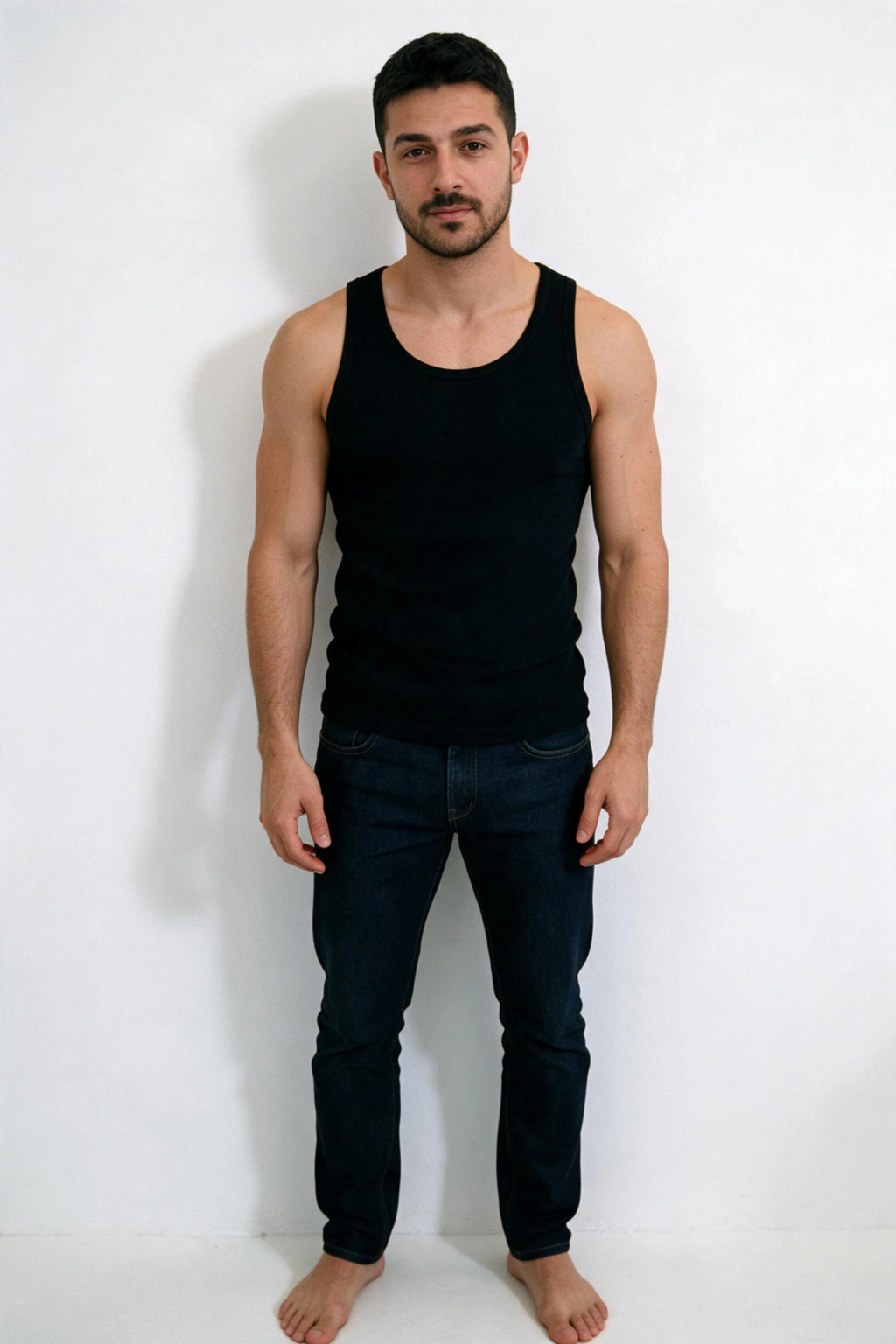
Digitals are raw, unedited photos in form-fitting clothes that show an agency exactly what you look like this month. They are honesty documents, shot plain on purpose. The full walkthrough is in our guide to how to take and submit modeling digitals.
A portfolio is your curated book of professional images, printed or digital, that shows the breadth of your work over time.
The comp card is the condensed handout version: one headshot up front, a few portfolio highlights and your stats on the back. You shoot digitals first, build the portfolio second, and print the card last.
Where do AI photos fit on a comp card?
AI photos are useful for the creative side. With the AI model photoshoot create page you can produce editorial concepts, commercial looks, and polished social content that show how you read on camera in different styles.
On the card itself, AI shots can only ever compete for the back-side range images, and only if they hold up at print resolution and look like you today. The front headshot and every polaroid an agency requests must be real, current, and unretouched.
The hard line: agencies require unedited digitals, and AI images can never stand in for them. Use AI for range frames, wardrobe tests, and social presence, then shoot real digitals when an agency asks.
Frequently Asked Questions
- What is a comp card in modeling?
- A comp card, short for composite card, is a printed 5.5 by 8.5 inch card that works as a model's business card. The front shows your strongest headshot with your name, and the back shows three to five range images plus your stats and agency contact.
- What size is a model comp card?
- A standard model comp card is 5.5 by 8.5 inches in the US, printed on both sides of card stock. In metric countries it is usually A5 on 350 to 400 gsm stock. Keep image files at 300 dpi or higher so both sides print sharp.
- What goes on the back of a comp card?
- Three to five images that prove your range, usually a full-body shot, an editorial look, a commercial smile, and a profile or movement frame, plus your stats: height, sizes, shoe, hair color, eye color, and your agency contact.
- Do you need a comp card to get signed?
- No. Agencies scout from digitals and simple snapshots, and they usually design your comp card from your portfolio after you sign. Shoot digitals first and skip the print order until you have representation or freelance bookings that need one.
- What is the difference between digitals and a comp card?
- Digitals are unedited working photos agencies use to see the real you. A comp card is a finished, printed marketing card with your best headshot on the front and curated range images plus your stats on the back. Digitals come first, the card comes last.
- Can AI photos replace agency digitals?
- No. Agencies require current, unretouched polaroids to judge your real appearance, so AI images cannot replace an official submission. AI photos from MakeAiPhotos are best for comp card range frames, wardrobe tests, and social content.