Four ways to get a skydiving photo without jumping
A fake skydiving photo is made one of four ways: a photo from an indoor wind tunnel, a face-swap app on a stock skydiver, a chatbot prompt with your photo attached, or a generator that builds the whole scene around your face from one selfie.
They are not equal. Two of them change your face, one of them looks like it was taken indoors, and only one looks like the handcam shot a drop zone sells you. The table below is the short version.
| Method | What you get | Looks like a real jump? | The tell |
|---|---|---|---|
| Indoor wind tunnel | A real photo of you flying in a suit and helmet | No, it reads as indoors | Glass tube walls, padded floor, no horizon |
| Face-swap app on a stock skydiver | Your face pasted onto a stranger's body | Rarely | Light and skin tone change at the neck, head size is off |
| Chatbot prompt with your photo | A new scene loosely based on you | Sometimes | The face drifts, gear shows invented logos |
| One-selfie generator | A new photo of your own face in freefall | Yes, from a sharp selfie | You never jumped, so you cannot answer questions about it |
What makes a skydiving photo look real
Real tandem photos all share the same handful of details, because they are all shot the same way: a camera on the instructor's wrist, a wide lens, and 120 mph of wind.
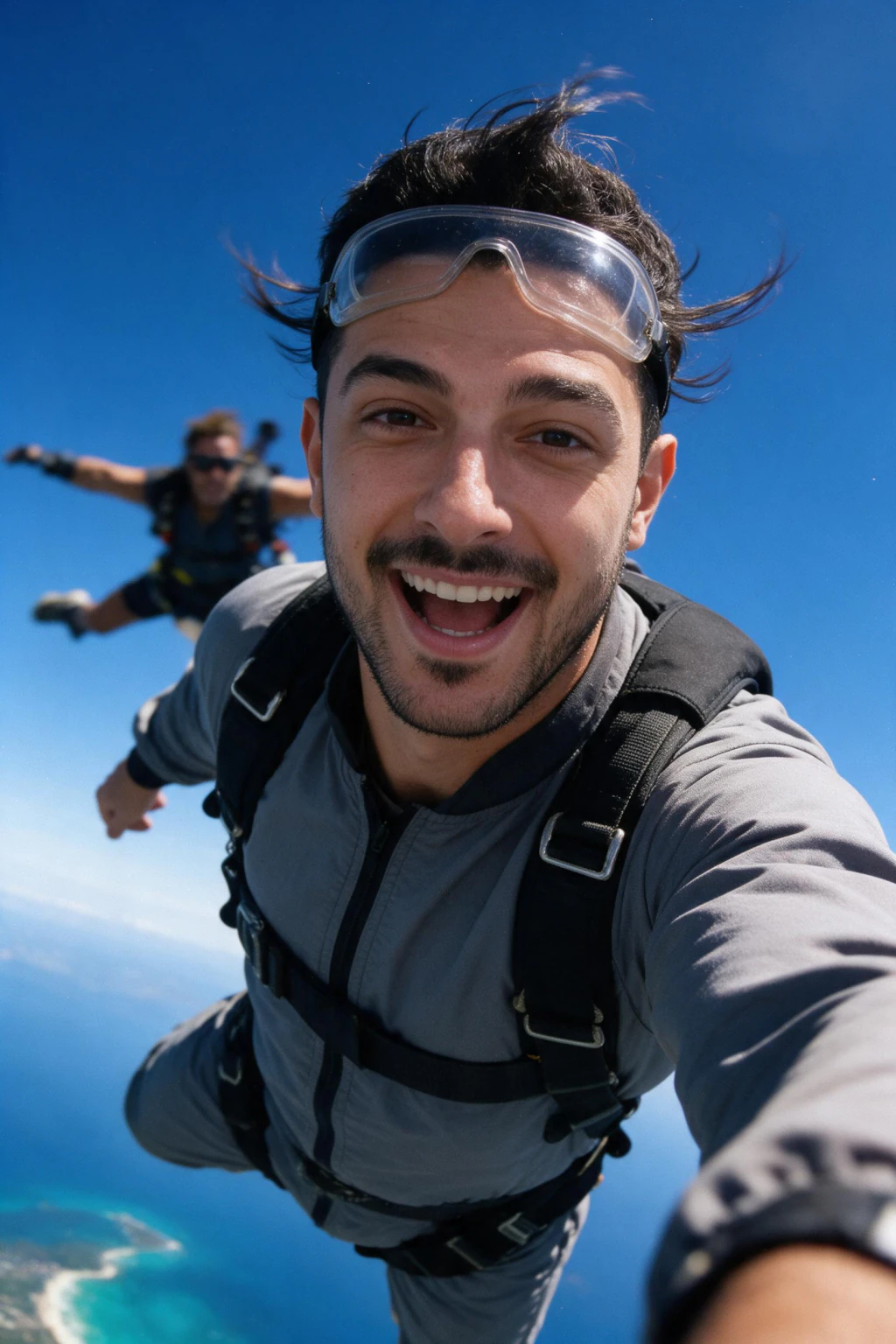
Look for these six: a wide-lens angle from arm's length, cheeks and hair pulled by the wind, clear goggles or goggles on the forehead, the instructor's harness or arm in frame, hard midday sun with deep shadows, and a horizon far below that bends slightly at the edges.
A fake fails on the same list. Calm hair, soft studio light, a perfectly straight horizon or a face with no wind in it reads as fake at a glance, no matter how good the sky is.
Do indoor skydiving photos pass for the real thing?
No, and they are not trying to. A wind tunnel photo is a real photo of you doing a real thing, but the glass walls, the padded net and the full helmet make it obvious where you are.
It is the most honest option on this list and a good day out. It just answers a different question. If you want the freefall-over-a-coastline shot, the tunnel will not give it to you.
Why face-swap apps and chatbot prompts fall short
A face-swap app takes a stock photo of someone else mid-jump and puts your face on it. The body, the light and the angle all belong to the stranger, so the join at the neck and the mismatch in skin tone give it away.
A chatbot prompt is better because it generates a whole new scene. The catch is that it redraws your face too, from scratch, every attempt. The prompts in AI skydiving photo prompts that keep your face help, but the likeness still moves between tries.
A one-selfie generator keeps your face and changes everything else. MakeAiPhotos builds the jumpsuit, harness, instructor, sky and coastline around your real features, so it reads as your handcam shot. Pick the skydiving look in the AI skydiving photo generator and it takes about 2 minutes.
Should you post a fake skydiving photo on a dating app?
Not as a jump you made. Adventure photos get attention on dating profiles precisely because they start a conversation, and a skydive you never did is the first thing a match will ask about.
The rule every dating app cares about is that your photos show how you actually look. A photo generated from your own selfie passes that. Claiming the experience is a different problem, and it tends to surface on the first date. More on the platform rules in are AI photos allowed on Tinder, Hinge and Bumble.
If you want it on a profile, caption it as what it is: the jump on your list for this year.
The honest uses: preview, joke, or bucket list
Preview the jump. Seeing yourself in freefall is a surprisingly good nudge to finally book it, and a way to show a nervous friend what the photo package will look like.
Make the joke. A skydiving photo from someone who is famously afraid of ladders is funnier than any caption, as long as everyone is in on it.
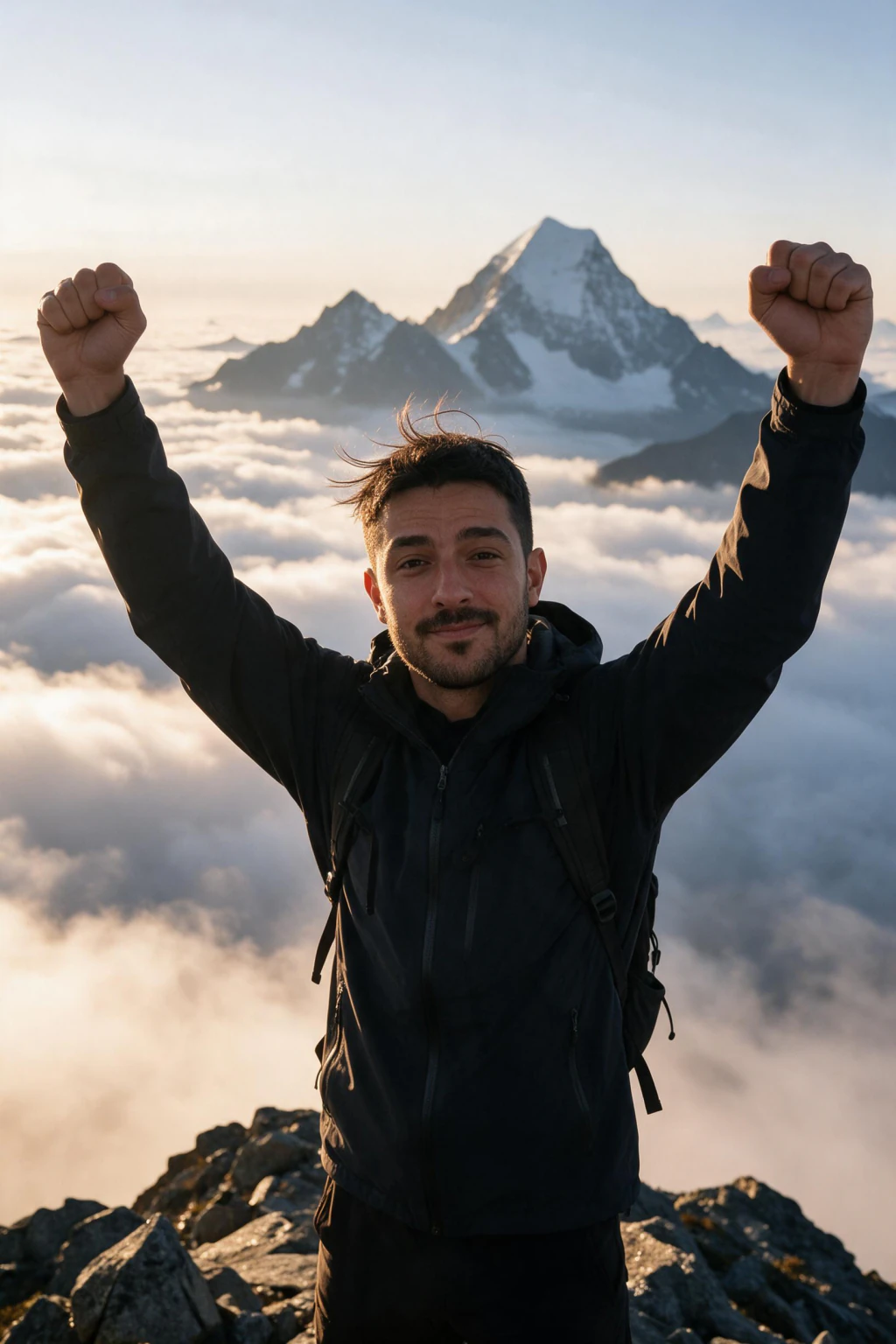
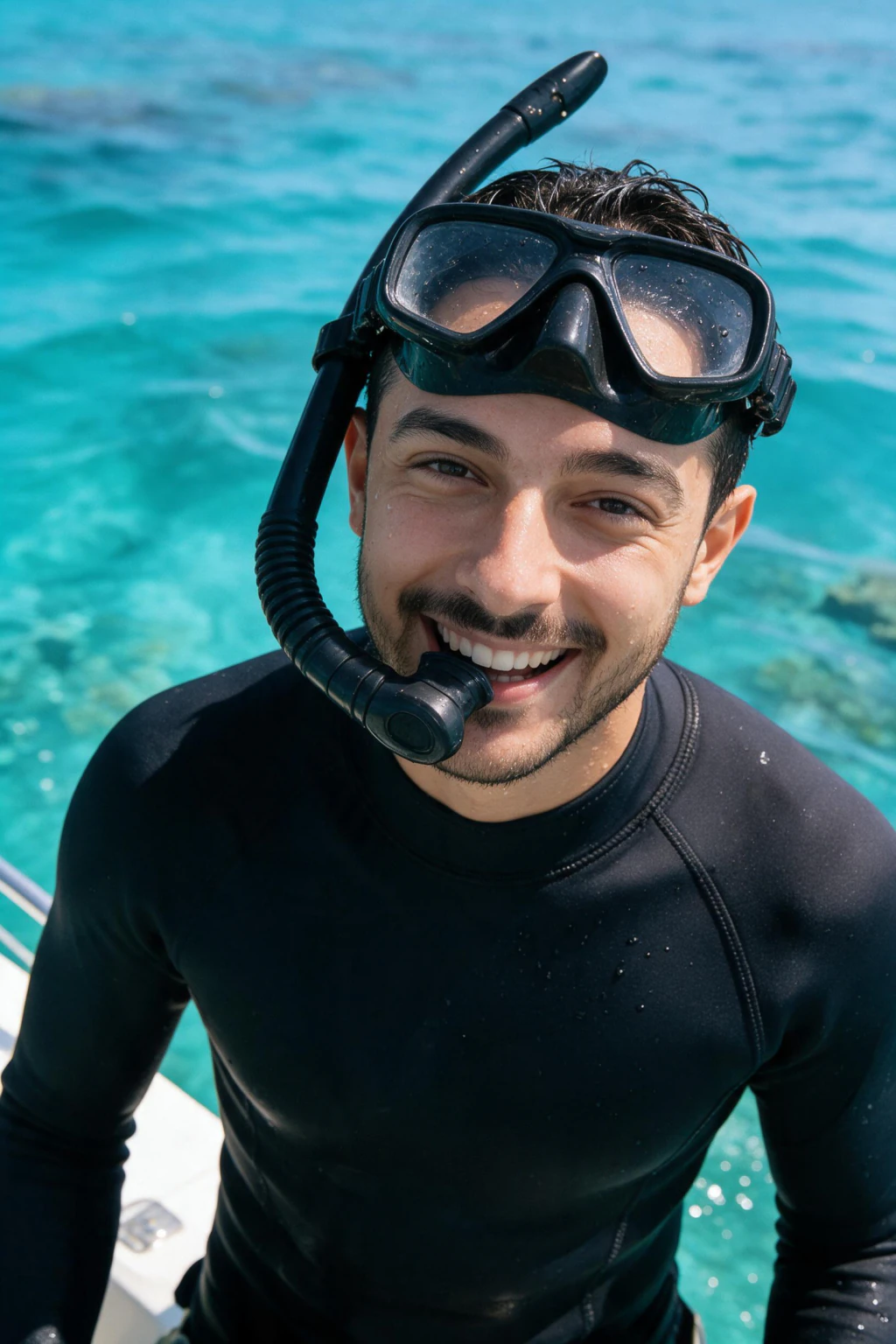
Pin the goal. A bucket-list board with you on a summit, in freefall and under water is a better reminder than a list. One selfie covers all ten looks on the extreme sports photo page, including bungee, scuba, big-fish catch, rock climbing, marathon finish, paragliding, big-wave surfing and snowboarding.
What a real skydiving photo costs, for comparison
The handcam photo and video package is sold on top of the tandem jump. One US drop zone's published prices put it around $99 to $130, and an outside camera flyer around $160 to $180. Prices vary by drop zone. If you are jumping, that package is worth every cent.
MakeAiPhotos is $14.99 one time for about 15 photos, each back in about 2 minutes, with a 14-day money-back guarantee. It does not replace the jump. It shows you what it would look like.
Frequently Asked Questions
- How do you make a fake skydiving photo?
- Four ways: a photo from an indoor wind tunnel, a face-swap app on a stock skydiver, a chatbot prompt with your photo attached, or a one-selfie generator. Only the last keeps your real face and looks like a tandem handcam shot, with wind in the hair, hard sun and a coastline below.
- Do indoor skydiving photos look real?
- They are real photos, but they do not look like an outdoor jump. The glass tunnel walls, the padded net and the full helmet show exactly where you are. They are a good record of a real experience, not a stand-in for a freefall-over-the-coast shot.
- How can you tell a skydiving picture is fake?
- Usually, from the details. Calm hair, soft even light, tinted goggles over the eyes, crisp logos on the gear, or a face with no wind in it all read as fake. A convincing photo has wind-pulled cheeks, messy hair, hard sunlight and a wide-lens horizon.
- Is it bad to put a fake skydiving photo on a dating app?
- Yes, if you present it as something you did, because a match will ask about it. A photo generated from your own selfie shows how you really look, which is the rule dating apps enforce. Caption it as a bucket-list goal or a joke and it works as a conversation starter.
- What does a real tandem skydiving photo look like?
- A wide-lens shot from a camera on the instructor's wrist, at arm's length. Your cheeks and hair are pulled by the wind, goggles are clear, the instructor's harness or arm is in frame, the sun is hard and bright, and the horizon sits far below, bending slightly at the edges.
- How long does an AI skydiving photo take?
- About 2 minutes per photo on MakeAiPhotos, from one clear selfie with no model training. $14.99 one time covers about 15 photos, so you can generate skydiving plus bungee, scuba, a summit or any of the ten adventure looks, with a 14-day money-back guarantee.