Are AI photos allowed on dating apps? The direct answer
Yes, AI photos are allowed on dating apps. Tinder, Hinge and Bumble do not treat a generated image as a banned file type, and what all three ban instead is impersonation and misrepresentation. If the person in the photos is you, at your real age and build, in a place you could plausibly go, you are inside the rules on every one of these apps.
The confusion comes from reading the wrong thing into the silence. People open the policy pages, find no line about generated images, and assume the apps simply have not caught up yet. They have. The rule they wrote covers the outcome rather than the method, which is why a heavily retouched real photo and a badly generated one get pulled for exactly the same reason.
That distinction decides everything else on this page. Your real risk is not that a moderator spots a model in your pixels. Your risk is that a match studies your grid, then looks at you across a table, and the two do not line up. Every enforcement path on all three apps starts at that gap, including the automated ones.
So the useful question is not whether AI photos are permitted. It is whether your specific photo survives two tests: an app-side check that you are one consistent person, and a human check on a first date. The six frames below all pass both, because the face in them belongs to the person who uploaded the selfie.
One phone selfie to 5 AI photos of the same person

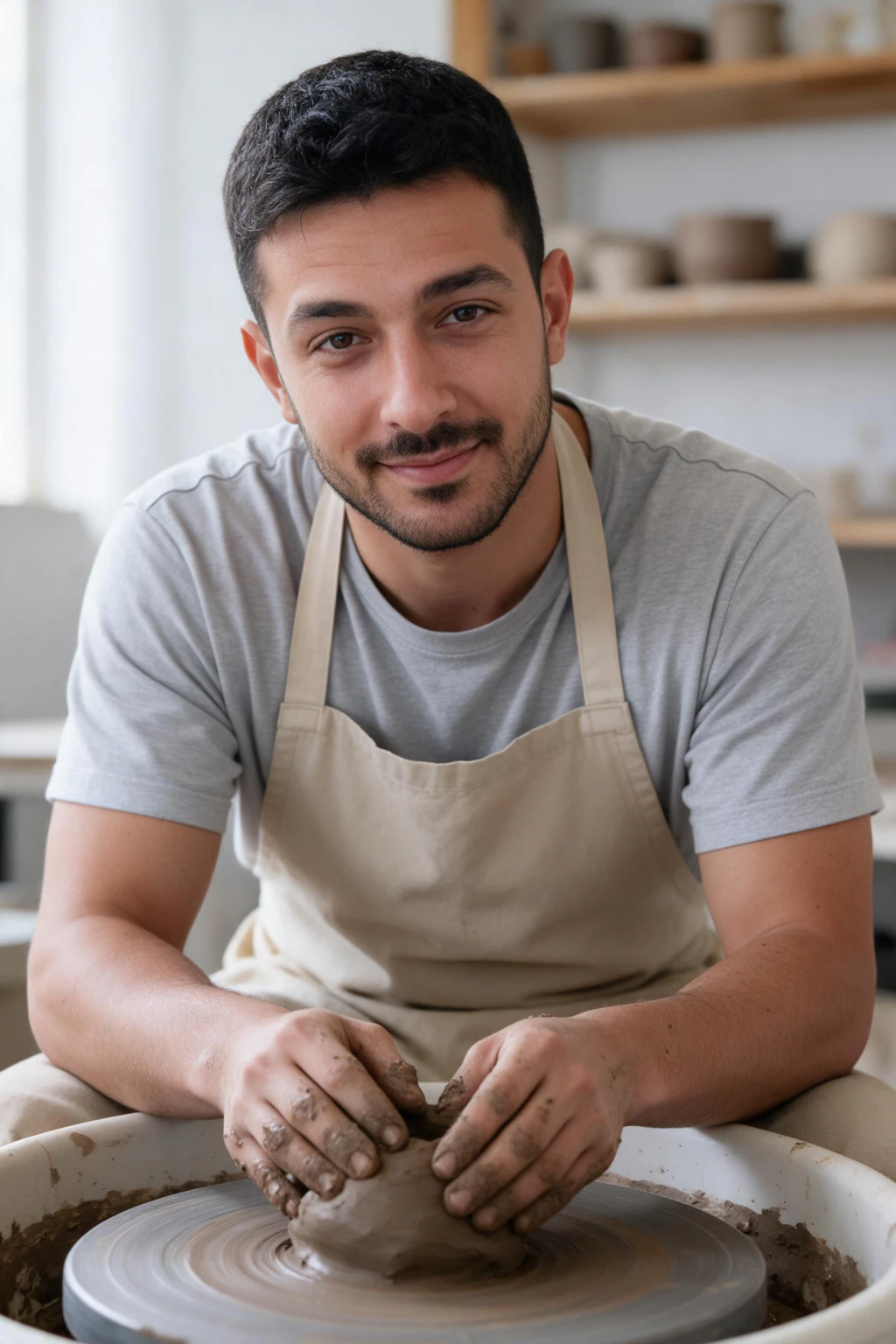
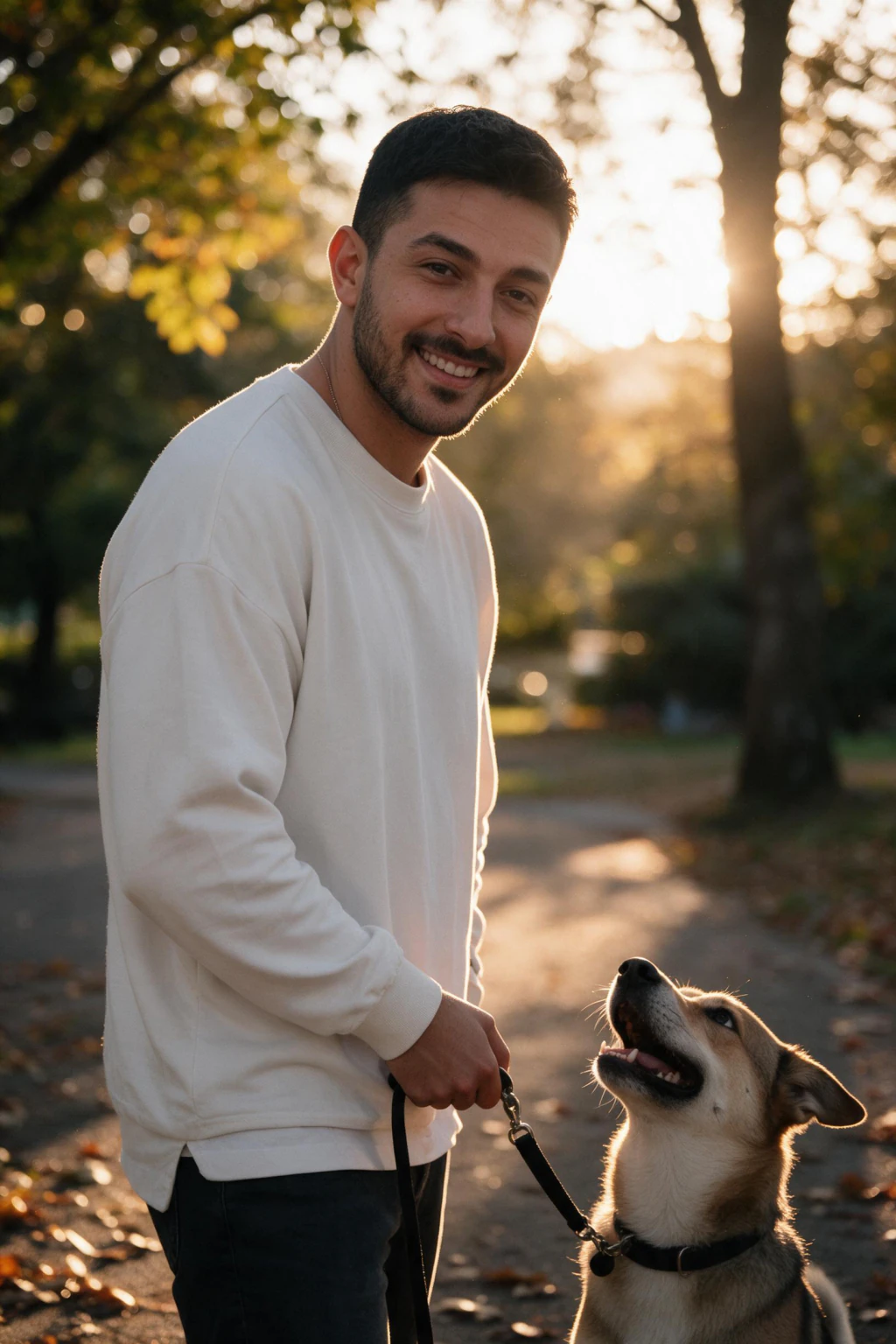

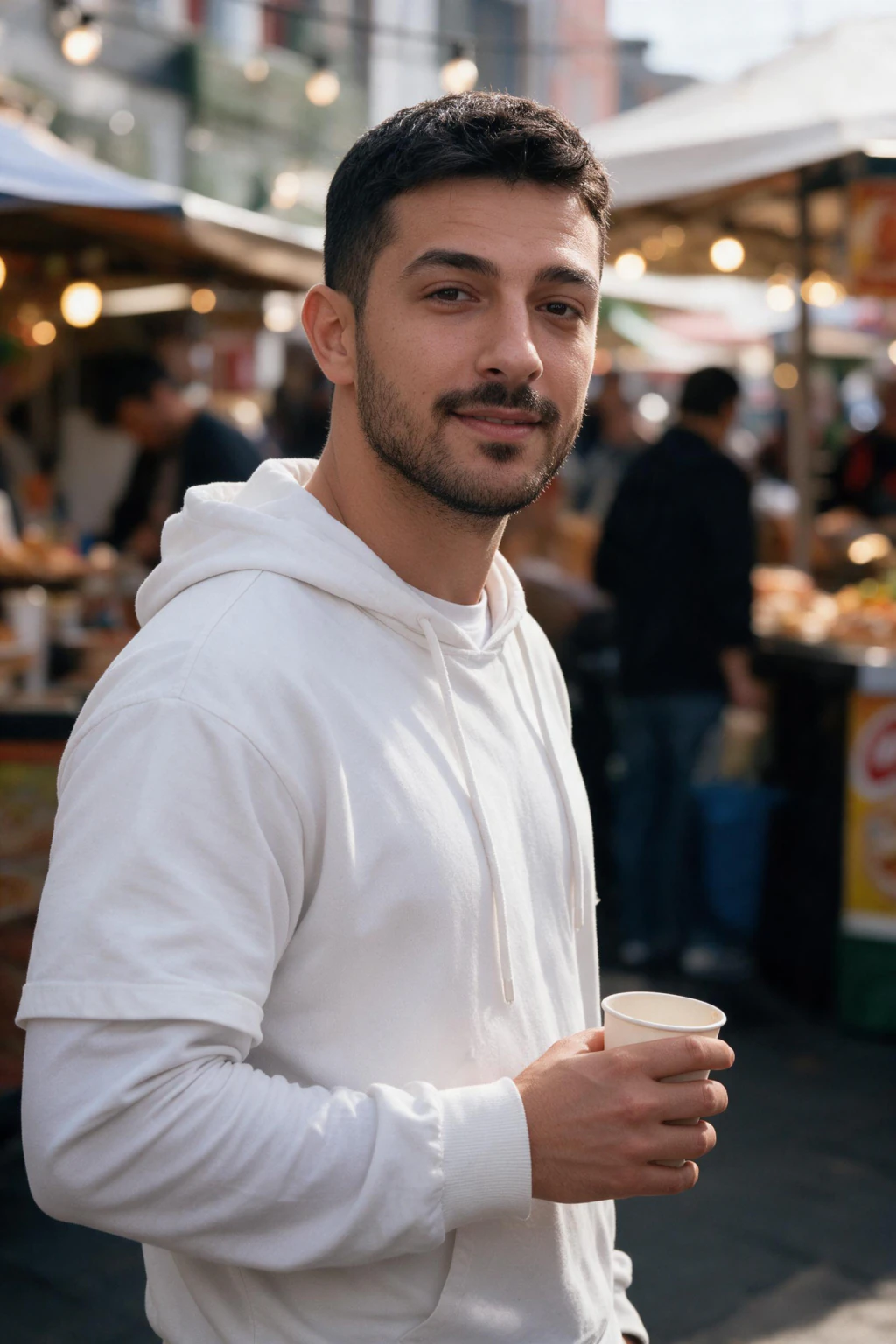
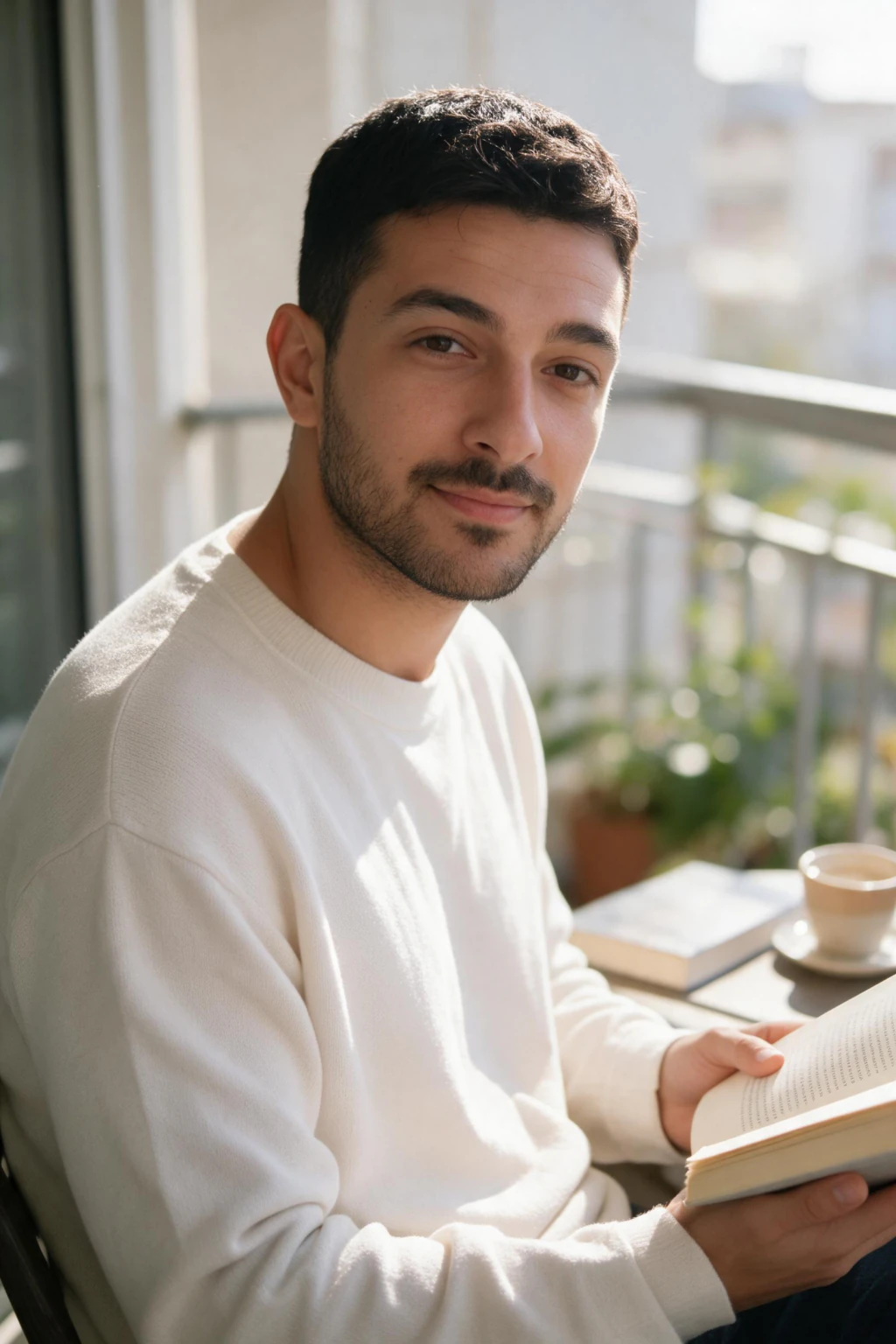
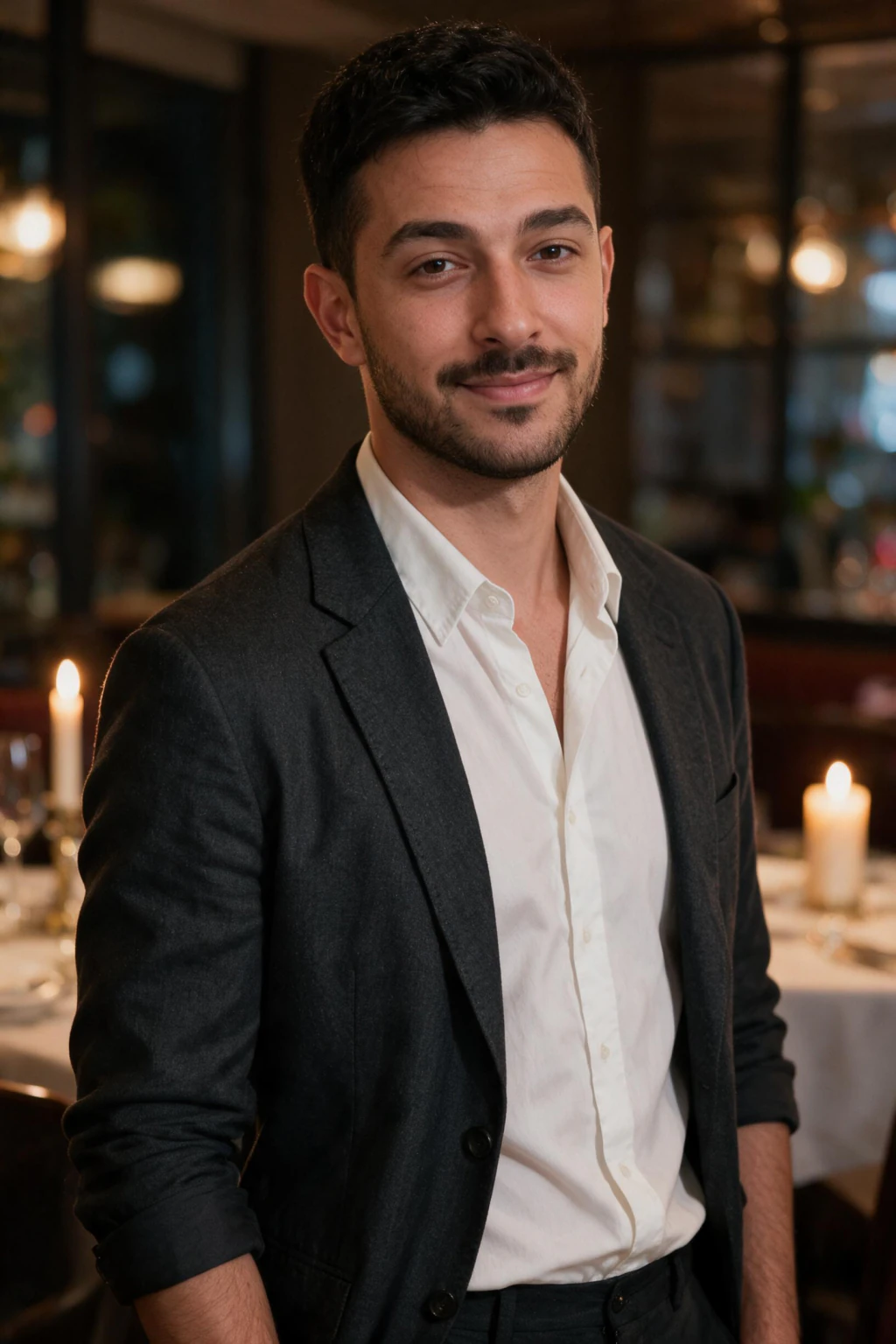
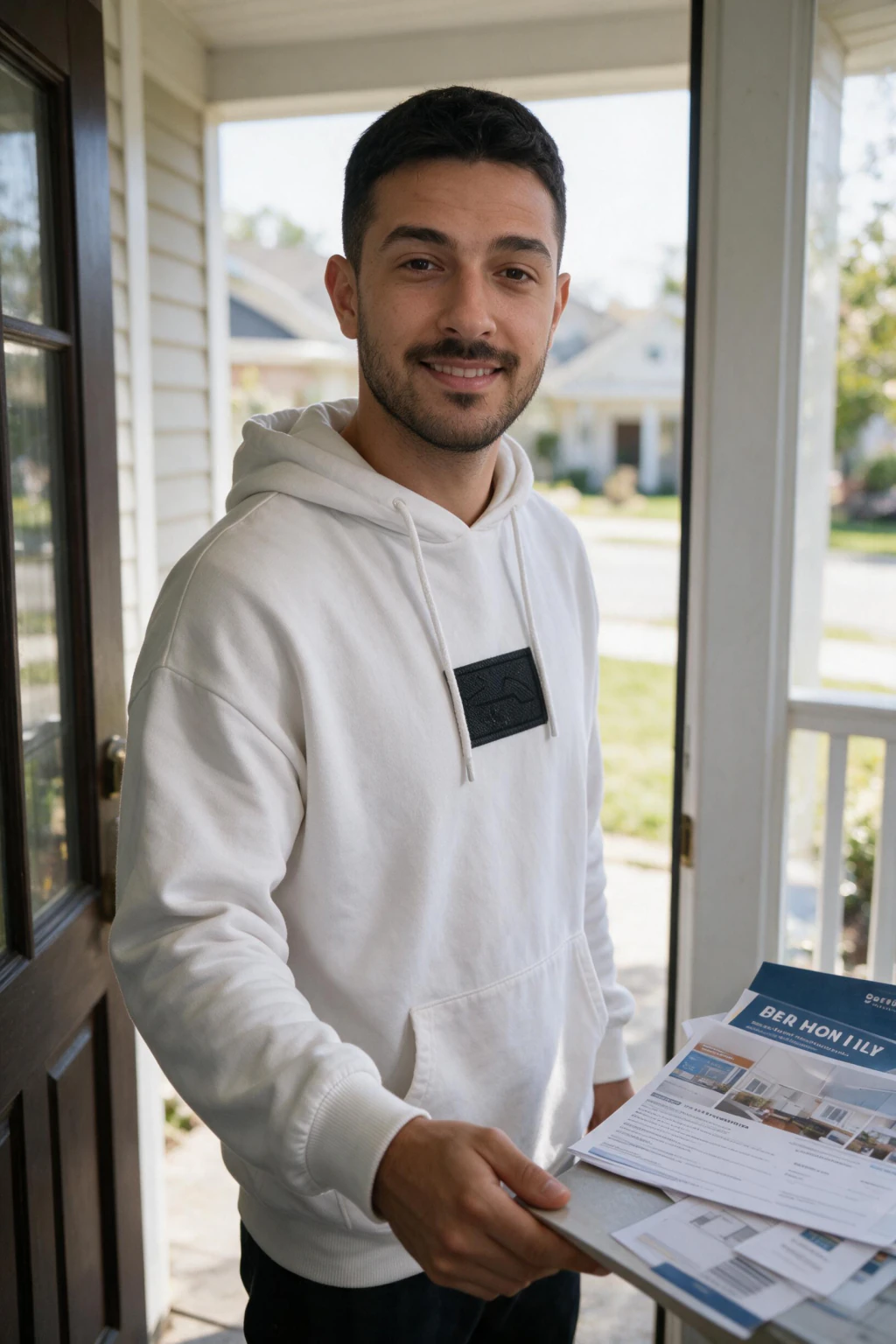
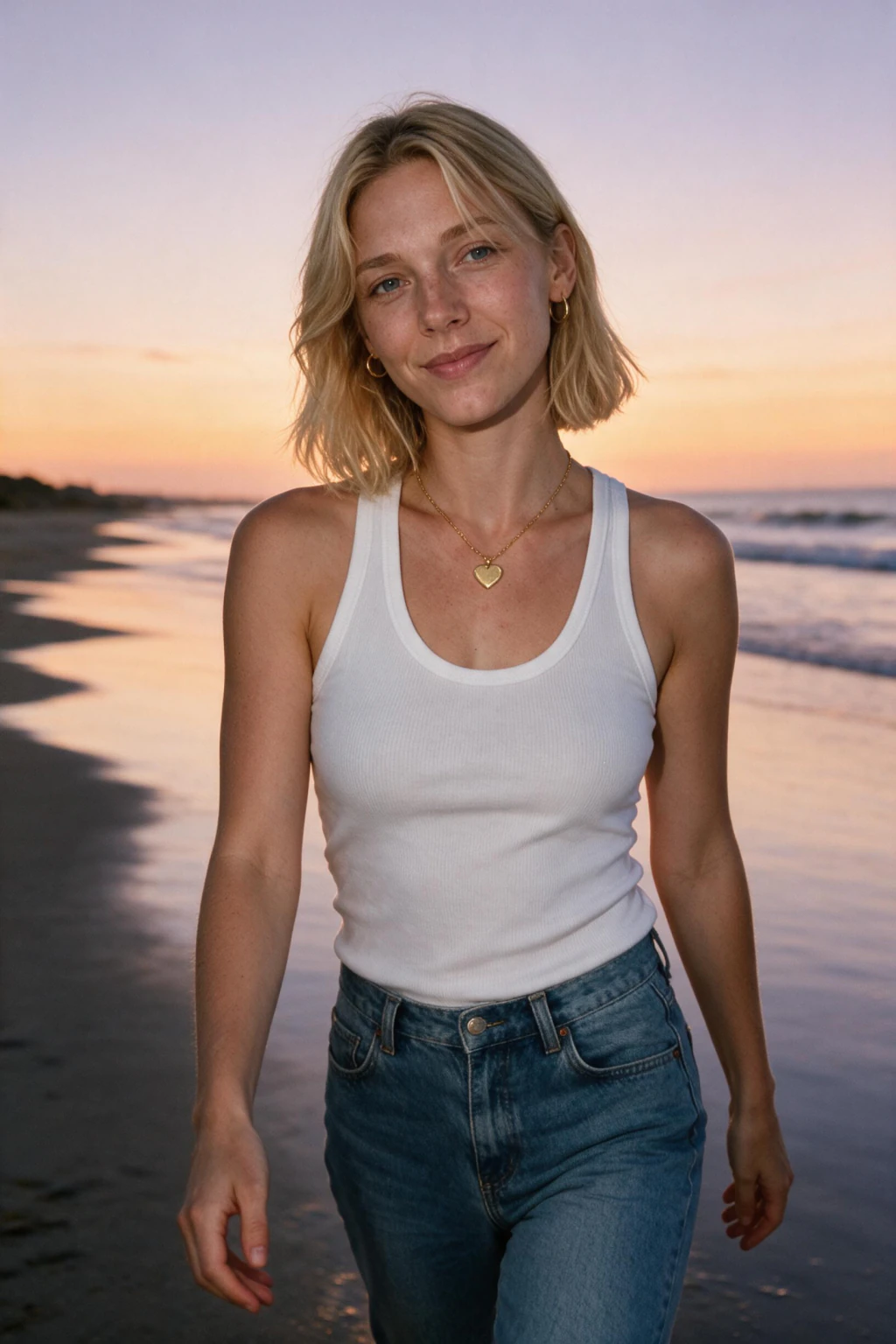
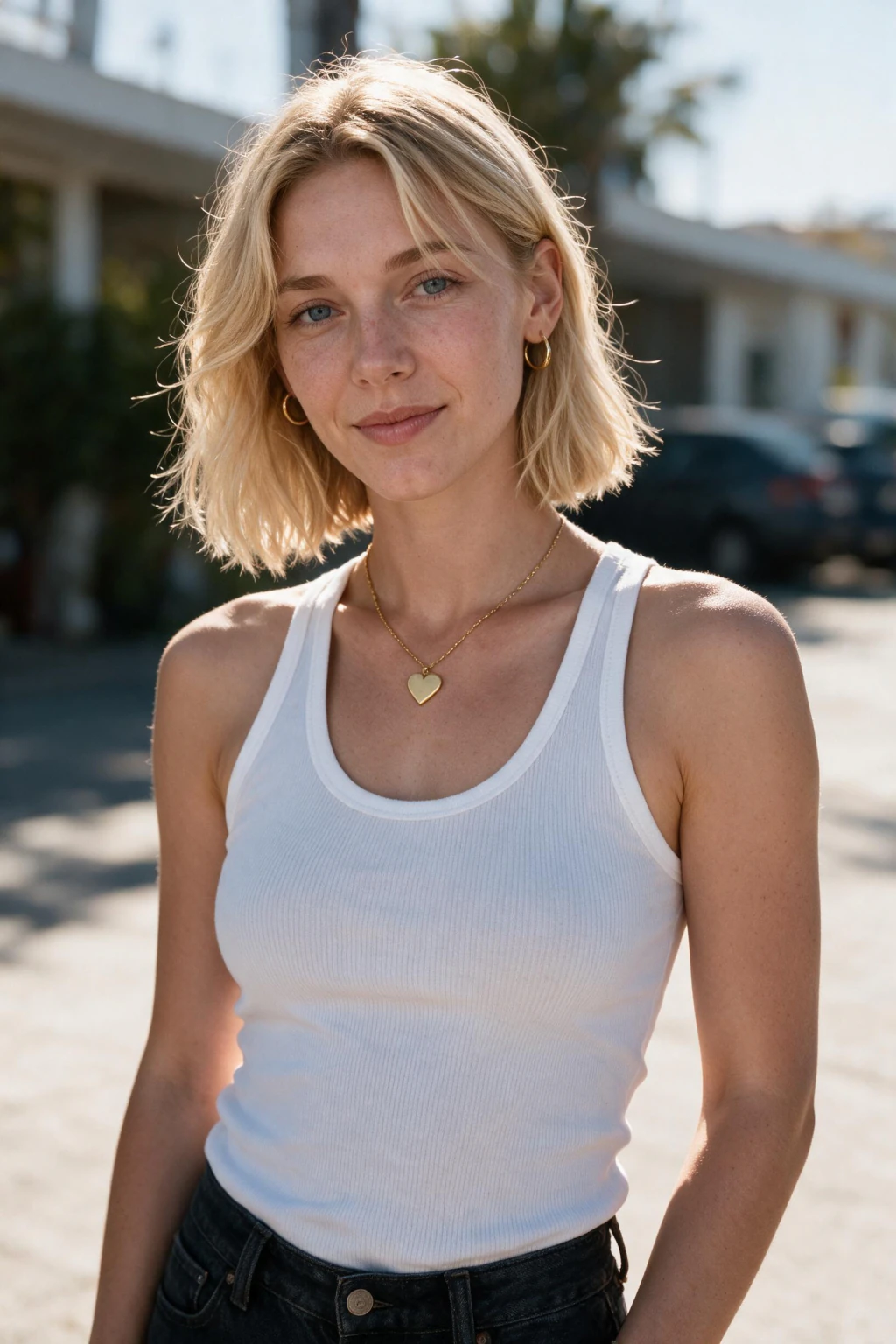
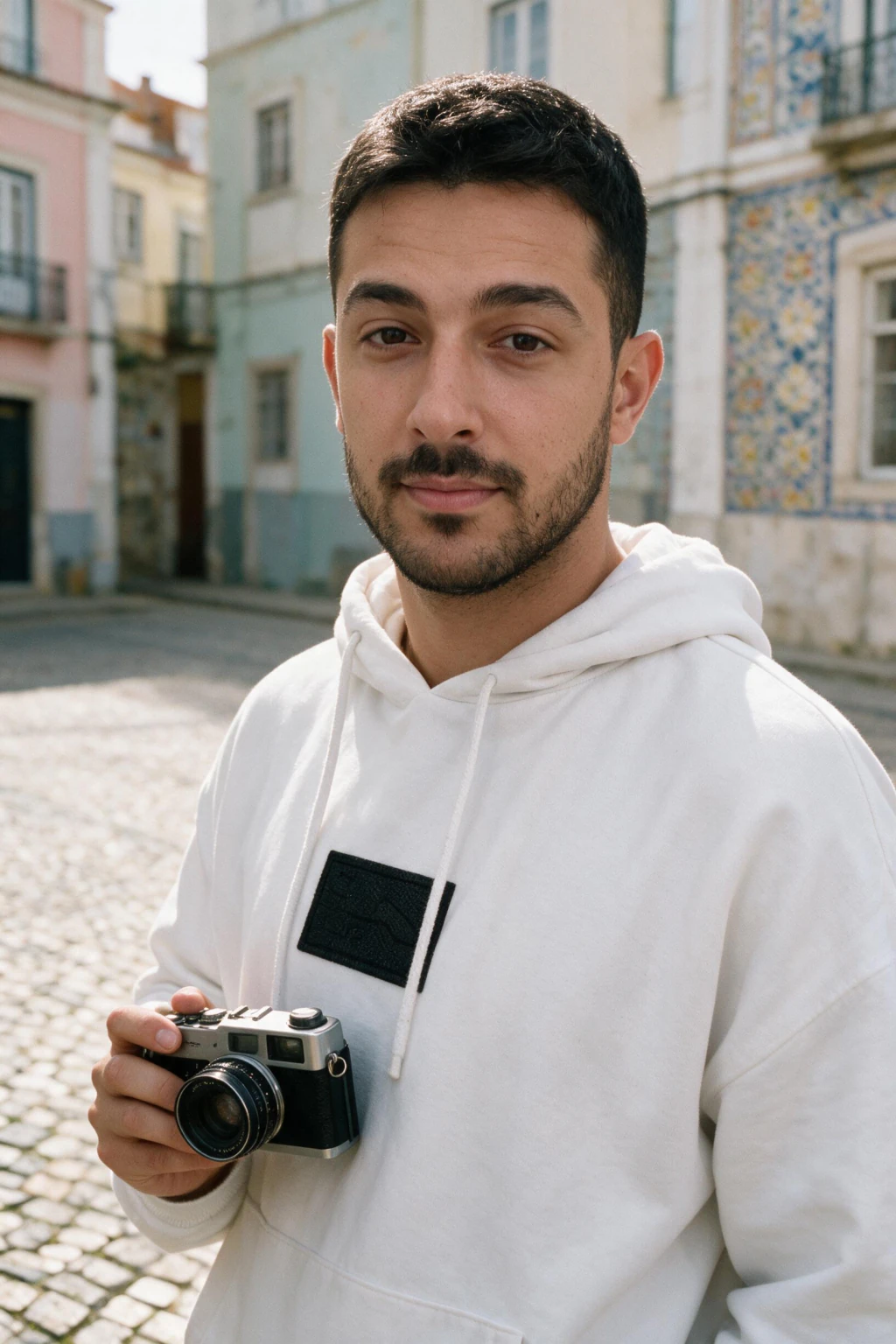

Missing four of these six? Generate them from a selfie you already have.
The rule all three apps actually enforce (and why AI is not in it)
Tinder, Hinge and Bumble all ban impersonation and misrepresentation, not image generation. That is exactly why none of their policy text mentions AI photos of yourself. The rule they enforce is whether this person is who they say they are, and a generated photo of your own face in a place you could plausibly go sits inside that rule, while a generated photo that changes your face, age or body does not.
Read Tinder's community guidelines with that framing and the wording stops looking vague. They are written against fake identities, borrowed photos and profiles that mislead the person on the other side. A tool that renders your real face into a different room never touches any of those categories. A tool that shaves ten years off you touches all three at once.
Hinge's terms take the same route from a different angle, asking for a profile that accurately represents you. Accuracy is a claim about the person, not about the software, which is why AI Hinge photos rendered from your own selfie never collide with it. The company's own authenticity guidance warns against letting synthetic media stand in for the real you, which is a warning about substitution rather than a ban on the technique.
Bumble is the one that names deception directly and treats synthetic content used to mislead as a violation. Even there, the operative word is deception. Bumble does not care that a photo was rendered. Bumble cares that the rendered person is a fiction, and it built tooling to catch the version where the face itself is invented.
The practical upshot is a clean test you can run on any photo in your camera roll. Could you send this to the person you are meeting on Friday and have them recognise you when you walk in? If yes, no policy on any of these three apps has anything to say about how the image was made. If no, the method never mattered.
Policy by app: Tinder, Hinge and Bumble side by side
The table below is a plain-language read of what each app targets as of August 2026, written from their published community guidelines and terms rather than quoted from them. Policies re-checked August 2026. Policies change and this is not legal advice, so check the current guidelines for the app you use before you rebuild a grid.
The pattern to notice is the third column. Only Bumble names synthetic content directly, and even Bumble names it in the context of deception. The other two never mention it, because the behaviour they wrote against is older than the technology and covers it without an update.
The fifth column is the one worth memorising. Safe use looks nearly identical across all three apps, which means you do not need three different photo strategies. You need one grid that survives recognition, and it works on AI Tinder photos the same way it works everywhere else.
| App | What the policy actually bans | Does it name AI photos | What gets you removed | Safe use |
|---|---|---|---|---|
| Tinder | Impersonation, false identity, and profile content that misleads | No | Photos of another person, or a face that fails a live selfie check | Your own face, verification completed, lifestyle scenes you could plausibly be in |
| Hinge | Profiles that do not accurately represent the person behind them | No | A grid a match cannot recognise you from, plus user reports that follow | One recent real selfie leading, generated scenes filling the slots behind it |
| Bumble | Content used to deceive, synthetic media included | Yes, in the deception context | An obviously synthetic portrait, or repeat flags from its detector | Real face shape and skin texture preserved, never an entirely generated grid |
What Bumble's Deception Detector is actually looking at
Bumble shipped its Deception Detector in 2024, an in-house classifier that scans profile photos at upload and flags the ones matching known patterns of fully synthetic faces. It is the most concrete automated enforcement any major dating app has published, and it is worth understanding because people assume it detects AI when what it really detects is a specific look.
That look is familiar once you know it. Skin with no pores. A face symmetrical past the point any real one is. Earrings that do not match each other. Teeth that blur into a smooth band. Backgrounds where a railing melts into a wall or a hand grows a sixth finger. Those artefacts are what a classifier scores, not the presence of a model in your pipeline.
A photo built from your own selfie carries the opposite signals. Your face keeps its asymmetry, your skin keeps texture, and the light on your cheek matches the light in the room behind you. That is why AI Bumble photos generated from a real face behave differently at upload than a portrait typed into a prompt box from scratch.
The detector is also not the last gate. A photo that clears it can still be reported by a match who feels the profile did not match the person, and reports carry more weight than any single upload check. Optimising your photos to beat a classifier while failing the coffee-shop test is the wrong order of operations.
What actually gets you removed from a dating app
Removals on Tinder, Hinge and Bumble follow four repeatable triggers, and none of them is the act of generating an image. Each one is a form of the person in the photos not being the person holding the phone. Read them as a checklist against your own grid before you publish it.
Notice how little of this is technical. Three of the four are decisions you make while picking photos, and the fourth is a decision you make while generating them. You control every trigger on this list, which is why the ban rate on honest generated photos stays close to zero.

The photos show a different person
A generated face that borrows your hair and general shape but not your actual bone structure. It reads fine in isolation and falls apart next to you.
This is impersonation under every policy on all three apps, and it is the single fastest route to a removed profile.
You changed your age or your body
Frames that take a decade off, slim your build, or rebuild a hairline. The scene can be honest while the person in it is not.
Misrepresentation of physical attributes is named directly by all three apps, and matches report it more reliably than anything else.
The grid has no real anchor
Six generated photos with no recent unedited selfie in the lead slot. Every frame is plausible on its own and the set still feels staged.
Reports cluster on all-generated grids because viewers cannot find one photo that reads as an ordinary Tuesday.
You keep tripping the detector
Repeated uploads of obviously synthetic portraits, plastic skin and melted background details included, on an app that scans at upload.
One flag is a review. A pattern of flags across uploads is what escalates into an account-level action.
Is using AI photos on dating apps catfishing?
Catfishing is pretending to be a person you are not. Adjusting light, background or setting on photos of the real you sits in the same category as the retouching dating coaches have recommended for a decade. Changing bone structure, hair density, age or body type crosses into deception, and that is the line every app report form is built around.
The test people actually apply is not philosophical. Your match is running one comparison when you walk in, between the face on their screen and the face in front of them. Everything that survives that comparison reads as a good photographer. Everything that does not reads as a lie, no matter how it was produced.
There is a second effect worth naming. Daters in 2026 are more sceptical of polished photos than they were three years ago, which means an over-produced grid can cost you matches even when it is entirely honest. Photos that look shot rather than manufactured beat photos that look expensive.
The argument for generated photos on a dating profile was never perfection. It is variety. One recognisable person across four believable settings converts better than ten near-identical selfies taken in the same bedroom under the same ceiling light, and that second version is what most camera rolls actually contain. Variety is a scheduling problem, not a character flaw, and it is the one problem a generator is genuinely good at solving.
What the apps' own photo data says
Hinge's published photo research found that selfies get about 40 percent fewer likes than photos someone else took, and that bathroom selfies get about 90 percent fewer. That is the variety gap generated lifestyle frames exist to close.
Read what that data is measuring. It is about the subject and the setting of a photo, not the method that produced it. The apps are measuring whether a photo shows you doing something somewhere, and most camera rolls hold ten near-identical selfies instead.
The slot-by-slot mix is covered in how many pics you need for Hinge and Tinder, including which slot each type of photo belongs in.
How photo verification interacts with AI photos
Tinder photo verification compares a live selfie you take in the app against the photos already on your profile. If your generated photos carry your real face, the comparison passes and you get the badge that tells other users a human checked. If they diverge, verification fails, and a failed check is a louder signal to viewers than anything a policy page says.
Hinge runs a selfie check on the same principle. The system is not asking whether a photo was generated. It is asking whether the same person appears in the live capture and the uploaded grid, which is the impersonation rule expressed as software instead of prose.
This is the most useful audit available to you. Run verification after you publish a grid built from generated photos. A pass tells you the face survived generation intact. A fail tells you the model drifted off your identity, and the fix is a better input selfie rather than a different app.
The input matters more than most people expect here. Soft window light at roughly 45 degrees, rear camera, beauty mode and skin smoothing switched off, face unobstructed. A selfie shot that way gives the model a clean reference, and a clean reference is what keeps your verification photo and your profile photos describing one person.
The photo mix that stays inside the rules on all three apps
One pattern holds across Tinder, Hinge and Bumble, and it is a ratio rather than a rule. Two to four generated lifestyle frames inside a six-photo grid, with the remaining slots filled by recent real photos including the lead. Generated frames fill the middle of the deck. They never replace the face anchor at the front.
Step 1, put a plain recent selfie in slot one. No filter, no sunglasses, nothing across your eyes, shot within the last few months rather than pulled from a holiday three years ago. This is the photo doing the recognition work for your whole profile, and it quietly earns every slot behind it the benefit of the doubt.
Step 2, use slot two for a full body shot at your current weight. This is the slot users check hardest and the one profiles most often hide. A generated frame works here as long as the build in it is genuinely yours, and skipping it entirely reads as evasive on all three apps.
Step 3, fill slots three to five with generated lifestyle scenes tied to your real interests. A trail you would actually hike, a shoreline near where you live, a street you walk. Scenes you could not plausibly have been in are the ones that draw questions you cannot answer on a first date.
Step 4, keep one candid in the final slot. Mid-laugh, slightly off-centre, imperfect in a way you would normally crop out. A single unpolished frame does more for your grid's credibility than three more beautiful ones, because it is the photo nobody would ever bother faking, and viewers read that instantly without being able to explain why.
Step 5, run the recognition pass before you publish. Look at the six photos as a stranger would and ask whether they describe one consistent person. If two frames could be siblings rather than the same person, cut the weaker one and generate a replacement.
How to generate dating photos that still read as you
The workflow is short because the hard part is the input, not the output. You upload one selfie and each finished photo comes back in about 2 minutes, with no model training in front of it. Output runs up to 4K with no watermark and no download gate, and everything renders vertical, which is the shape every dating grid wants.
Spend your effort on the selfie. Soft window light at about 45 degrees, rear camera rather than an arm's-length front-camera shot, beauty mode and skin smoothing off, nothing across your eyes. A blurry or filtered input produces photos that drift off your face, and drift is the one failure mode that actually breaks the rules.
Then be ruthless in selection. Keep frames with visible skin texture, matched catchlights in both eyes, and lighting on your face that agrees with the background. Cut anything with a warped hand, a melted railing, jewellery that changed between frames, or a jawline that is not the one you shave. Roughly a third to a half of any batch is worth publishing.
Cost is $14.99 one time for about 15 finished photos, no subscription, against the $200 to $500 a studio session runs. Current numbers live on the pricing page. One upload session covers Tinder, Hinge and Bumble at once, because the grid that passes on one of them is the same grid that passes on the other two.
Mistakes that turn an allowed AI photo into a reported one
Every mistake below is a version of the same error: letting your photos describe someone slightly better than the person who actually shows up on the date. They are ranked by how often they end in a report rather than by how bad they look on screen, because those two orderings are not the same and the second one is the one people optimise for.
Mistake 1, generating from a description instead of a selfie. Typing your appearance into a prompt box returns a stranger who matches the words. That output is exactly what the impersonation rules were written for, and it fails photo verification on the first attempt because there is no real face behind it.
Mistake 2, quietly fixing your body. A slimmer waist or a fuller hairline feels like a small edit while you are picking photos. It is the most reported category on dating apps and the one your match notices in the first three seconds of meeting you, before either of you has said anything.
Mistake 3, publishing an all-generated grid. Even six honest frames start to feel staged with no ordinary photo among them. Keep one real recent selfie in the lead slot and at least one more further down, and the whole grid reads as photography rather than production.
Mistake 4, scenes you cannot back up in conversation. A yacht deck, a private jet cabin, a summit you have not climbed. These photos pass every automated check and fail the only one that matters, which is the follow-up question in the first message you receive.
Mistake 5, ignoring verification. The badge takes under a minute to earn and settles the authenticity question before a viewer has to consciously think about it. Skipping it on a grid that contains generated photos leaves behind the exact doubt the badge exists to remove, and you have already done the hard part by keeping your real face.
Frequently Asked Questions
- Are AI photos allowed on dating apps in 2026?
- Yes. Tinder, Hinge and Bumble all allow AI-assisted and AI-generated profile photos, because none of the three ban image generation. What they ban is impersonation and misrepresentation. A generated photo of your own face at your real age and build is inside the rules on all three. A generated photo that changes your face, age or body is not, and that version is what gets reported.
- Why do the policies never mention AI photos?
- Because the behaviour they were written against is older than the technology. Tinder's community guidelines target fake identities and misleading profiles. Hinge's terms ask for a profile that accurately represents you. Both rules already cover a generated photo that misleads, and neither one is triggered by a real photo of you rendered in a different room, which is why AI never needed its own clause.
- Can you use AI photos on Tinder?
- Yes. Tinder's community guidelines do not ban generated images by file type. The rule that applies is no impersonation and no misleading representation, so use lifestyle frames only when your face, build and age still match in person. Completing photo verification adds a badge that compares a live selfie against your grid and settles the authenticity question for viewers before they ask it.
- Does Hinge allow AI photos?
- Yes, with one condition. Hinge has not banned generated photos, and its terms ask for a profile that accurately represents you. Hinge's own authenticity guidance warns against letting synthetic media stand in for the real person, which is a warning about substitution rather than about the tool. Keep one or two recent real candids in the grid and use generated frames for the lifestyle slots.
- Does Bumble detect AI photos?
- It is an in-house classifier Bumble launched in 2024 that scans profile photos at upload and flags patterns typical of fully synthetic faces: pore-free skin, unnatural symmetry, mismatched jewellery, melted background detail. Photos generated from your own selfie keep asymmetry, texture and consistent lighting, so they behave very differently at upload than a portrait typed into a prompt box from nothing.
- Do AI photos pass Tinder photo verification?
- They pass when they carry your real face. Tinder verification compares a live selfie against your uploaded photos, so generated frames built from your own selfie match and the badge is granted. Frames generated from a text description fail, because there is no real face behind them.
- Will I get banned for using AI photos on a dating app?
- Bans follow impersonation, misrepresentation or repeated user reports, never the mere use of a generator. The highest-risk patterns are posting photos that look like a different person, editing your real age or body, publishing a grid with no real anchor photo, and tripping an automated flag on upload after upload. Recognisable photos of your own face carry very little ban risk.
- Is using AI photos on dating apps catfishing?
- Not automatically. Catfishing means pretending to be a different person. Adjusting light, setting or outfit on photos of the real you sits in the same category as retouching, which dating apps have tolerated for years. Photos that change bone structure, age, ethnicity or body type are deception under every policy here, and most users will report them once they meet you.
- How many AI photos can I safely put in a six-photo grid?
- Two to four is the working range. The remaining slots should hold recent real photos, including the lead photo and ideally a full body shot at your current weight. An entirely generated grid is the pattern most likely to feel off to a match and to draw a report, even when every individual frame would have passed on its own.