Can Tinder, Hinge and Bumble detect AI photos?
No. Tinder, Hinge and Bumble do not publish an AI image detector that scans your profile photos and flags them for being generated. Search their policy pages and you will not find the claim, because they do not make it.
What they run instead is identity verification on the person. Match Group deployed FaceTec biometric liveness under the name Face Check, making it a requirement for new Tinder accounts state by state in the US, and has said it is extending the same technology across its other apps. The check compares a short live video selfie against the photos on the profile.
Bumble took the reporting route. In July 2024 it added "Using AI-generated photos or videos" as a report reason under its Fake profile category, which means the signal comes from other users rather than from a scanner.
So the honest answer to the search is this: the apps do not check whether a photo was generated, they check whether it is you. That is a completely different test, and it is the one your photos have to pass.
If your photos are of your own face, taken from your own selfie, you can generate a dating set and give the check the same face it would see on any camera photo.
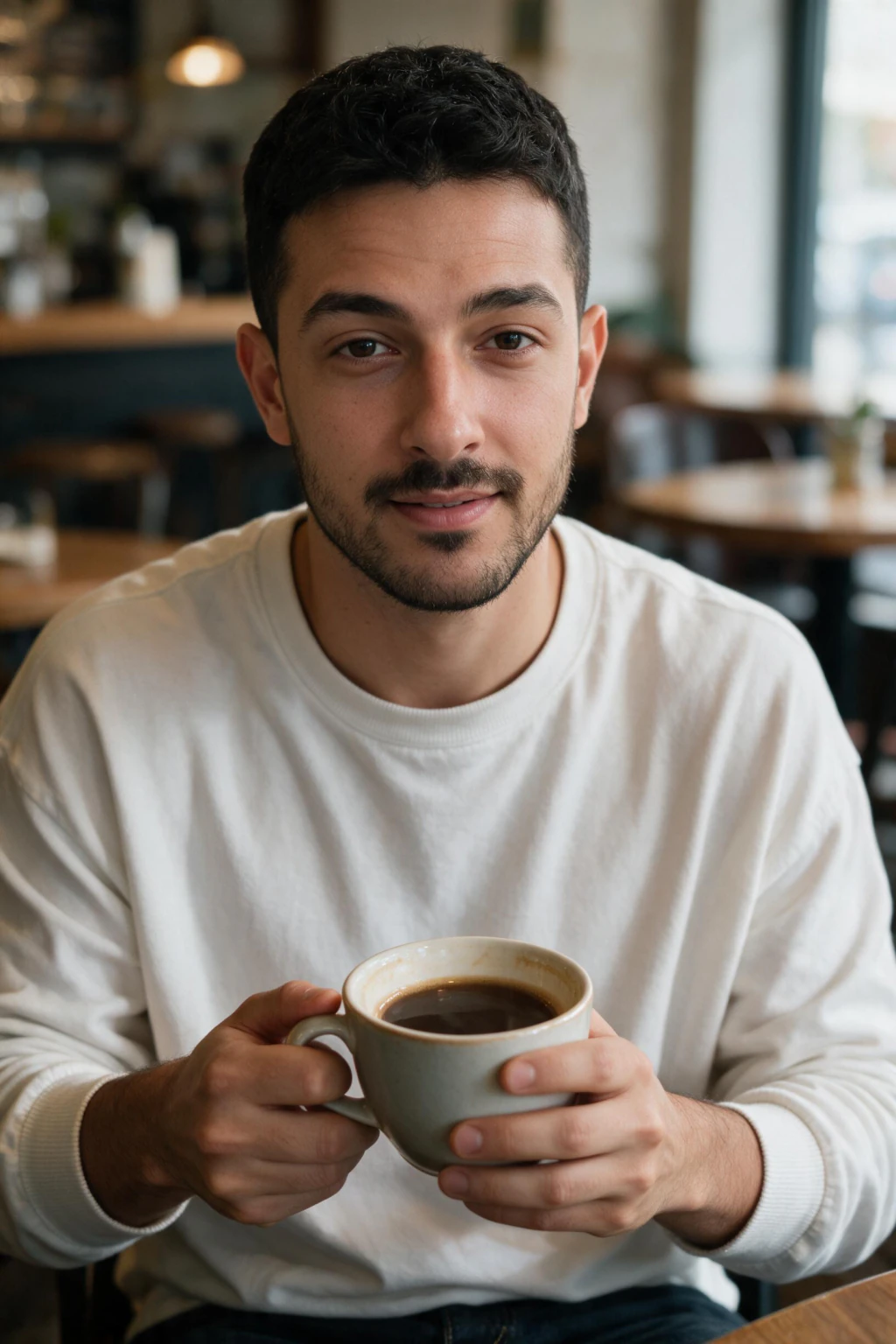
One phone selfie to 5 AI photos of the same person





Does Tinder detect AI photos?
No. Tinder checks that a live human face matches the face in the profile photos, not whether a photo was generated. Face Check asks for a short video selfie, confirms it is a live person rather than a held-up screen or printout, and compares it against your uploaded pictures.
It is not looking at file metadata, generation artefacts or pixel statistics. It is looking at facial geometry, and its question is whether these are the same person.
The practical consequence: an AI photo of you in a bar you have never been to passes. An AI photo with a narrowed jaw, a different nose or ten fewer years on it does not, because the geometry has moved.
Tinder's Community Guidelines ban impersonation and misrepresentation. Neither phrase mentions image generation, and that omission is deliberate. The line is about identity, not about tooling.
Can Hinge detect AI photos?
No published detector, same as Tinder. Hinge runs its own Selfie Verification flow, which awards a verified badge. It also sits inside Match Group, which has said it is rolling the same FaceTec liveness technology out across its apps, so treat Hinge as heading toward the Tinder model rather than as identical to it today.
Verified profiles get more likes, which matters more on Hinge than on the other two because Hinge attaches likes to a specific photo rather than to the profile as a whole.
Hinge's own published photo research is worth more attention here than any detection question. In Hinge's Profile Picture Report, photos of men looking straight at the camera were 102 percent more likely to earn a like, candid shots 15 percent more likely, and bathroom selfies about 90 percent less likely.
Read that next to the detection question and the priority inverts. Hinge is far more likely to cost you matches for a bad photo than to remove you for a generated one.

Does Bumble detect AI photos?
Not with a scanner. Bumble is the only one of the three that names AI photos in its product. The July 2024 report category lets any user flag a profile for using AI-generated photos or videos, filed under Fake profile.
That is a human-triggered path, not a scanner. Someone has to look at your profile, believe the photos are not you, and tap report. What gets reported is the impression of deception, not the presence of generation.
Bumble also runs Deception Detector, an automated system it announced in 2024 aimed at spam, scam and fake accounts. Bumble's published figure for it is a 95 percent block rate on fake profiles it identifies. That system targets fake accounts, not real people using generated photographs of themselves.
Bumble's Community Guidelines permit AI-generated photos when they accurately represent the user, and its report flow is the only enforcement path it publishes.
What actually gets a profile flagged?
The pattern in that table is the whole article. Nothing in the enforcement path cares how the photo was made. Everything in it cares whether the photo is you.
This is also why the widely repeated claim that dating apps scan for pixel-level generation artefacts should be treated carefully. It is technically possible, none of the three apps claims to do it on profile photos, and no enforcement action has been publicly tied to it.
The failure mode people actually hit is much less exotic. They generate something flattering, it drifts, and the mismatch shows up on a verification selfie or on a first date.
| What you did | Does it pass verification? | Why |
|---|---|---|
| Generated your real face in a new setting | Yes | Facial geometry is unchanged, so the live selfie matches |
| Generated your face with a slimmer jaw or nose | No | The check compares geometry, and you moved it |
| Generated a photo that takes ten years off you | No | Age drift is one of the most visible mismatches on a live check |
| Changed body shape or height in the photo | Risky | Passes verification, fails the first in-person meeting |
| Used a generated photo of somebody else | No | This is the impersonation rule, and it is the one with real consequences |
| Used a stock or celebrity image | No | Removed under fake profile rules on all three apps |
Why do some AI photos look obviously generated?
People spot generated photos by texture and lighting, not by any technical tell. Over-smoothed skin with no pores, teeth that are uniformly white, a background blur that falls off too evenly, and light that comes from nowhere in particular.
Hands and jewellery still fail more often than faces. A ring that merges into a finger or a watch face with no dial reads wrong even to someone who is not looking for it.
The other giveaway is consistency across the profile. Six photos with the same skin, the same light quality and the same distance from the camera read as one session, and a session that never happened.
There is a full breakdown of these tells in our guide on making realistic AI photos, including which ones a viewer notices first.
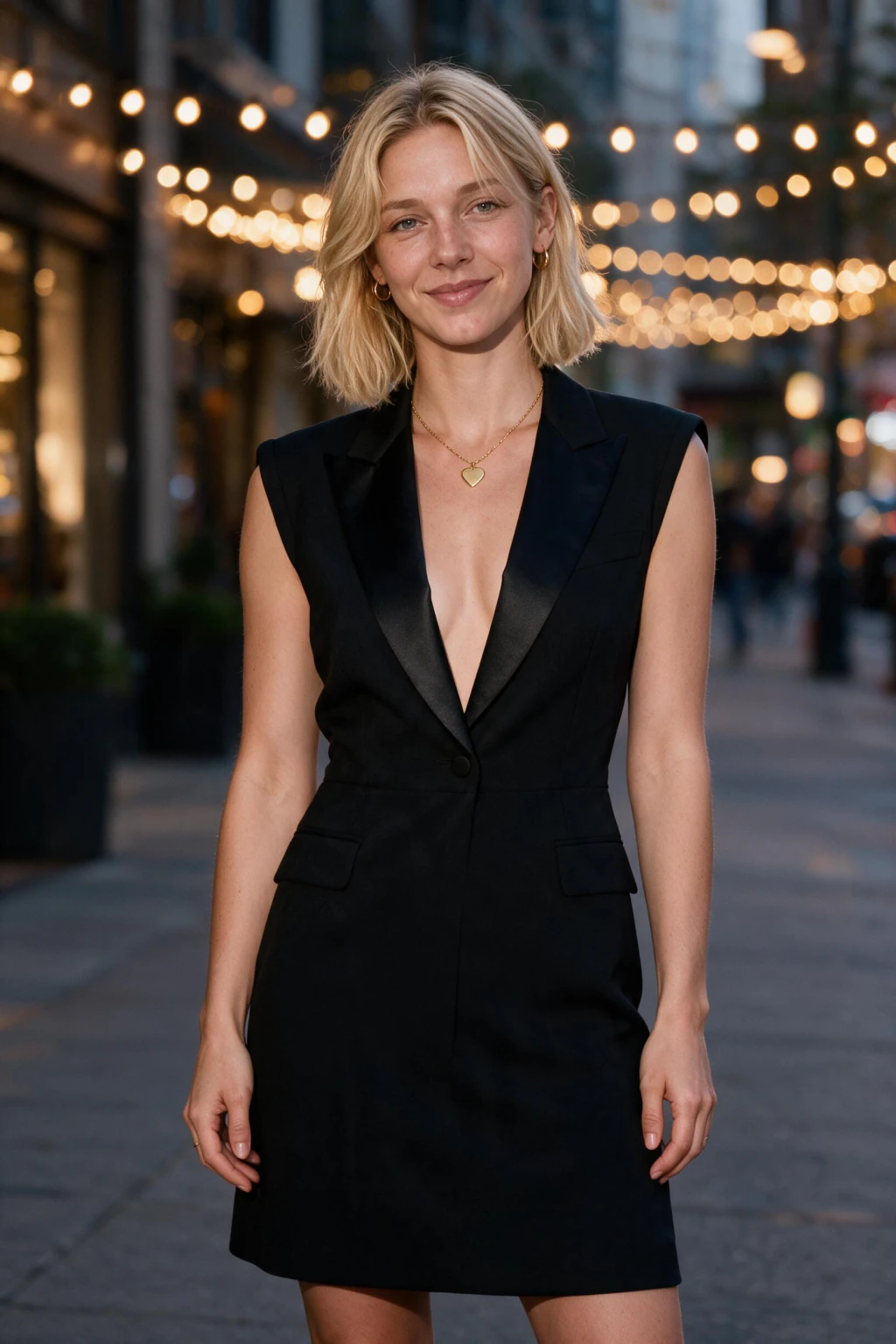
How do you use AI photos on a dating app without problems?
Follow those five and the detection question stops being a question. You are not trying to beat a scanner, you are trying to be recognisable.
Most people arrive at this search worried about a ban. The realistic risk is smaller and more boring: a profile full of photos that all feel like the same afternoon, and a match who quietly moves on.
Keep your own face
Generate from a clear, recent selfie and change the scene, not the person. The verification check compares geometry, and geometry is the one thing to leave alone.
This is the single rule that decides whether you pass Face Check.
Do not shift your build or your age
A slimmer frame or a younger face passes the app and fails the date. The purpose of the photo is to get to the meeting, not to survive the swipe.
Every published guideline on all three apps bans misrepresentation.
Mix generated and camera photos
Two or three generated scenes among real ones reads as a person with a life. Six generated scenes reads as a set.
Uniformity is what makes people report a profile, not any single image.
Get verified early
Run the verification flow before you build the profile out. If your photos clear it on day one, you never have to wonder afterwards.
The badge also earns more likes, which is worth having anyway.
Say so if asked
If a match asks whether a photo is AI, the honest answer costs nothing when the face is really yours. Bumble's own rules allow it.
The problem was never the tool. It is the gap between the photo and the person.
Should you use AI photos at all?
Use them for the slots your camera roll cannot fill. Most people have three usable photos and need six, and the missing three are always the same ones: a full-length shot, a dressed-up shot, and something outdoors in decent light.
That gap is the sensible use. Generating a version of yourself that does not exist is not.
MakeAiPhotos generates new photographs of you from one uploaded selfie, in about 2 minutes per photo. It does not retouch, slim or restyle your face, which is why the face in the output is the face on your selfie.
If you want the reasoning on whether generated photos actually perform, real versus AI dating photos gives you a 30-day protocol to test it on your own profile, including the cases where they lose.
Frequently Asked Questions
- Can Hinge detect AI photos?
- Hinge does not publish an AI image detector for profile photos. It runs Selfie Verification, and its parent company has said the same FaceTec liveness technology used on Tinder is being extended across its apps. A generated photo of your own face passes that check. One that alters your face does not.
- Does Tinder detect AI photos?
- Tinder checks identity, not image origin. Face Check requires a short live video selfie and compares it to your profile photos, and it is now required for new accounts in several US states. Nothing in that flow examines whether an image was generated, only whether the face matches.
- Can you get banned for using AI photos on dating apps?
- You can be removed for misrepresentation, which is a different thing. Using generated photos of someone else, a celebrity, or a face materially unlike yours breaks the impersonation rules on all three apps. Generated photos of your own real face are not banned by any published policy.
- Does Bumble allow AI photos?
- Yes, when they accurately represent you. Bumble's guidelines permit AI-generated photos on that condition. Since July 2024 other users can report AI-generated photos under the Fake profile category, so the practical test is whether your profile looks like you rather than how the photos were made.
- How do people tell a dating photo is AI?
- Texture and light, almost always. Skin with no pores, evenly white teeth, background blur that falls off too smoothly, and hands or jewellery that do not resolve. Six photos that all share the same lighting quality is the strongest tell of all.
- Is it worth verifying your profile if you use AI photos?
- Yes, and do it first. Verification confirms the photos match your live face, which settles the only question the apps actually ask. Verified profiles also receive more likes, so the badge pays for itself regardless of how your photos were made.