What are the best dating profile photos for men?
The best set is six photos that each answer a different question: what you look like, what your build is, what you do, who you spend time with, how you clean up, and where you have been.
Almost every quiet male profile fails the same way. Three photos, all chest-up, all shot in the same light, in the same week, wearing the same expression. That profile answers one question six times.
The numbers back the lineup. Hinge's Profile Picture Report, built by tagging a random sample of a thousand photos, found photos of men looking straight at the camera 102 percent more likely to earn a like, candid shots 15 percent more likely, travel photos 30 percent more likely, and bathroom selfies about 90 percent less likely.
If you are missing slots rather than missing effort, one clear selfie is enough to generate the scenes you do not have.
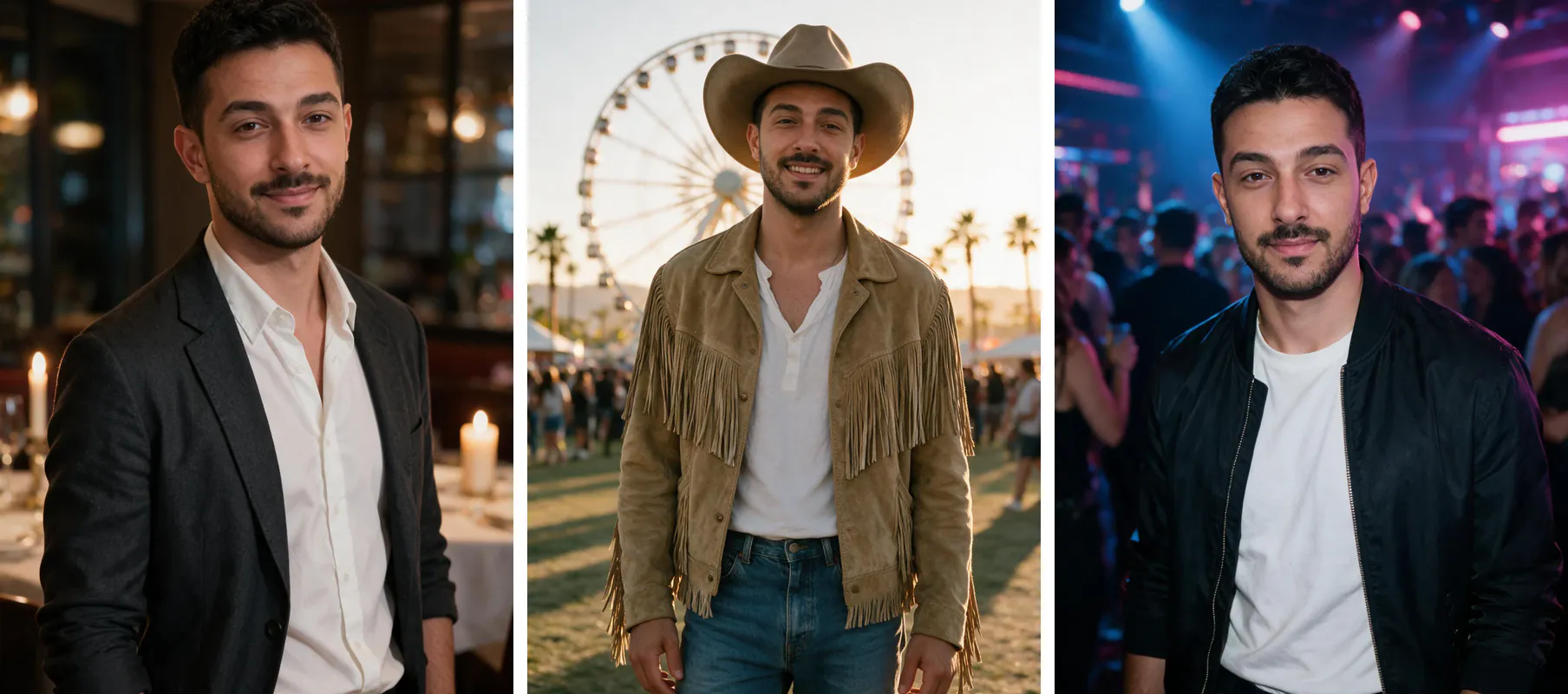
One phone selfie to 5 AI photos of the same person

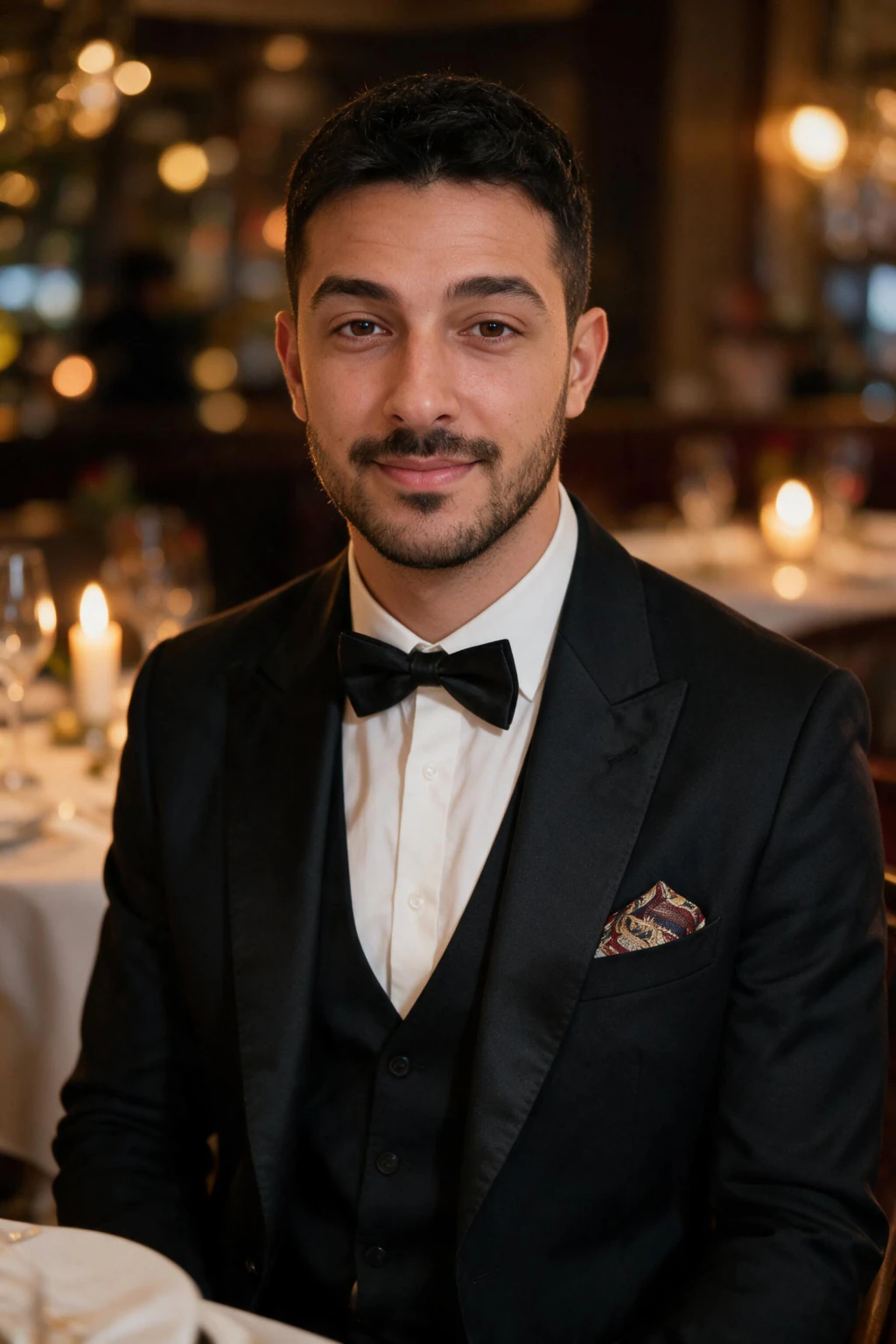
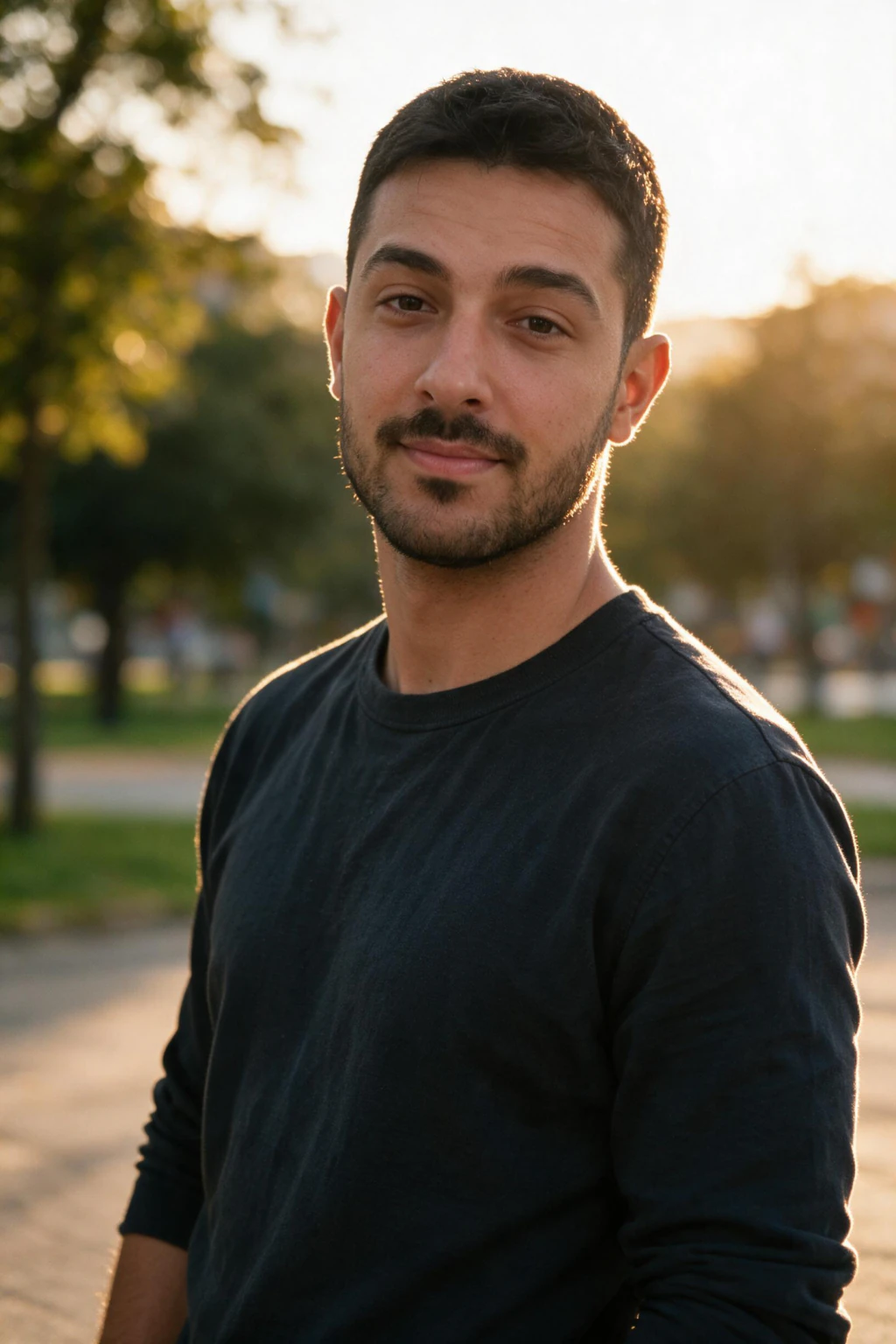
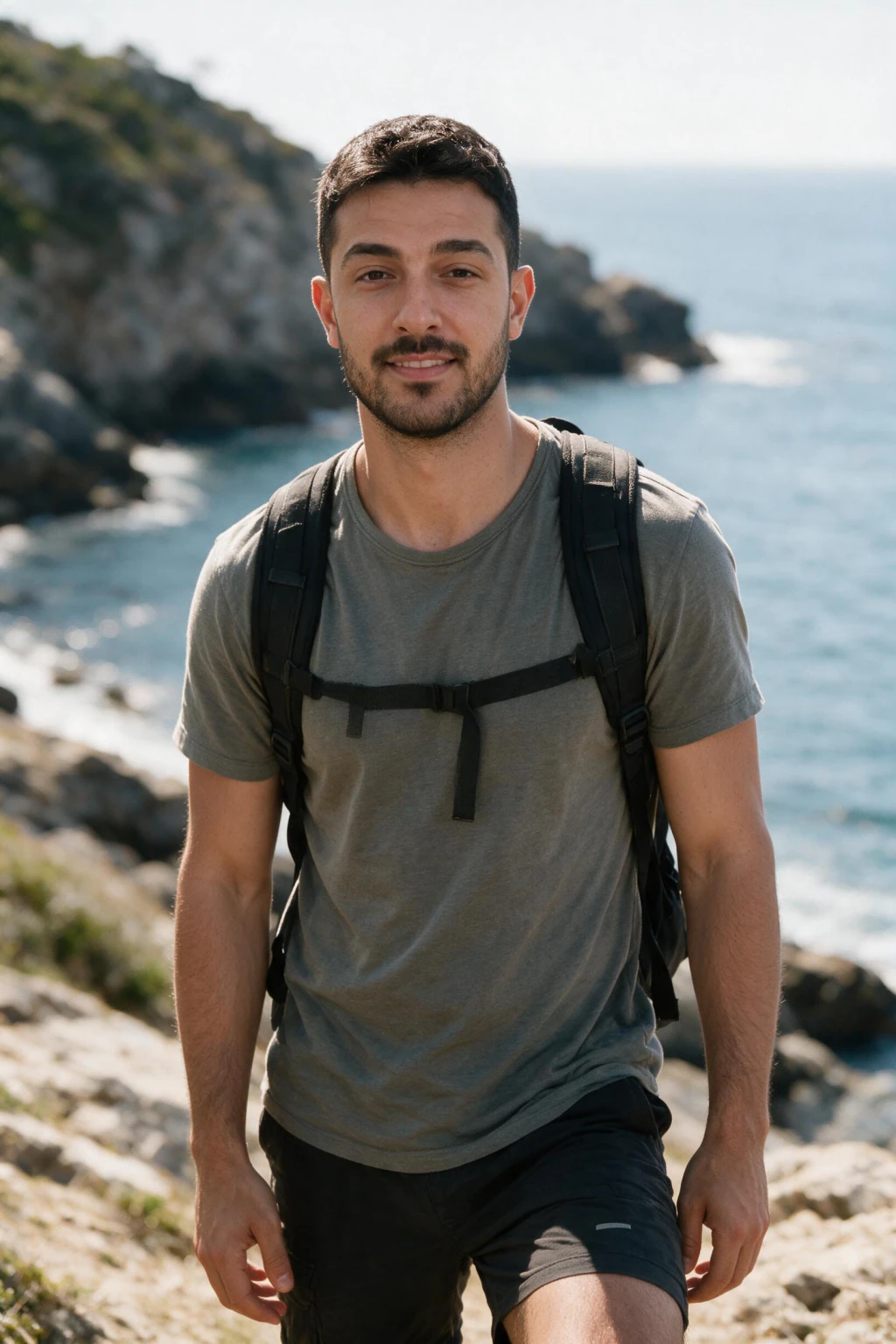
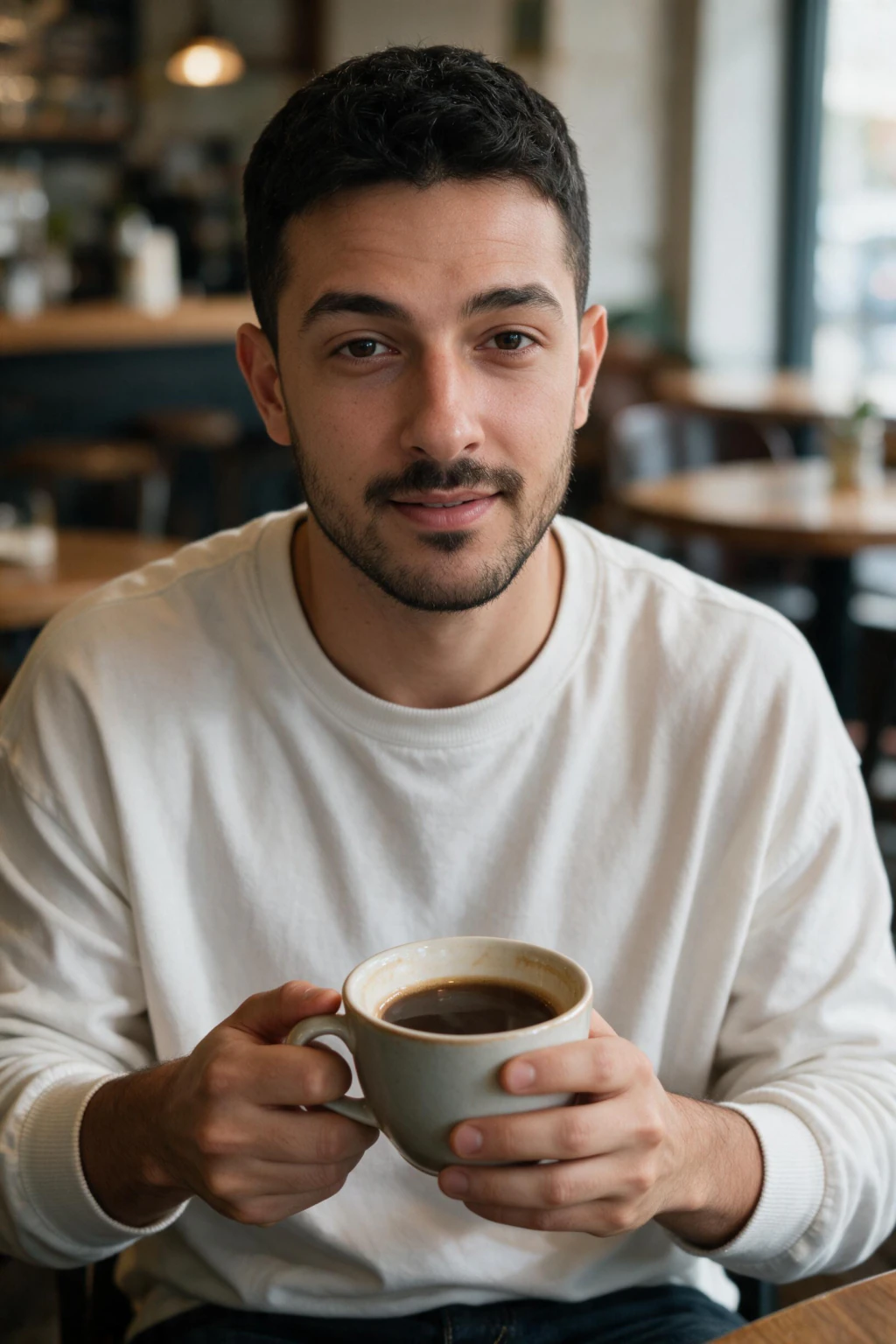
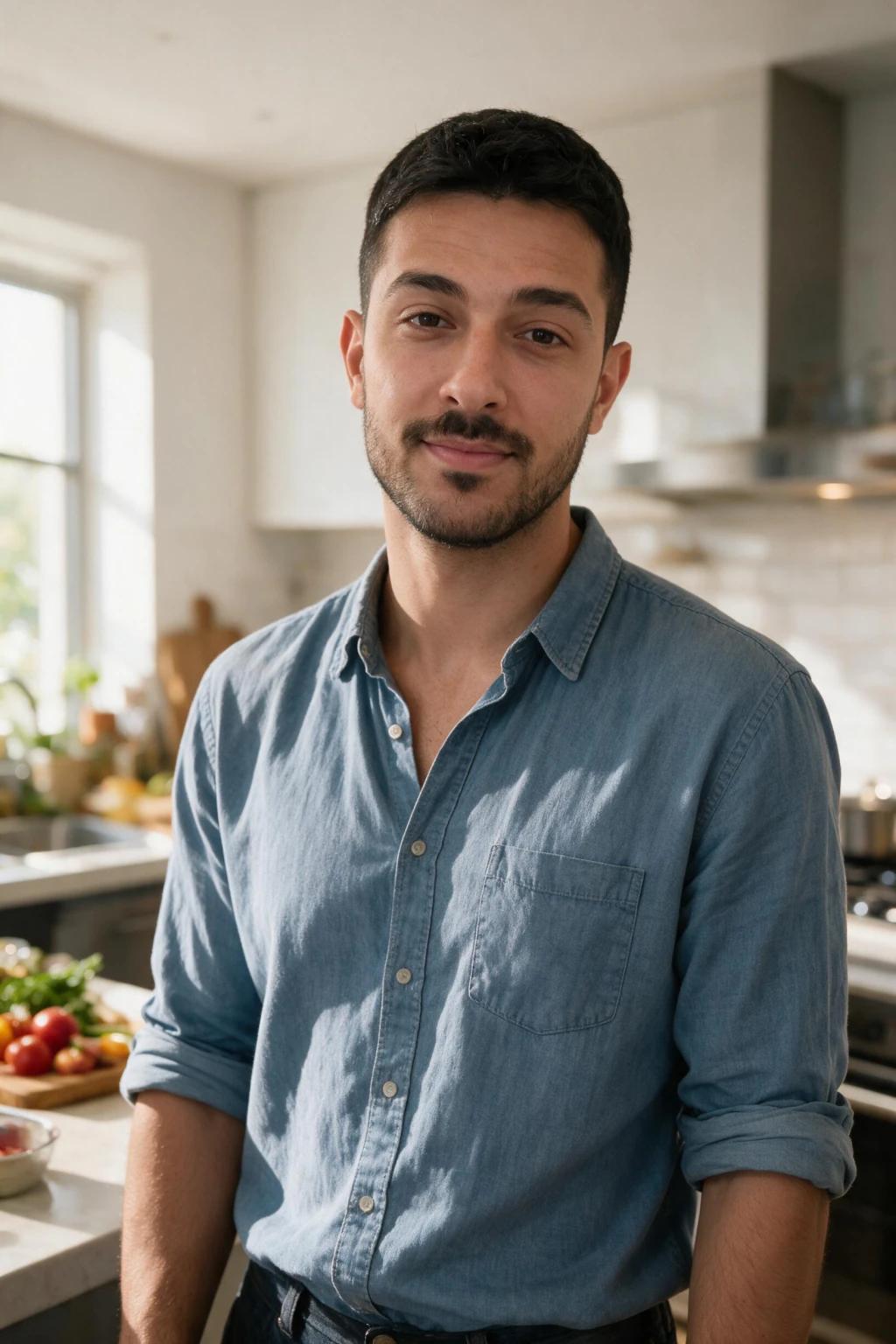
Slot 1: the face shot that decides the swipe
Chest up, both eyes visible, looking into the lens, lit from the front. Your face should fill roughly 40 to 60 percent of the frame.
This slot carries most of the decision. It is seen at thumbnail size, for about a second, next to a hundred others, and it is the photo the verification check will compare against if you ever get asked.
What to cut here: sunglasses, hat brims low enough to shadow the eyes, group shots, heavy filters, and any shot where someone who has never met you cannot immediately point at you.
How to get it without a photographer: stand facing a window, hold the phone at eye level with the rear camera, beauty mode off, and take thirty frames. One of them is the shot.
5 copy-paste prompts for slot 1: attach one clear selfie in Gemini, ChatGPT or Nano Banana and paste one. Each puts the face instruction first and names one light with a direction. In a chatbot your face is redrawn on every attempt, so for a set that holds the face use the AI dating photo generator.
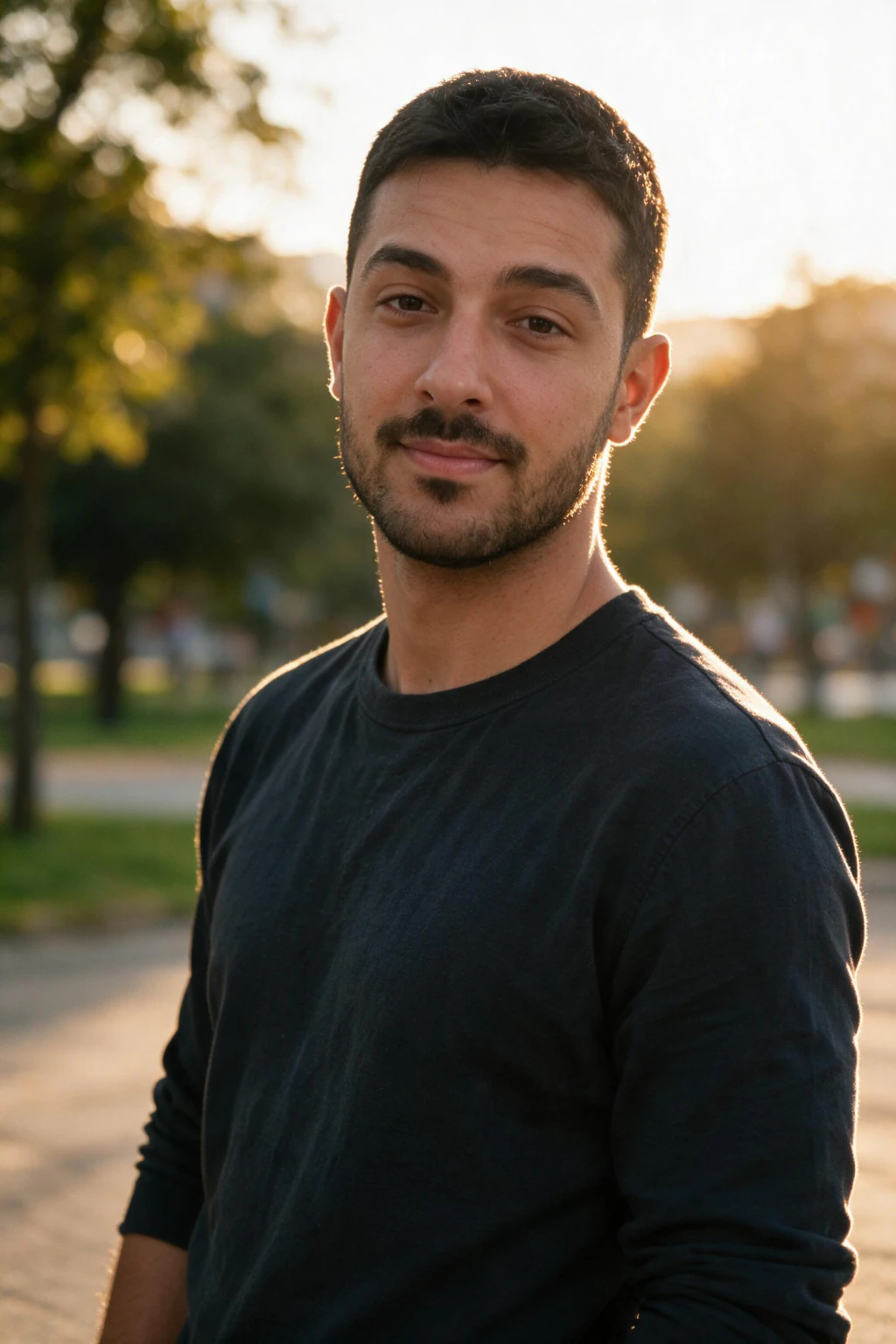
Window Light Opener
Use the face in the uploaded photo exactly, same features, same skin tone, do not beautify or smooth skin. Head-and-shoulders photo of this person in a plain crew-neck top, standing near a large window indoors, genuine relaxed smile, eyes to camera. Soft daylight from camera left, dim uncluttered room behind. 85mm lens look, shallow depth of field, visible skin texture, no filter.
The safest first photo there is. Window light from one side gives the face shape, and a plain top keeps the eye on your expression instead of a pattern. Banning skin smoothing is what stops it reading as a filtered selfie.
Park Bench, Overcast
Use the face in the uploaded photo exactly, do not beautify. Head-and-shoulders photo of this person sitting on a park bench in a soft knit sweater, leaning slightly forward, laughing naturally with eyes to camera. Flat overcast daylight, no direct sun, blurred green trees behind. 85mm lens look, natural colour, fine grain.
Overcast is the one case where flat light helps: no squint, no harsh shadow under the eyes. Asking for a natural laugh instead of a smile is what separates this from a passport photo.
Golden Hour Street
Use the face in the uploaded photo exactly, do not beautify. Head-and-shoulders photo of this person standing on a quiet street in the early evening in a plain jacket, half turned toward the camera, warm easy smile. Low golden sun from camera right across the cheek, blurred shopfronts behind. 50mm lens look, warm film colour, slight grain.
Warm side light is the most flattering free light there is. The half turn keeps the frame from reading as a posed headshot while your face stays fully visible, which is what the opener needs.
Balcony, Early Morning
Use the face in the uploaded photo exactly, do not beautify or smooth skin. Head-and-shoulders photo of this person leaning on a balcony rail in a plain hoodie, unstyled hair, relaxed half smile, eyes to camera. Cool early daylight from camera right, soft out-of-focus rooftops behind. 50mm lens look, natural skin texture, no HDR.
The frame that reads as a real moment rather than a shoot, which is what the research on candid-looking photos rewards. Keep the background soft or the eye goes to the rooftops instead of your face.
Outdoor Cafe Table
Use the face in the uploaded photo exactly, do not beautify. Head-and-shoulders photo of this person sitting at an outdoor cafe table in a plain shirt, one hand resting on the table, open friendly expression, eyes to camera. Dappled late-afternoon shade with soft light on the face from camera left, blurred street behind. 50mm lens look, natural colour, fine grain.
Adds a hint of context without turning into a scene. Asking for soft light on the face inside dappled shade is what stops the model painting hard leaf shadows across your eyes.
Slot 2: the full-length photo you are probably missing
One head-to-toe photo, standing, in clothes that fit. This is the most common gap in a man's profile, and the gap does not stay empty. It gets filled with a guess.
The reason is not vanity, it is uncertainty. A profile with no full-length shot reads as a profile hiding a full-length shot, and people fill the gap with a guess that is rarely generous.
Framing that works: a plain wall or a street background, camera at chest height, weight on one leg so you are not standing to attention. Avoid the shot from below, which distorts everything above the knee.
This is also the slot people fake most, and the one where faking costs the most. A build that does not match shows up on the first date, and nothing else in the profile survives that.
Slot 3: the activity photo that answers what you do
One photo of you actually doing something: climbing, cooking, playing, building, running, riding. Not posing next to the thing, doing it.
This slot exists to give a match an opening line. A photo that raises a question converts to a conversation at a much higher rate than a photo that simply looks good.
The failure version is the gym mirror selfie, which is an activity photo in theory and a mirror selfie in practice. If fitness is the thing you want to show, show it in a real setting rather than in a mirror.
If your hobby happens somewhere your phone never goes, this is a slot worth filling with AI gym photos rather than leaving empty.
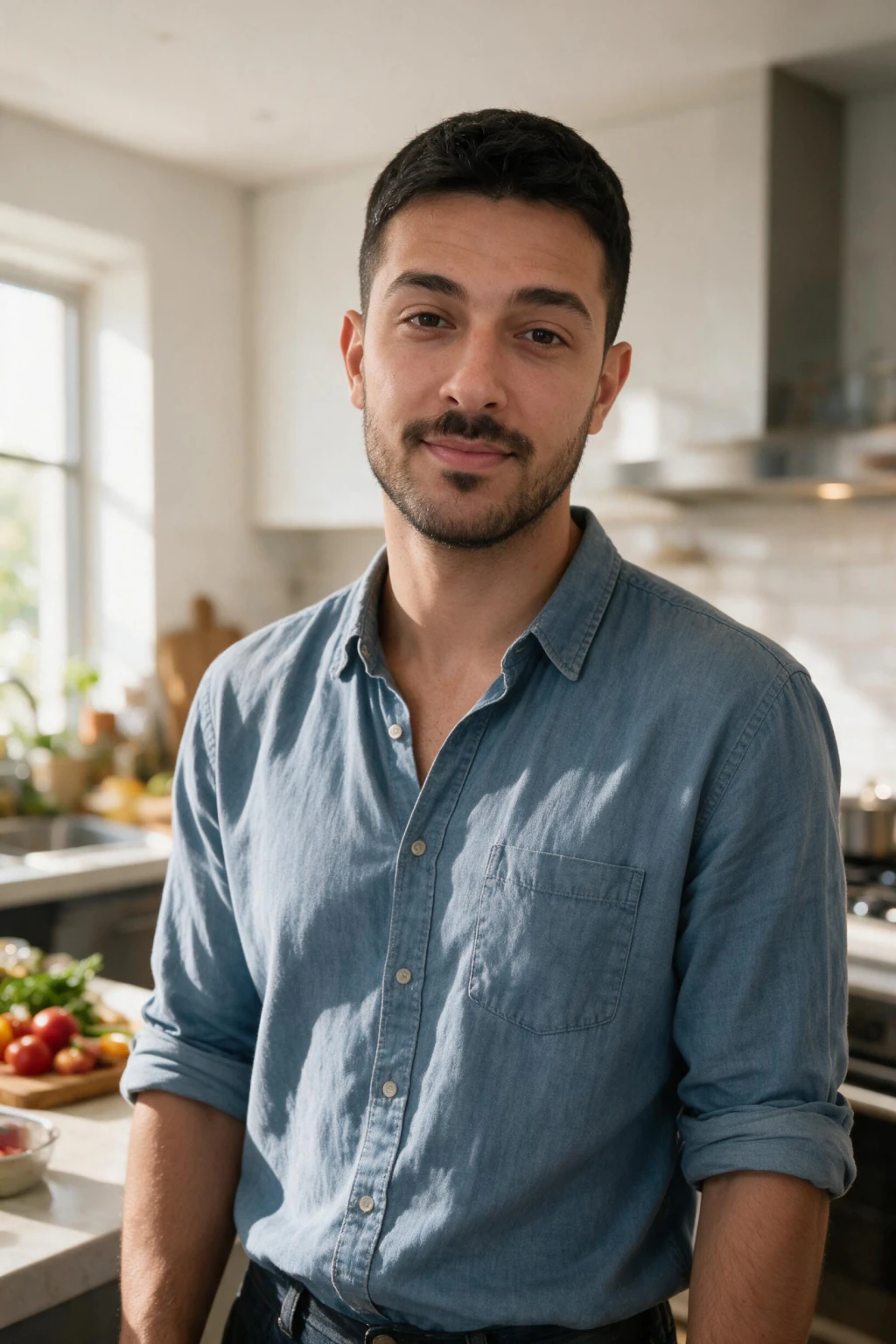
Slot 4: the social photo, framed so you are obvious
One photo with other people in it, positioned so there is no confusion about which one you are. Centre frame, in focus, or the only one facing the camera.
The purpose is social proof, and it is real: a man with no photos containing another human being reads as isolated whether or not that is true.
The rule that makes it work: never put a group shot in slot one, and never use one where a friend is more prominent than you. Both are among the most common self-inflicted wounds on a male profile.
Two or three people is the right size. A photo of eleven people at a wedding is a photo of nobody.
Slot 5: the dressed-up photo
A jacket, a proper shirt, an occasion. One photo where you clearly made an effort.
This slot answers a specific and unspoken question: what will this person look like sitting across a table on a Friday night. If nothing in the profile answers it, the answer defaults to the t-shirt in slot one.
It does not need a suit. A collar, decent shoes and evening light do the job. What matters is the contrast against the casual photos around it.
This is another good candidate for generation if your camera roll is all weekday. One selfie in, an evening scene out, same face.
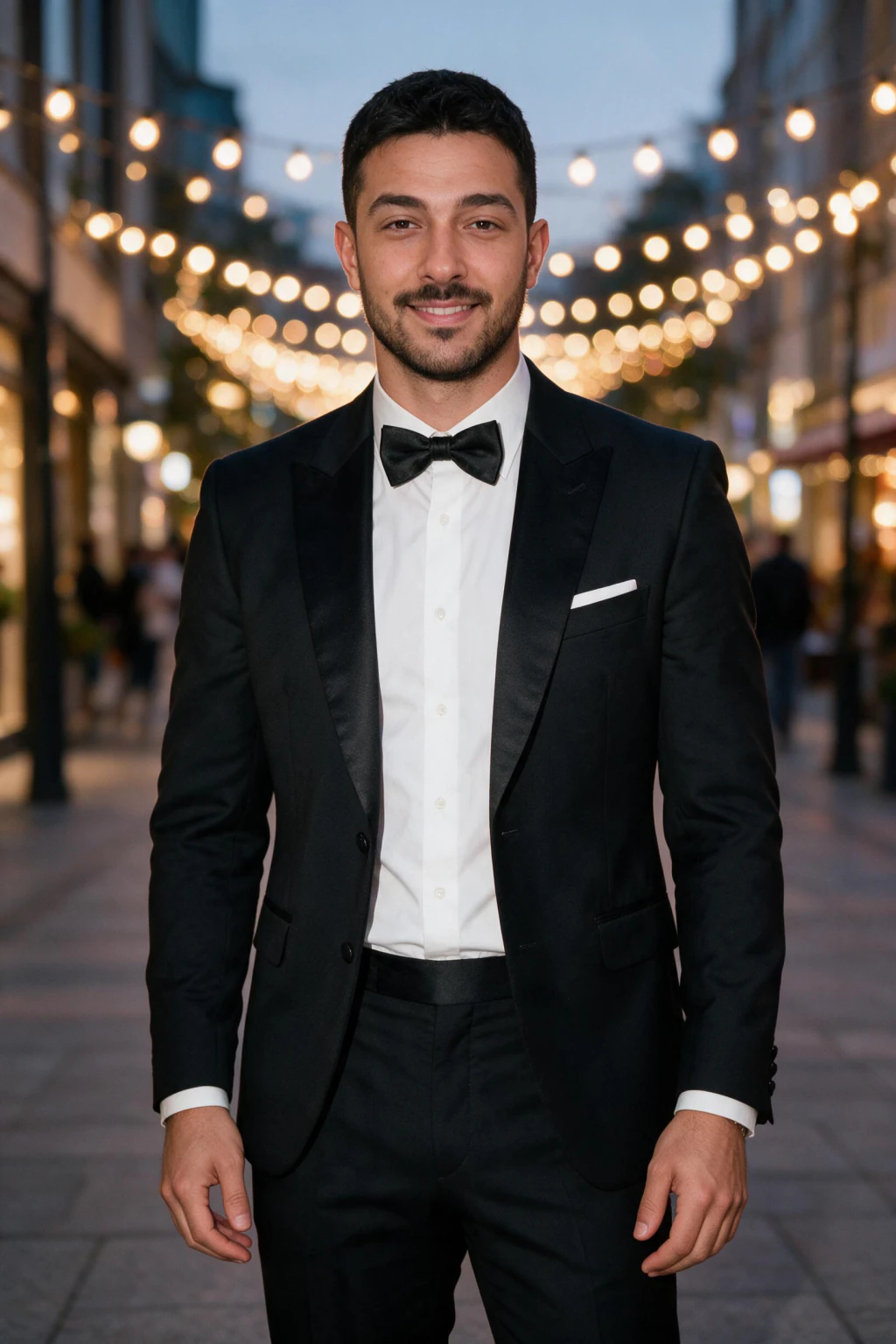
Slot 6: the photo with texture
Weather, distance, a place. Something that adds a bit of narrative without needing a caption.
Travel is the obvious version, but it is not the only one. A workshop, a coastline in bad weather, a kitchen mid-mess, a dog on a wet walk all do the same job.
The point of slot six is that the profile ends on a specific detail rather than trailing off. Specific is memorable, and memorable is what gets a like an hour later.
Avoid the two clichés that saturate this slot: the sedated tiger and the fish. Both are on every published list of what to cut, for the same reason, which is that everyone has seen them a thousand times.
What should you cut from a men's dating profile?
Five of those seven rows are straight deletions. That is intentional. Most profiles improve faster by deleting than by adding.
The single biggest available edit is replacing a lead selfie with a forward-facing, front-lit chest-up shot. That one change moves the photo from the bottom of the published research to the top of it.
| Photo type | Verdict | Why |
|---|---|---|
| Mirror selfie | Cut | Hinge's report puts bathroom selfies about 90 percent below average |
| Any selfie in slot 1 | Cut | Hinge found candid photos 15 percent more likely to be liked than posed ones, and a selfie is the most posed photo there is |
| Sunglasses in the lead photo | Cut | Sunglasses and filters are on Hinge's own list of what to avoid, and the viewer cannot read a face it cannot see |
| Group shot in slot 1 | Cut | The viewer has one second and cannot spend it working out which one you are |
| Heavy filter or beauty mode | Cut | Reads as edited, and fails a verification selfie later |
| Photo older than two years | Replace | The gap between profile and person is what people fear most |
| Shirtless gym photo | Situational | Works for a narrow audience and actively repels a wider one |
Does the same lineup work on Tinder, Hinge and Bumble?
Yes, with one adjustment per app. Tinder allows nine photos but shows one card at a time, so the first photo does most of the work: put slots one, two and five up front. Hinge caps at six and attaches likes to a specific photo, so every slot has to stand on its own. Bumble also caps at six and weights completeness, so leave nothing empty.
The six-slot formula is the same on all three. What changes is how much each app punishes a gap: Hinge and Bumble more than Tinder, because their limit is the formula's length.
The exact counts and what each app does with them are in how many pictures you need for Tinder, Hinge and Bumble.
How do you get six photos when you only have three?
Two options. Spend an afternoon with a friend and a phone, or generate the missing scenes from one selfie.
The afternoon works, and it is worth doing if you can get a second person to hold the camera. Change clothes twice, move between three locations, shoot far more frames than feel necessary.
If that is not happening, MakeAiPhotos builds new photographs of you in different settings from a single uploaded selfie, about 2 minutes per photo. It does not retouch or reshape your face, so what comes back still looks like you across a table.
The sensible split is to keep your best real photos and fill only the gaps: usually the full-length, the dressed-up shot and the outdoor one. A profile that is entirely generated reads as a set, and that is its own problem.
Before you post, read how many pictures you need for Hinge, which differs from Tinder and Bumble more than most people expect.
Frequently Asked Questions
- How many photos should a man have on a dating profile?
- Six, on every app that allows six. Each one should show a different setting, outfit and distance from the camera. Profiles with three or fewer give a match fewer reasons to swipe right and, on Hinge, fewer specific photos to like or comment on.
- What should your first dating photo be?
- A chest-up shot with both eyes visible, looking into the lens, lit from the front, with a real smile. Hinge's report found photos of men looking straight at the camera 102 percent more likely to earn a like. No sunglasses, no hat shadow, no group.
- Do shirtless photos work on dating apps?
- They narrow your audience rather than widening it. A shirtless gym photo performs well with a small group and costs matches with a much larger one. If you want to show fitness, use an activity photo in a real setting instead.
- Are selfies bad for dating profiles?
- They underperform badly. Hinge's Profile Picture Report found candid photos 15 percent more likely to be liked than posed ones and bathroom selfies roughly 90 percent less likely. One casual selfie deeper in the lineup is survivable. A profile built from them is not.
- Should men use AI photos on dating apps?
- For missing slots, yes, provided the face stays yours. Generated photos that keep your own face still look like you in person, which is the only check that matters. Changing your jaw, build or age fails both the check and the first date.
- How recent do dating profile photos need to be?
- Within about two years, and the lead photo should match your current hair, weight and glasses. Older photos are invisible to you and obvious to everyone else, and the mismatch is what people notice first when you meet.